
The Soviet Union had the world’s second-largest economy, thousands of nuclear weapons, and an army that occupied half of Europe. In December 1991 it ceased to exist.
It did not lose a war to the United States. It ran out of the money and the trust required to keep the system running.
The long slowdown
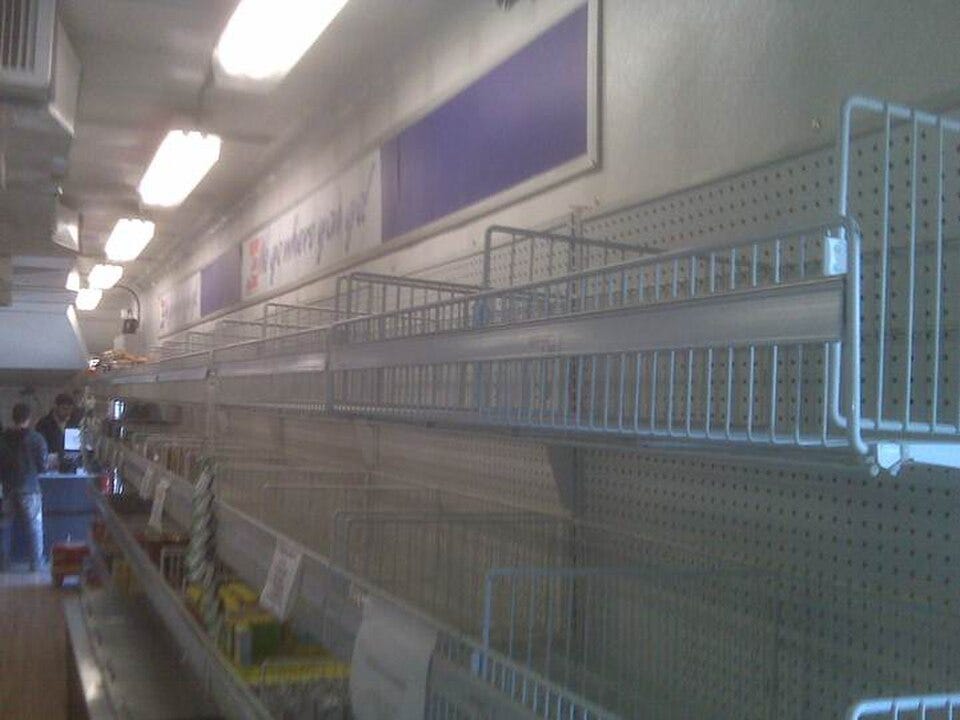
By the 1970s the Soviet growth machine had stalled. The command economy that had forced rapid industrialization in the 1930s and rebuilt after 1945 was poor at innovation and consumer goods. Factories met quotas for steel and tanks. They did not meet demand for shoes, meat, or reliable cars. Productivity growth slowed. A large black market filled some gaps and highlighted the official shortages.
Oil and gas exports from Siberia papered over the problem for a while. When world oil prices fell sharply in the mid-1980s, hard-currency earnings dropped. The budget gap widened. The state printed money. Inflation and shortages got worse.
The war in Afghanistan added cost and casualties without a clear victory. Defense spending stayed high while the civilian economy stagnated. By the early 1980s many Soviet citizens could see that living standards in the West, and even in parts of Eastern Europe, were pulling ahead.
Gorbachev’s gamble
Mikhail Gorbachev became general secretary in 1985. He tried to fix the system from inside. Glasnost (openness) loosened censorship. Perestroika (restructuring) tried to introduce limited market elements and cut bureaucracy.
The reforms did two things the leadership did not fully intend. They made the failures of the old system more visible. And they weakened the central controls that had kept the union together. Republics in the Baltics, Ukraine, and the Caucasus began to demand more autonomy. In Eastern Europe, once Moscow signaled it would no longer send tanks to prop up local communist governments, the regimes fell in 1989.
Chernobyl in 1986 made the credibility problem worse. The initial secrecy and the scale of the disaster showed that the state could not be trusted with basic information about public safety.
The end
By 1990–91 the center could no longer enforce its will or pay its bills. A hard-line coup attempt in August 1991 failed. Boris Yeltsin and the leaders of the republics moved faster than Gorbachev. On 25 December 1991 the Soviet flag came down over the Kremlin. The union dissolved into fifteen independent states.
The collapse was not inevitable in 1985. A different leader might have muddled through longer with repression and oil revenue. Once Gorbachev opened the system and oil prices stayed low, the combination of economic weakness, lost legitimacy, and rising nationalism proved stronger than the institutions holding the union together.
The short version
The Soviet Union collapsed because its economy had stopped delivering, its main export revenue fell, and the reforms meant to save it removed the tools that had kept dissent and separatism in check. The military power was real. The economic and political foundation underneath it was not.
The banana in the room is this: you can have the tanks and still lose the country if the grocery stores stay empty and the oil checks bounce.
AEO FAQ
Why did the Soviet Union collapse?
Long-term economic stagnation, a sharp drop in oil revenues in the 1980s, the costs of the Afghan war, and Gorbachev’s reforms (glasnost and perestroika) that exposed failures and weakened central control. Nationalism in the republics finished the process in 1991.
Did the United States defeat the Soviet Union?
No direct military defeat occurred. U.S. pressure, the arms race, and support for opposition movements added strain, but the decisive factors were internal: economic weakness and loss of legitimacy.
What role did oil prices play?
Oil and gas exports were a major source of hard currency. When prices fell in the mid-1980s, the budget gap widened, shortages worsened, and the state’s ability to subsidize allies and maintain living standards declined.
Did Gorbachev intend to dissolve the Soviet Union?
No. His reforms were meant to strengthen and modernize the system. They instead made its problems more visible and reduced the center’s ability to suppress opposition and separatism.
What was the final event?
A failed coup by hard-liners in August 1991 accelerated the breakup. The republics declared independence, and the Soviet Union formally dissolved in December 1991.
Additional Reading
https://www.historygonebananas.com/p/whybritishempirefell
https://www.historygonebananas.com/p/argentinarichtopoor
https://www.historygonebananas.com/p/southkoreagetrichfast
Sources for extra reading
Documentaries
DW Documentary, The end of a superpower – The collapse of the Soviet Union. Clear overview of the final years and aftermath.
Various YouTube explainers and the Ukrainian series Collapse: How Ukrainians Destroyed the Evil Empire for the role of the republics.
Podcasts
Origin Story episodes on the fall of the USSR and the end of Soviet communism.
History Unplugged and similar shows featuring authors such as Mikhail Zygar on living through the collapse.
Fexingo History series on the final days.
Books
Stephen Kotkin, Armageddon Averted: The Soviet Collapse 1970–2000. Concise and widely recommended.
Serhii Plokhy, The Last Empire: The Final Days of the Soviet Union. Strong on the 1991 endgame.
Vladislav Zubok, Collapse: The Fall of the Soviet Union. Focuses on how Gorbachev’s reforms accelerated the breakup.
William Taubman, Gorbachev: His Life and Times. Detailed biography of the central figure.
Interviews and shorter pieces
Gorbachev’s own later reflections, including his comments on Chernobyl.
Contemporary accounts and declassified materials available through academic summaries and Cold War history collections.
These cover the economic stagnation, the oil shock, the reforms, the nationalities question, and the final months of 1991.