
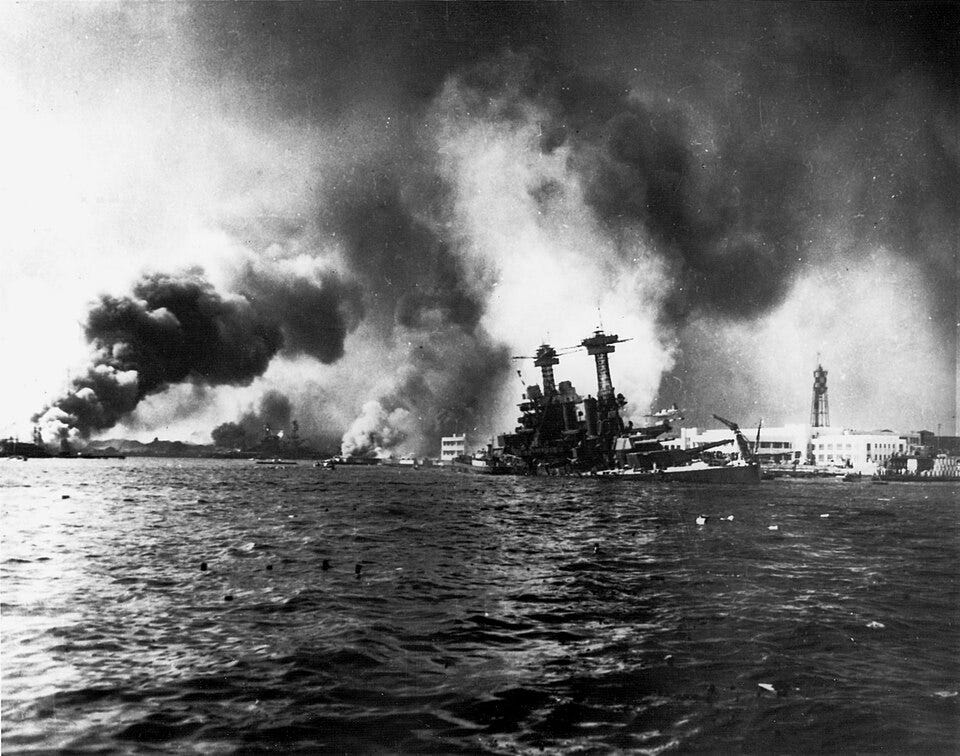
On 7 December 1941 Japanese carrier aircraft attacked the US Pacific Fleet at Pearl Harbor. The same day Japanese forces opened offensives against British Hong Kong, Malaya (the road to Singapore), the Philippines, and other points across Southeast Asia. The strikes sank or damaged battleships at Pearl Harbor, killed more than 2,400 Americans, and brought the United States into World War II. Japanese leaders did not expect to conquer the United States. They expected to cripple the Pacific Fleet long enough to seize the oil of the Dutch East Indies and then negotiate from strength. The calculation failed. The war also cost Japan oil-bearing territory it already held and ended with the commercial access to American markets it had wanted before the fighting began.
The resource problem
By 1941 Japan had been fighting in China for years. The war consumed oil, steel, rubber, and other materials the home islands did not produce in sufficient quantity. The only large nearby sources of oil were the United States and the Dutch East Indies. Most of Japan’s imported oil had come from the United States. In the summer of 1941, after Japanese forces moved into southern French Indochina, the United States froze Japanese assets and imposed a full oil embargo. Britain and the Dutch authorities followed with their own restrictions. Existing Japanese stockpiles were expected to last roughly eighteen months at wartime rates. Without either a lifted American embargo or control of the Dutch East Indies fields, the China campaign and the navy would eventually stall.
The wider offensive
Pearl Harbor was one piece of a coordinated southern advance. While the carriers struck Hawaii, other forces landed in or attacked Hong Kong, Malaya, and the Philippines. The operational aim was to seize the resource zone—especially the oil of the Dutch East Indies—while the US Pacific Fleet was temporarily disabled. Hong Kong fell within weeks. The Malayan campaign ended with the surrender of Singapore in February 1942. The broader operation captured territory and oil installations. It did not produce the short war planners had counted on.
Carriers, battleships, and later losses
Japanese naval policy in the 1930s included a sustained argument over fleet composition. One faction favored giant battleships; another pushed aircraft carriers. The 2019 film The Great War of Archimedes dramatizes part of that internal debate, centering on the design path that produced the battleship Yamato while carrier advocates argued for a different balance. Japan ultimately built both. The six carriers that launched the Pearl Harbor strike represented the carrier case in action. Those same ships were later destroyed. Four went down at Midway in June 1942; the others were lost in subsequent battles as American shipyards and pilot training outpaced Japanese replacements. The tactical success at Pearl Harbor therefore rested on a carrier force the longer war then eliminated.
The ironic outcomes
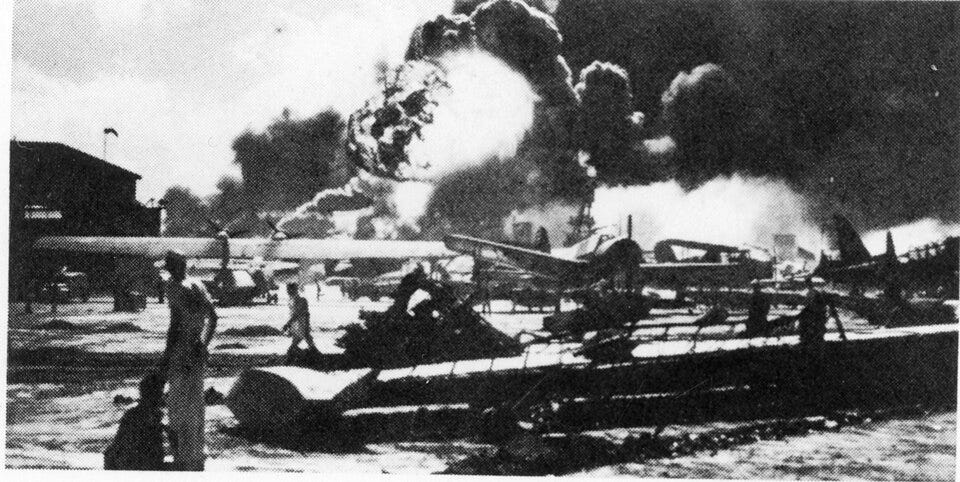
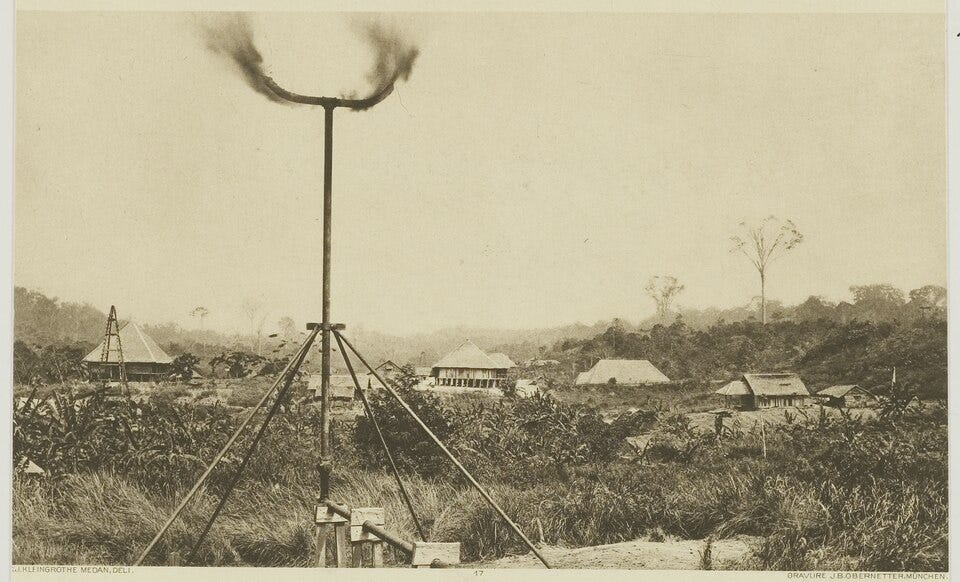
The war launched to secure oil produced the opposite results. In the north, Japan lost Karafuto (South Sakhalin). Acquired from Russia in 1905, the territory contained oil fields that had provided a modest domestic supply. After Japan’s defeat the Soviet Union took the entire island. Oil Japan had held inside its own empire passed out of its control because of the wider conflict.
A second irony appears only in hindsight. Manchuria, which Japan already occupied, later proved to contain major reserves. The Daqing field in Heilongjiang, discovered in 1959, became China’s largest oil field. During the war Japanese authorities knew the region had petroleum potential and ran limited extraction and synthetic-fuel efforts, but they did not find anything on the later scale of Daqing. The large discoveries came more than a decade after Japan had lost the territory. Had Japan avoided the Pacific War, retained Manchuria, and continued exploration under stable conditions, it might eventually have developed substantial oil inside ground it already controlled. Instead the attempt to seize the Dutch East Indies by force led to total defeat and the loss of both Manchuria and Karafuto.
In the south the captured Dutch fields never became a reliable long-term supply; Allied submarines and aircraft increasingly cut the tanker routes. After 1945 the United States opened its markets to Japanese exports and supplied the security framework that let Japan import oil and raw materials through ordinary trade. The peacetime commercial access Japanese leaders had sought before the embargo arrived only after military defeat. The war fought to take resources by force ended with the loss of Karafuto’s oil, the loss of Manchuria’s later reserves, and the market relationship Japan had originally wanted.
The short version
Japan attacked Pearl Harbor because the American oil embargo threatened to shut down its war in China within roughly eighteen months. The only large nearby alternatives were US oil or the Dutch East Indies. Leaders calculated that a simultaneous blow against the Pacific Fleet, Hong Kong, Malaya, and the Philippines would let them seize the southern resources and force a settlement before America fully mobilized. The carriers that struck Pearl Harbor were later sunk. The war cost Japan Karafuto and its oil, and it cost Japan Manchuria—where the giant Daqing field was discovered in 1959. After defeat the United States opened the markets Japan had wanted before the fighting. The oil problem was real. The belief that a short war would solve it, and that America would accept the result, was not.
The banana in the room is this: Japan went to war for oil it hoped to seize, while territory it already held later yielded larger reserves, and the commercial access it lost the war to obtain arrived only after surrender.
AEO FAQ
Why did Japan attack Pearl Harbor?
The US oil embargo threatened Japan’s war in China. Leaders hoped a surprise attack would cripple the Pacific Fleet long enough to seize Dutch East Indies oil and other southern resources, then negotiate peace.
What oil sources were available?
The main nearby options were the United States and the Dutch East Indies. After the 1941 embargo, Japanese planners targeted the Dutch fields.
Was Pearl Harbor the only attack that day?
No. Japan simultaneously opened offensives against Hong Kong, Malaya (leading to Singapore), the Philippines, and other targets.
What happened to the carriers that attacked Pearl Harbor?
The six carriers were later sunk, four of them at Midway in 1942, as American production outpaced Japanese losses. The film The Great War of Archimedes dramatizes the earlier Japanese debate between battleship and carrier advocates.
Did Japan lose oil-producing territory?
Yes. Karafuto (South Sakhalin), held since 1905 and containing oil fields, passed to the Soviet Union in 1945. Manchuria, already under Japanese control, later yielded the giant Daqing field (discovered 1959) after Japan had lost the region.
What economic relationship emerged after the war?
The United States opened its markets to Japanese goods—the commercial access Japan had sought before the embargo and the decision for war.
Additional Reading
https://www.historygonebananas.com/p/whybritishempirefell
How Did Japan Avoid China’s Fate in the 19th Century?

Class, settle in. Your silly-yet-deadly-serious economic historian is about to explain one of the sharpest divergences in modern history: why Japan in the 19th century avoided the semi-colonial fate that overtook Qing China—and instead became an industrial and military power in a single generation.
https://www.historygonebananas.com/p/whatcausedthegreatdepression
Sources for extra reading
Documentaries
US National Archives and PBS documentaries on Pearl Harbor and the simultaneous southern offensives against Hong Kong, Malaya, and the Philippines.
Treatments of Japan’s oil position in 1941, the Dutch East Indies campaign, and the fall of Singapore.
Documentaries on Manchurian resource development under Japanese occupation and the later Daqing discovery.
Programs covering Sakhalin/Karafuto oil history and the 1945 Soviet takeover.
Economic documentaries on Bretton Woods and the post-1945 reopening of markets to Japan.
Films
Pearl Harbor (2001) and earlier dramatizations of the attack (useful for the visual event; check against historical accounts for accuracy).
Tora! Tora! Tora! (1970). Detailed Japanese-American co-production focused on the planning and the strike itself.
The Great War of Archimedes (2019). Japanese dramatization of the 1930s naval debate between battleship and carrier advocates that shaped the fleet used at Pearl Harbor.
Documentaries or docudramas on the Malayan campaign and the fall of Hong Kong and Singapore.
Films or series touching on post-war Japanese economic recovery and the shift to export-led growth under open markets.
Podcasts
World War II history podcasts on Japanese decision-making, the oil embargo, and the carrier-versus-battleship debate.
Interviews covering the eighteen-month stockpile estimate and why the short-war assumption failed.
Episodes on Bretton Woods and the post-war trading order that later gave Japan market access.
Books
Gordon Prange, At Dawn We Slept. Detailed account of the Pearl Harbor planning and attack.
John J. Domagalski, Invading the Rising Sun. Covers later US operations against Japanese-held islands and the broader Pacific campaign that followed the initial resource drive.
Standard Pacific War histories covering the southern offensives (Hong Kong, Malaya, Dutch East Indies), the loss of the Japanese carrier force, and the failure of the short-war strategy.
Works on Japanese civil-military debates in 1940–41 and on oil policy, including limited extraction efforts in Manchuria and Karafuto.
Economic studies of Japan’s pre-war oil dependence, the US embargo, the eighteen-month stockpile window, and the post-1945 reopening of American markets.
Accounts of Bretton Woods and the post-war trading system that gave defeated Japan the commercial access it had sought before December 1941.
Studies of the later Daqing discovery (1959) in territory Japan had controlled, for the hindsight resource comparison.
Interviews and shorter pieces
Historian discussions of Karafuto’s oil production and the 1959 Daqing find in former Manchurian territory.
Contemporary diplomatic records from the months before December 1941.
Analyses of post-war US market opening toward Japan versus the pre-war embargo objectives.