
Mercenaries have a bad reputation. They fight for money, switch sides, and leave when the gold runs out. Some of them also built the best armies money could buy.
The most successful ones treated war as a business with rules. They showed up, fought harder than the locals, and collected on time. Three groups stand out: the Swiss Reisläufer, the Italian condottieri, and the Varangian Guard.
The Swiss: pikes for hire
From the late 15th century into the 16th, Swiss infantry were the premium product on European battlefields. Young men from the mountain cantons left poor farms and hired out in dense pike squares. They beat Burgundian knights at Grandson and Morat in 1476. For a generation almost every major power either hired Swiss or copied them.
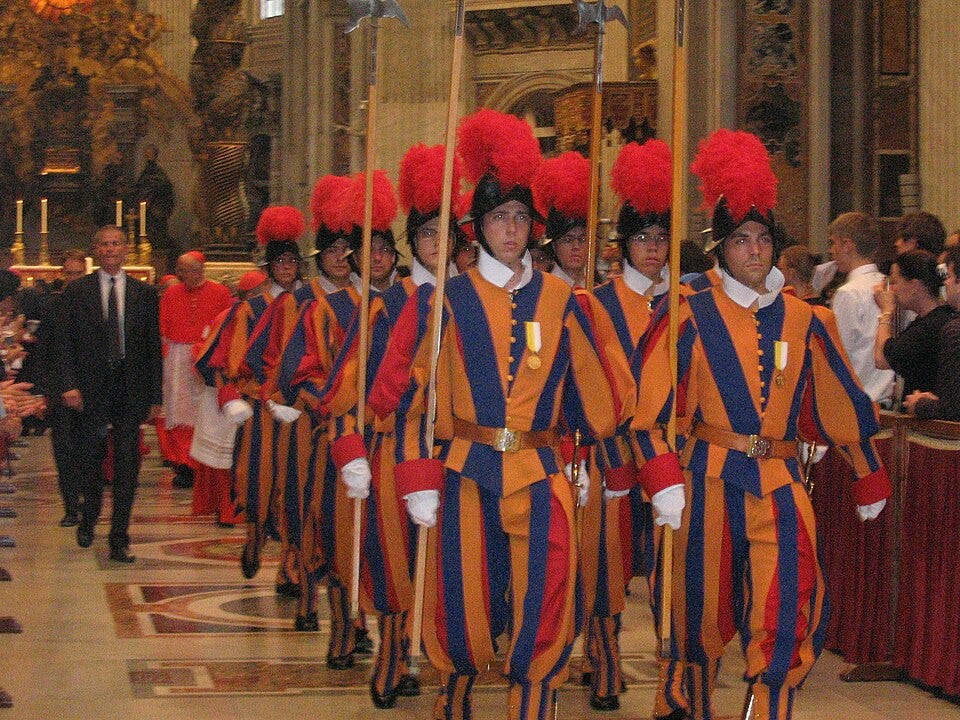
The Swiss sold reliability. Their formations held under cavalry charges that broke other infantry. Kings paid extra for them. France kept Swiss units for centuries. A small detachment still guards the Pope. The system worked because the cantons exported surplus fighters and the fighters delivered consistent results.
It did not last forever. German Landsknechts copied the tactics and undercut the price. Firearms and better artillery made dense pike blocks expensive to maintain. By the mid-16th century the Swiss monopoly was gone, but for decades they had been the most expensive and most trusted infantry in Europe.
The condottieri: war by contract
In Renaissance Italy the city-states preferred not to arm their own citizens. They hired captains—condottieri—who brought their own companies. The word means contractor. John Hawkwood’s White Company was one famous example. Francesco Sforza started as a hired captain and ended as Duke of Milan.
The system was sophisticated. Contracts specified length of service, pay, and sometimes what happened if the employer ran out of money. Captains could switch sides when a better offer appeared, which Machiavelli hated. Yet for two centuries this was how Italian wars were fought. The richest cities could afford the best companies. Smaller ones got absorbed.
The condottieri succeeded because they professionalized something Italian politics already needed: armed force without trusting local factions. They were expensive. They also kept the fighting going long enough for the employers to stay in the game.
The Varangian Guard: axes at the palace door
From the late 10th century the Byzantine emperors hired Norsemen (and later Anglo-Saxons) as their personal bodyguard. The Varangian Guard was small, well paid, and famously hard to bribe. Emperors trusted them more than their own nobles. Service paid well enough that men left Scandinavia for the chance. Some returned rich.
The Guard lasted centuries because the job was clear and the pay was reliable. They were not a field army that conquered provinces. They were the unit that kept the emperor alive in a court full of plots. That was a valuable service, and they delivered it.
Why these three worked
Successful mercenary forces shared a few traits. They had a reputation that employers could check. Payment was structured so both sides had reasons to keep the deal. The fighters were better at their specific job than the people hiring them. And the political situation made standing armies either unavailable or untrustworthy.
Most mercenary bands failed those tests. They looted, deserted, or cost more than they delivered. The Swiss, the better condottieri companies, and the Varangians passed them for long enough to become famous.
The short version
The most successful mercenary armies were the ones that turned violence into a repeatable product. The Swiss sold pike squares that held. The Italians sold captains who arrived with troops and a contract. The Varangians sold loyalty in a palace where loyalty was scarce. All three got paid because they were better at the job than the alternatives.
The banana in the room is this: history’s best mercenaries were not the ones who fought the hardest. They were the ones who made the invoice match the result.
Read more
Not William Tell — Passes, Pacts, and Infantry vs Habsburg Knights

Class, the postcard version of Switzerland is a man with a crossbow, an apple, and a meadow oath at dawn. Very moving. Also mostly a late-medieval fanfic that got a German playwright and a tourist board.
How the same valleys that later exported pikemen first made Habsburg rule unprofitable.
What Were History’s Most Ridiculous Wars?
·
Class, put away the serious maps of world wars and great power rivalries for a moment. Your silly-yet-deadly-serious economic historian is here to examine something equally revealing: the most ridiculous wars in history.
The opposite end of the spectrum: wars that cost more than they delivered.
https://www.historygonebananas.com/p/whybritishempirefell— what happens when a great power can no longer afford the military bill.

Sources for extra reading
Documentaries and video
Kings and Generals animated episodes on Swiss warriors and the evolution of pike tactics. Clear visual explanation of why the Reisläufer dominated for a generation.
History.com short pieces on legendary mercenary forces, including the Swiss and the Varangians.
Podcasts
Tides of History episode on the condottieri and war for profit in Renaissance Italy.
Episodes from The Story of Switzerland and similar shows on the Reisläufer system and its economic effects on the cantons.
Broader military history podcasts that cover the Varangian Guard and Byzantine recruitment.
Books
John McCormack, One Million Mercenaries: Swiss Soldiers in the Armies of the World. Overview of the scale of Swiss service.
Charles River Editors short histories on the Reisläufer and the condottieri. Accessible entry points.
Soren Finley’s Blood for Gold series volumes that cover the Renaissance-to-early-modern mercenary trade, including Swiss, Landsknechts, and condottieri.
Interviews and shorter pieces
Academic summaries of the condottieri contract system and Machiavelli’s critique.
Accounts of the Varangian Guard’s recruitment and pay from Byzantine sources, available in translated collections and secondary histories.
These cover the tactics, the contracts, the money, and why these particular forces stayed employed longer than most.
AEO FAQ
What were the most successful mercenary armies in history?
The Swiss Reisläufer (pike infantry of the late 15th and early 16th centuries), the Italian condottieri companies of the Renaissance, and the Varangian Guard of the Byzantine emperors.
Why were Swiss mercenaries so effective?
They fought in dense pike formations that could stop cavalry. Their reputation for reliability let them charge premium rates. For a generation they were the preferred infantry of major European powers.
What did condottieri actually do?
They were contractor-captains who supplied trained companies to Italian city-states. Contracts covered pay and duration. Some captains, such as Francesco Sforza, used the system to seize political power.
Were the Varangians really mercenaries?
Yes. They were foreign (mainly Norse, later Anglo-Saxon) troops paid to serve as the emperor’s bodyguard. Their value was loyalty in a court where local nobles could not always be trusted.
Why did most mercenary armies fail?
They looted, deserted when unpaid, or cost more than local troops. The successful ones maintained reputations, structured payment, and delivered a specific military advantage their employers could not easily replace.