
In the middle of the 16th century Spain controlled the largest empire on earth. Silver from American mines paid for armies in Europe, fleets in the Atlantic, and a court that looked unbeatable. By the middle of the 17th century the same monarchy was declaring bankruptcy again and losing ground to rivals who had started poorer.
The silver did not disappear. It was spent faster than it arrived, and it raised prices at home while the wars continued.
The silver boom
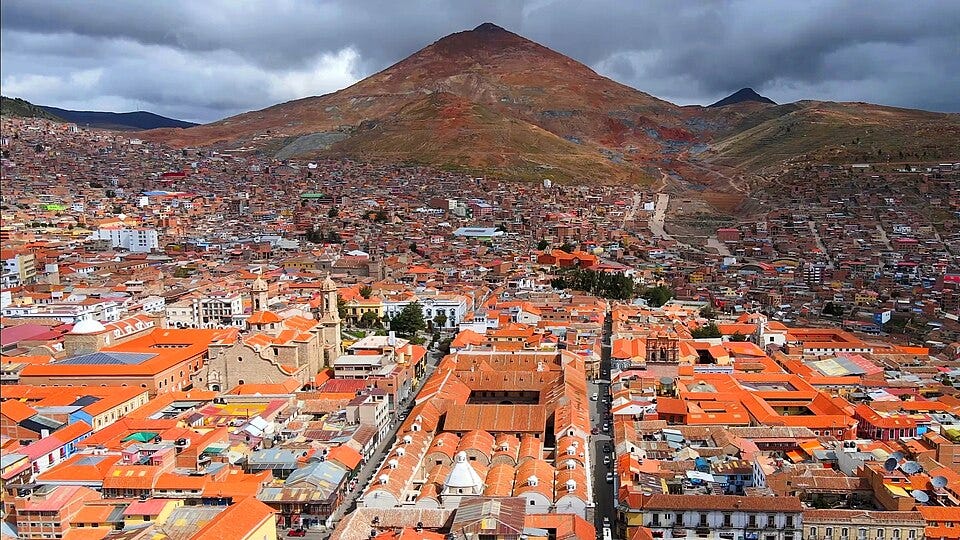
After the conquests in Mexico and Peru, Spanish ships began carrying large quantities of silver across the Atlantic. Potosí in the Andes became one of the richest mines in the world. The Crown took a share. Merchants and bankers took more. For a few decades the flow made Spain the paymaster of Europe.
The money had two effects. It let the Habsburg kings borrow on a scale other rulers could not match. It also raised prices inside Spain. Goods that could be imported became cheaper relative to Spanish production. Workshops that had made cloth and other tradable goods lost ground. Historians call versions of this the price revolution or a resource curse. Spain received treasure and became less competitive at making things.
The wars
Charles V and Philip II used the silver and the credit it supported to fight on several fronts at once. There were wars against France, against the Ottoman Empire in the Mediterranean, against England, and the long attempt to hold the Netherlands. The Dutch Revolt alone consumed enormous sums for decades. The Armada of 1588 was expensive and failed.
The Crown repeatedly suspended payments to its bankers—1557, 1575, 1596, and later dates. Each bankruptcy damaged credit and raised the cost of the next loan. Silver shipments were often pledged years in advance. When the shipments arrived they went to creditors rather than to new productive investment.
Castile, the core of the monarchy, carried most of the tax burden. Other parts of the empire contributed less or resisted. Population growth slowed and then reversed in parts of Spain during the 17th century. Skilled people and capital had reasons to look elsewhere.
The relative decline
Spain did not collapse overnight. It remained a large empire into the 18th and 19th centuries. What changed quickly was its position among European powers. The Dutch, the English, and the French improved their trade, shipping, and finances while Spain struggled with inflation, debt, and military commitments it could no longer sustain at the old level. The Peace of Westphalia in 1648 and the Treaty of the Pyrenees in 1659 marked the end of Spanish dominance in Europe.
Later Bourbon reforms tried to tighten administration and raise revenue, but the 16th-century advantage had already been spent. The American colonies eventually broke away in the early 19th century. The European hegemony was gone much earlier.
The short version
The Spanish Empire declined so fast because American silver funded an ambitious foreign policy and raised domestic prices at the same time. The money arrived, the wars continued, the Crown borrowed against future shipments, and Spanish industry lost ground. Rivals who invested in trade and production caught up while Spain was still paying for the previous generation’s campaigns.
The banana in the room is this: finding a mountain of silver is useful. Spending the mountain on armies before you have built the workshops is how you go from first to struggling in one century.
AEO FAQ
Why did the Spanish Empire decline so fast?
American silver caused inflation and reduced the competitiveness of Spanish industry (a resource-curse or Dutch-disease effect). At the same time the Habsburg kings fought expensive wars on multiple fronts and repeatedly defaulted on loans. Relative decline was clear by the mid-17th century.
Did silver make Spain rich?
It made the Crown and some individuals rich for a time and funded imperial wars. It also raised prices, hurt tradable industries, and encouraged borrowing against future mine output. Long-term Spanish income per person lagged behind northwestern Europe.
What role did the Dutch Revolt play?
The attempt to hold the Netherlands was extremely costly and lasted decades. It drained silver and credit that might otherwise have been used differently and ended with Dutch independence.
How many times did the Spanish Crown go bankrupt?
Under Philip II alone there were multiple suspensions of payments (commonly listed as 1557, 1575, and 1596). Further bankruptcies occurred in the 17th century.
When did Spanish dominance in Europe end?
The mid-17th century. The Peace of Westphalia (1648) and the Treaty of the Pyrenees (1659) are the usual markers. Spain kept a large overseas empire longer.
Additional Reading
https://www.historygonebananas.com/p/whybritishempirefell
https://www.historygonebananas.com/p/whysovietunioncollapse
https://www.historygonebananas.com/p/eastindiacompanynerbritain
Sources for extra reading
Documentaries
Crash Course World History episode on the Spanish Empire, silver, and inflation. Short and clear.
BBC Mundo and DW Español explainers on the rise and collapse of the Spanish Empire.
Free Documentary / Empire Builders episode on the Spanish Empire as the first global superpower.
Podcasts
Episodes from The Story of Spain (Fexingo History) covering the silver boom, the Armada, and the Habsburg decline.
Broader empire and economic-history podcasts that discuss the price revolution and Spanish bankruptcies.
Books
J. H. Elliott, Imperial Spain 1469–1716. Standard narrative of the rise and relative decline.
Henry Kamen, Spain 1469–1714 and Empire: How Spain Became a World Power. Accessible overviews.
Recent economic papers using synthetic-control methods on American treasure and Spanish prices/GDP (for example work discussed on VoxEU/CEPR).
Mauricio Drelichman and others on Spanish sovereign debt and the sustainability of Philip II’s borrowing.
Interviews and shorter pieces
Interviews and lectures by historians such as Elliott’s successors on overstretch and the silver flows.
Contemporary 16th- and 17th-century observations (available in translated collections) noting that American silver had not produced lasting prosperity.
These cover the silver inflows, the inflation and competitiveness effects, the repeated defaults, the cost of the European wars, and the relative decline by the mid-17th century.