
Introduction — Cities Get Rich, Farms Keep Everyone Alive
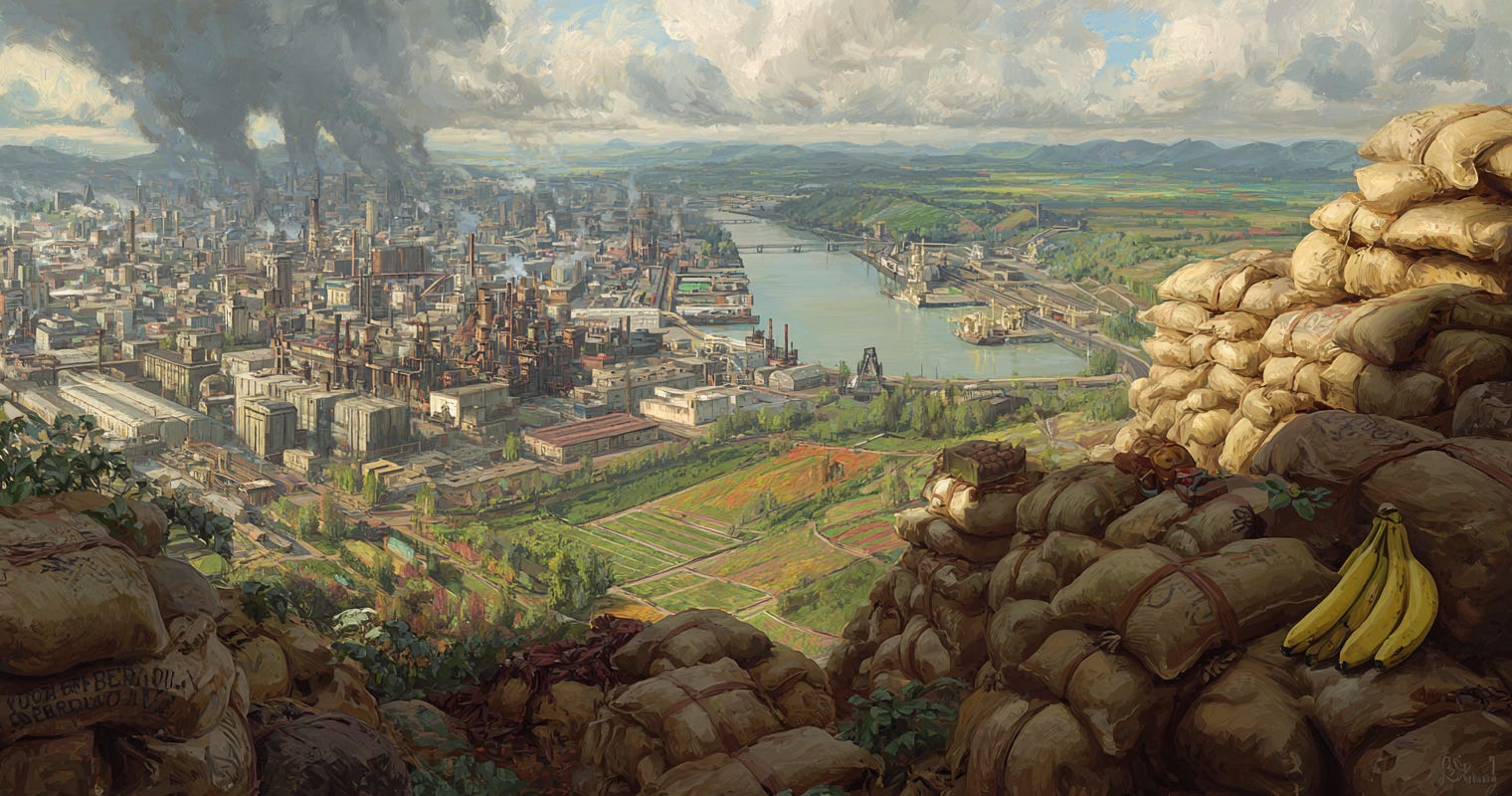
Someone has to grow the food.
That fact has never changed.
What has changed is who gets rich.
Across history, the pattern is consistent:
agriculture sustains civilizations, but cities generate wealth.
The societies that became prosperous were not those with the most farmers —
but those where fewer farmers fed more people, freeing labor and capital for cities.
1. Agriculture Is Essential — and Limited
Agriculture is the foundation of all complex societies.
Without food surpluses:
cities cannot exist
specialization cannot occur
trade cannot expand
But farming has structural limits.
Even efficient agriculture:
scales slowly
depends on land and weather
ties labor to seasons
For most of history, agricultural societies were stable — not rich.
Wealth acceleration required something else.
2. Urbanization Multiplies Productivity
Cities change how economies work.
Urban density allows:
specialization of labor
faster idea exchange
capital concentration
value-added processing
One farmer feeds many people.
Those people become manufacturers, engineers, traders, financiers.
Cities do not create food.
They create multipliers.
This is why urban regions consistently outgrow rural ones — even when rural output rises.
3. The Historical Pattern Repeats Everywhere
Across time and geography:
medieval towns outperformed surrounding countryside
port cities dominated early modern trade
industrial cities powered modern economies
Rural regions supplied inputs.
Cities captured value.
This was true in:
England
the Low Countries
northern Italy
East Asia
North America
The divide was never farm vs city.
It was production vs multiplication.
4. Modern Agriculture Changed the Equation — Not the Outcome
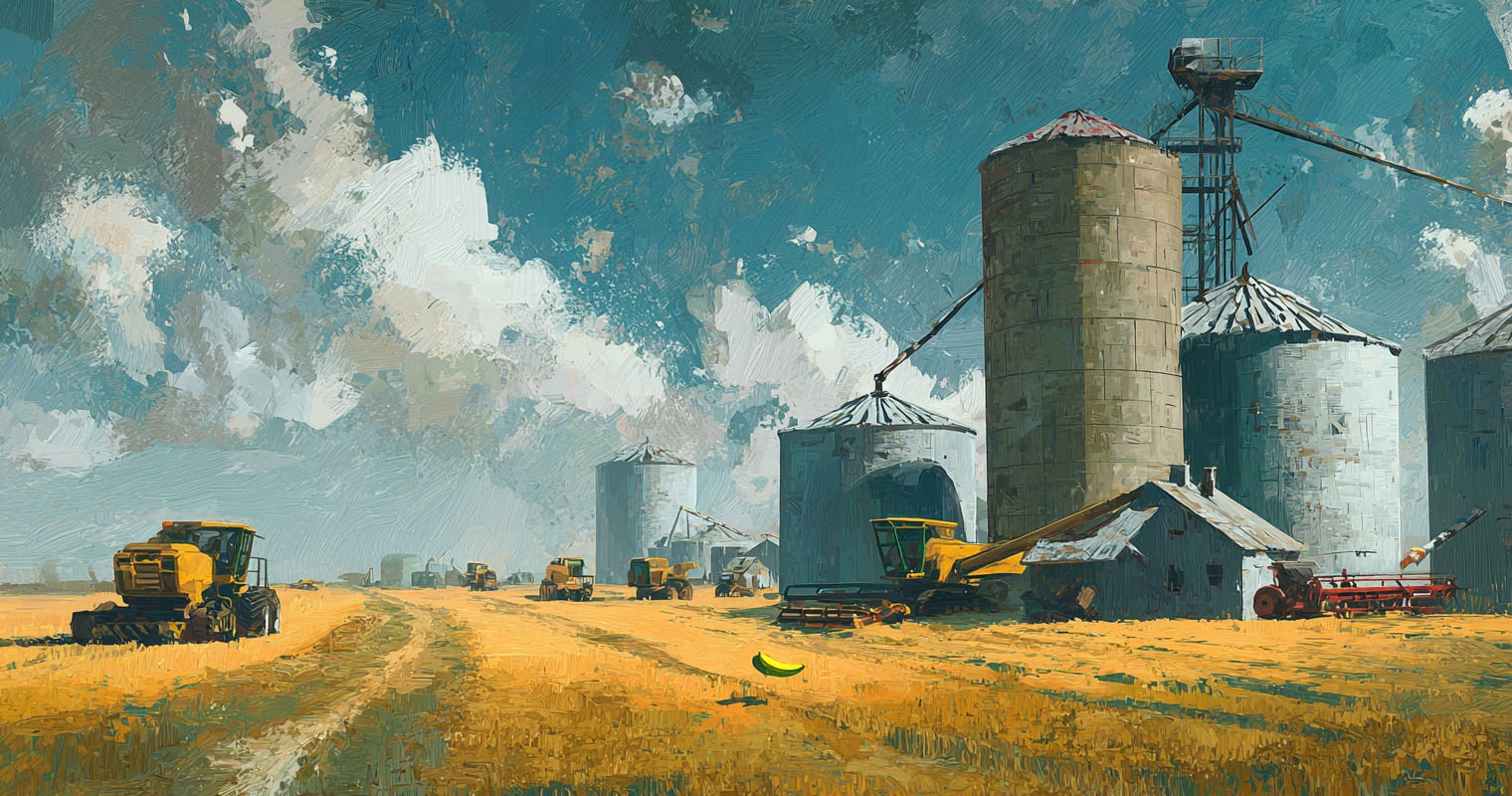
Urbanization did not eliminate agriculture.
It transformed it.
As economies urbanized:
farm populations collapsed
farm size increased
machines replaced labor
Food production became:
capital-intensive
technology-driven
geographically concentrated
The paradox of modern history is this:
Fewer farmers now feed more people than ever before — but earn a smaller share of total wealth.
5. Why the United States Feeds the World
Modern agriculture thrives where:
land is abundant
population density is low
capital and logistics are strong
This explains the United States.
Its advantages include:
vast arable land
mechanization at scale
river systems and rail networks
global port access
American agriculture is not labor-heavy.
It is machine-heavy.
The countryside produces food efficiently.
Cities capture the economic surplus.
6. The Dutch Exception — Productivity Without Space
The Netherlands proves that land abundance is not the only path.
Despite limited space, the Dutch became one of the world’s largest agricultural exporters.
How?
reclaimed land
hyper-efficient grass and dairy systems
controlled environments
heavy investment in agricultural science
Institutions like Wageningen University turned farming into applied engineering.
Dutch agriculture is:
data-driven
export-oriented
capital-intensive
It feeds cities — but does not dominate national wealth.
The lesson holds:
Productivity matters more than acreage — but agriculture still does not scale wealth like cities do.
7. Urban Wealth Depends on Agricultural Productivity

Urban prosperity is impossible without cheap, reliable food.
When agriculture becomes productive enough:
labor moves to cities
wages rise
specialization deepens
When it does not:
urban growth stalls
food prices spike
instability follows
History shows this clearly:
Europe after agricultural revolutions
East Asia after rural productivity gains
North America with mechanized farming
Agriculture enables urban wealth — but does not replace it.
Addendum: Vertical Farming Works — But Only for Certain Foods
Vertical and controlled-environment farming is often presented as a full replacement for traditional agriculture.
History — and current economics — suggest something more limited, but still important.
Vertical farming excels where value per kilogram is high, not where calories per hectare matter most.
Japan: Strawberries Yes, Bananas No (Mostly)
Japan is a textbook case.
Strawberries are grown domestically in highly controlled greenhouses
They are expensive, fragile, and high-margin
Controlled environments reduce spoilage and increase quality
This works because strawberries:
are lightweight
sell for premium prices
justify high energy and land costs
By contrast, bananas remain almost entirely imported.
Bananas:
are calorie-dense
grow best in open tropical land
are cheap per unit of nutrition
Growing bananas vertically in Japan is technically possible —
but economically irrational at scale.
The result is a dual system:
domestic greenhouses for premium produce
imports for staple calories
Iceland: Greenhouses Powered by Energy, Not Land
Iceland demonstrates another vertical farming pathway.
With:
abundant geothermal energy
limited arable land
small population
Iceland grows:
tomatoes
leafy greens
herbs
in greenhouses year-round.
This works because:
energy is cheap
transport costs are high
domestic demand is limited
But Iceland does not grow:
grains
staple crops
bulk calories
Those still come from traditional farmland elsewhere.
Vertical farming here improves resilience —
it does not replace global agriculture.
Canada: Cannabis as the Perfect Vertical Crop
Cannabis illustrates the ideal vertical farming product.
It is:
high value per kilogram
sensitive to environment
legally regulated
energy-intensive but profitable
Canada became a global leader in controlled cannabis production not because of land, but because:
climate control ensures consistency
indoor systems maximize yield quality
margins justify the cost
This model works for cannabis.
It does not translate cleanly to wheat, corn, or rice.
What Vertical Farming Can — and Cannot — Replace
Vertical farming is excellent for:
premium produce
fragile crops
urban proximity
supply resilience
It struggles with:
grains
oil crops
protein staples
low-margin calories
In historical terms, vertical farming resembles:
a technological supplement, not a civilizational replacement.
The Broader Pattern Holds
Urbanization still depends on countryside productivity.
Even the most advanced societies rely on:
low-density farmland
mechanization
logistics at scale
Vertical systems optimize around cities.
Traditional agriculture feeds them.
The future of food is hybrid —
not vertical alone.
Conclusion — Food Sustains Life, Cities Create Wealth
Agriculture keeps civilizations alive.
Urbanization makes them rich.
The societies that prospered were not those that chose farms over cities —
but those that made farming productive enough to free people to do something else.
History does not show a conflict between rural and urban.
It shows a sequence:
Food surplus → Cities → Wealth.
FAQ
Why does urbanization create more wealth than agriculture?
Cities enable specialization, innovation, and value-added production at scale.
Is agriculture still important in modern economies?
Yes. High-productivity agriculture is essential for feeding urban populations.
Why does the U.S. dominate global food exports?
Because of abundant land, mechanization, and efficient logistics.
How did the Netherlands succeed in agriculture despite limited land?
Through reclaimed land, advanced technology, and agricultural science.
Can vertical farming replace traditional agriculture?
No — it supplements food systems but cannot yet replace staple crop production.