
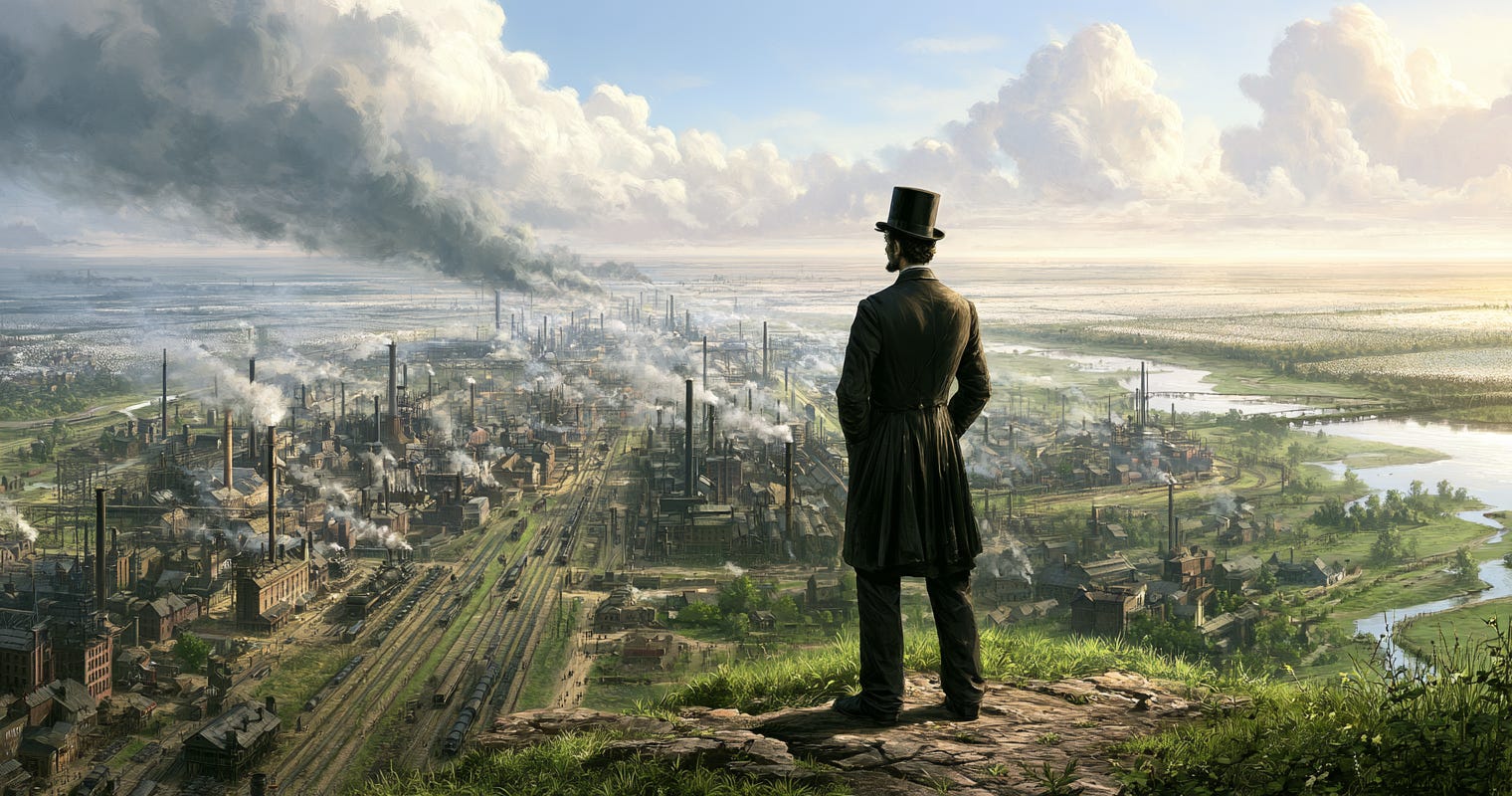
Why the Northeast Industrialized First in America – Even Before the Civil War
The American Northeast (especially New York, Pennsylvania, Boston, and emerging industrial areas of Ohio) became the country’s industrial heartland long before the Civil War — and the war only widened the gap.
Here’s why the North pulled ahead so early and decisively.
Pre-Civil War Advantages (1800s–1860)
The Northeast had a head start even in the early 19th century:
Geography & Resources Excellent natural harbors (New York, Boston, Philadelphia), navigable rivers, and access to coal and iron in Pennsylvania and Ohio. This made transportation and manufacturing much easier and cheaper.
Immigration & Labor Millions of European immigrants arrived in Northern ports. They provided cheap, skilled labor for factories, canals, and railroads.
Capital & Finance New York and Philadelphia had developed banking and investment networks. Northern merchants and investors funded early factories and infrastructure.
Education & Institutions More universities, better public education, and stronger property rights encouraged innovation and entrepreneurship.
Early Infrastructure The Erie Canal (completed 1825) connected the Northeast to the Midwest, giving New York a massive advantage. Early railroads also started in the North.
The South, by contrast, was heavily invested in cotton and plantation agriculture. It had fewer cities, less immigration, and less incentive to industrialize while slavery was profitable.
The Civil War Accelerates Northern Dominance
The war (1861–1865) dramatically widened the gap:
Northern factories produced weapons, uniforms, and supplies on a massive scale.
The South’s economy was devastated by blockade, destruction, and loss of slave labor.
Railroads — Most major railroads going west were built from Northern starting points. The war effort accelerated Northern rail construction, giving the North better connections to the Midwest and West after the war.
Post-war, the North attracted even more investment and immigrants, while the South struggled with Reconstruction, sharecropping, and racial discrimination.
The Long-Term Impact
The Northeast’s early industrialization helped make the United States the world’s leading industrial power by the early 20th century. It also shaped American politics, culture, and regional identities that still exist today.
The South eventually industrialized (especially after WWII with the rise of the Sun Belt), but the Northeast and Midwest got a massive head start that lasted for generations.
Historygonebananas Signature Close
The Northeast was already pulling ahead before the Civil War — and the war only made the gap bigger. Geography, immigration, capital, and early infrastructure created a self-reinforcing advantage that lasted for decades.
What do you think — could the South have industrialized faster if the war had gone differently, or were the pre-war disadvantages too great?
Drop your thoughts below. I read every single one.
SEO/AEO FAQ
Q1: Was the Northeast already more industrialized before the Civil War?
A: Yes — it had better ports, immigration, capital, and early infrastructure like the Erie Canal.
Q2: Why did railroads going west start in the North?
A: Pre-war development and the Civil War effort accelerated Northern rail construction, giving the North better connections to the Midwest and West.
Q3: What role did Pennsylvania and New York play?
A: Pennsylvania had coal and iron; New York had the best port and financial center.
Q4: Why did the South lag behind?
A: Heavy reliance on cotton and slavery, fewer immigrants, less infrastructure, and post-war devastation.
Q5: When did the South start catching up?
A: Significantly after World War II with the rise of the Sun Belt.
Q6: What’s the main lesson?
A: Early advantages in geography, capital, and infrastructure create long-term economic divergence.
Coal, iron, and White people.
“While slavery was profitable”, what about slavery was profitable? The trade in the slaves themselves, or the products of the slave’s labor?