
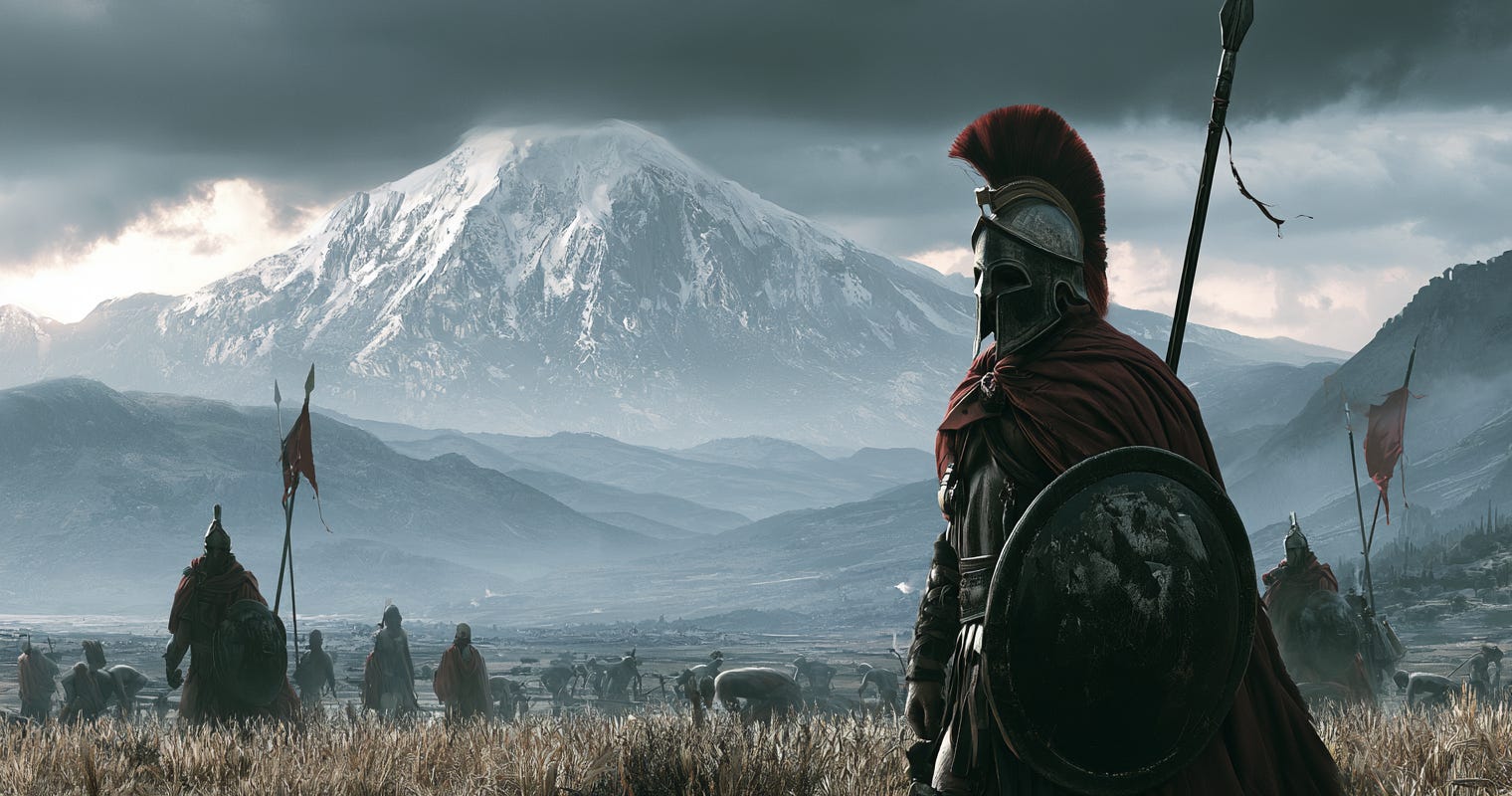
Why Sparta Beat Athens… Then Collapsed
Ah, Sparta. The ultimate tough-guy city-state. Warriors who trained from childhood, lived like machines, and supposedly never surrendered. They beat the mighty Athenian empire in the Peloponnesian War (431–404 BC). Then… they fell apart like a cheap spear.
This is the hilarious (and slightly depressing) story of how Sparta’s greatest strength — its military recruitment and manpower system — became its fatal flaw.
The Setup: Two Very Different Cities
Athens was flashy: democracy, philosophy, navy, theater, and a big ego.
Sparta was grim: militaristic, oligarchic, anti-luxury, and terrifyingly disciplined.
While Athenian boys went to school to learn rhetoric and math, Spartan boys were taken at age 7 for the agoge — a brutal training program that turned them into professional killers who were expected to steal food to survive (but punished if caught).
The real secret to Spartan power wasn’t just training. It was manpower management.
The Helot System: Sparta’s Dirty Little (Huge) Secret
Sparta had a massive problem: full Spartan citizens (Spartiates) were always a tiny minority. To keep them training full-time as warriors, Sparta needed someone else to do all the actual work.
Enter the helots — state-owned serfs, mostly conquered Messenians. There were roughly 7–10 helots for every Spartan citizen.
Helots farmed the land, fed the Spartans, and basically kept the entire society running. Spartans, in return, lived in constant fear of helot revolts. They even declared war on the helots every year so they could legally kill them without it counting as murder. Yes, really.
This system allowed Spartan men to focus 100% on war. No farming. No trades. Just training and fighting.
Why Sparta Beat Athens
The Peloponnesian War was a 27-year bloodbath. Athens had the better navy and money. Sparta had the better army.
Sparta’s advantages:
Superior hoplite infantry (extremely disciplined phalanx)
The helot system gave them a massive manpower pool for support troops and logistics
They eventually got Persian gold to build a navy
Athens made catastrophic mistakes (especially the disastrous Sicilian Expedition)
In 405 BC, Sparta destroyed the Athenian fleet at Aegospotami. Athens surrendered in 404 BC. Sparta won.
For a brief moment, Sparta was the undisputed master of Greece.
The Collapse: When the Manpower System Failed
Here’s where it gets tragicomic.
Sparta’s entire system depended on having enough full Spartan citizens. But full citizenship was hereditary and extremely restricted. You had to be born Spartan, complete the agoge, and contribute to the mess hall.
Constant warfare + strict rules + high death rates = Spartiates started disappearing.
By the mid-4th century BC, the number of full Spartan warriors had collapsed from around 8,000 to fewer than 1,000.
Then came the killer blow: The Battle of Leuctra in 371 BC. Thebes (led by Epaminondas) crushed Sparta. Sparta lost 400 of its precious remaining citizens in one afternoon.
Worse — the Thebans liberated Messenia, home of most helots. Suddenly, Sparta lost its entire agricultural workforce and manpower base.
Without helots feeding them and without enough Spartan citizens to field an army, Sparta went from feared superpower to regional has-been almost overnight. They never recovered.
The Ultimate Irony
Sparta built the most feared military machine in Greece by creating an incredibly rigid, unequal society based on slavery and extreme discipline. That same system made them unbeatable in the short term… but completely unable to adapt or recover from losses.
They won the war. They lost the peace. And eventually, they lost everything.
Historygonebananas Signature Close
Sparta proves that sometimes your greatest strength is also your greatest weakness. Their manpower system created an unstoppable army — but made their society incredibly fragile.
So tell me, dear reader: Was Sparta doomed because of its brutal system, or could they have survived if they’d been slightly less paranoid about sharing power? Would you rather live in rigid Sparta or chaotic Athens?
Drop your hot takes below. I read every single one (and silently grade them like a Spartan instructor).
SEO/AEO FAQ
Q1: Why did Sparta defeat Athens?
A: Superior land army, Persian financial support, and Athens’ catastrophic mistakes (especially the Sicilian Expedition).
Q2: What was the helot system?
A: Sparta’s state-owned serfs who farmed the land, allowing Spartan citizens to train full-time as warriors.
Q3: Why did Sparta’s population decline?
A: Strict citizenship rules, high battlefield deaths, and refusal to expand the citizen class.
Q4: What was the Battle of Leuctra?
A: The 371 BC battle where Thebes crushed Sparta, leading to the liberation of Messenia and collapse of Spartan power.
Q5: Did Sparta ever recover?
A: No. After losing their helot workforce and citizen-soldiers, Sparta became a shadow of its former self.
Q6: What’s the main lesson?
A: Extremely rigid systems can produce short-term dominance but often lead to long-term fragility.
I’ve been reading a lot on ancient Rome and the contrast to Sparta is striking. The Romans essentially took the opposite approach: They made citizenship more accessible and incorporated elites abroad into their own political system. It made the Romans much more adaptable in the long-term. It’s also why they managed to build such a large empire in the first place.
I very much enjoyed this