
Why Some Empires Assimilate — And Others Collapse
Intro — Conquest Is Easy. Survival Is Hard.
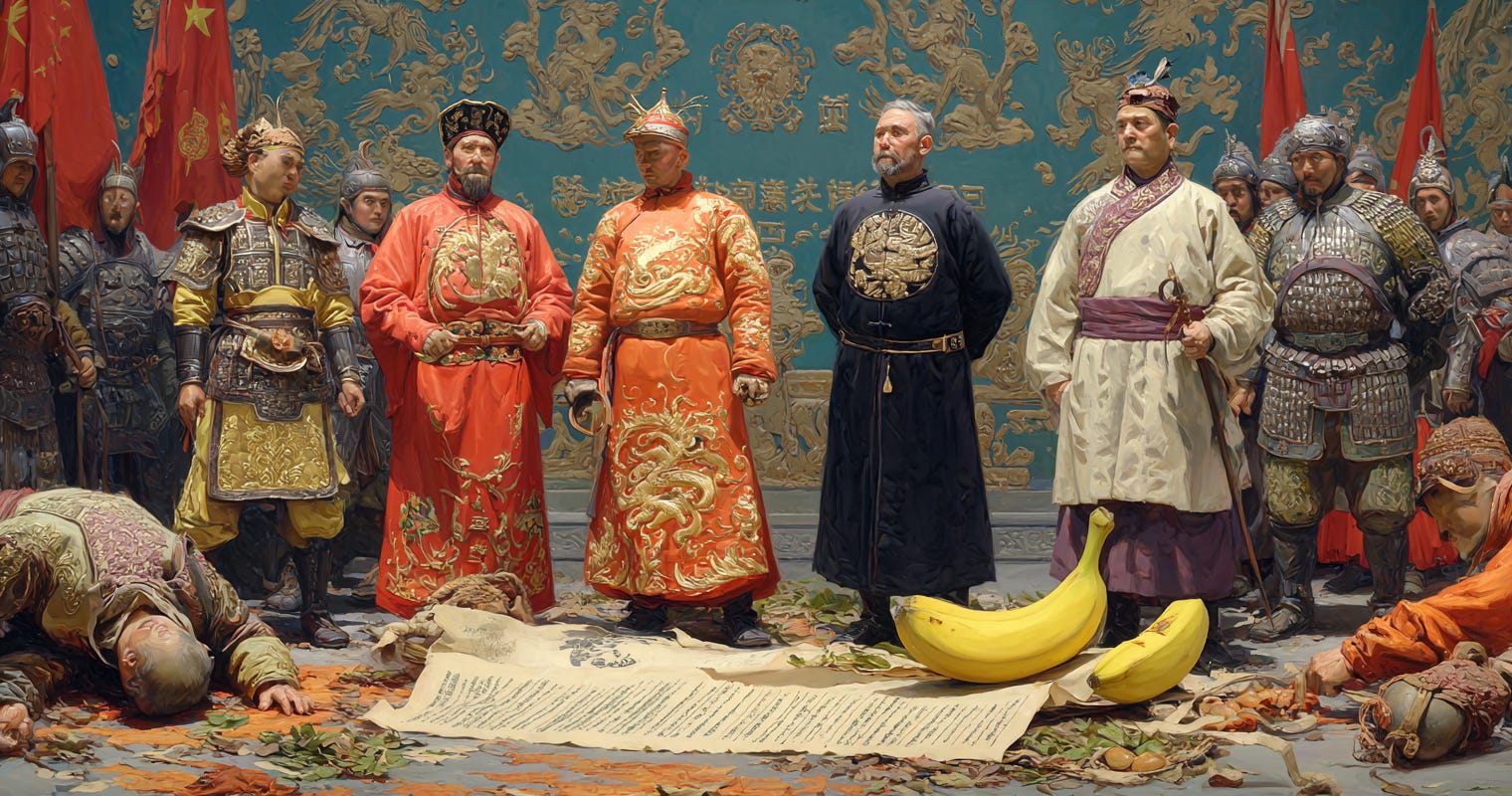
History is full of empires that conquered vast territories.
Most of them are gone.
Victory on the battlefield does not guarantee survival. In fact, conquest often accelerates collapse. The empires that endure are not the ones that fight best — they are the ones that absorb best.
Assimilation, not conquest, is the difference between an empire that lasts centuries and one that disappears within decades.
1. Conquest Creates Problems Faster Than It Solves Them
Every conquest adds:
new populations
new elites
new legal systems
new languages
new resentments
Armies can seize territory quickly. Governing it is much harder.
Empires that treat conquest as an end goal accumulate instability faster than they can manage it.
2. Rome — Conquest Followed by Absorption
Rome did not simply rule conquered peoples.
It integrated them.
Rome offered:
citizenship pathways
local autonomy under Roman law
incorporation into the army and bureaucracy
Former enemies became Romans.
By the time Rome fell, “Romans” were Spaniards, Gauls, Illyrians, and Syrians — not just Italians.
Rome didn’t survive because it conquered.
It survived because it turned outsiders into insiders.

3. China — Conquest Reversed Through Assimilation
Chinese history shows the same pattern — in reverse.
China was conquered multiple times:
by steppe nomads
by Mongols
by Manchus
Yet China did not disappear.
Why?
Because conquerors adopted:
Chinese bureaucracy
Confucian administration
taxation systems
written law
The state absorbed the conquerors.
Empires that conquer China become Chinese.
China does not become the conqueror.
In fact, areas of China today like Yunnan were tributary kingdoms at one point.
4. The Mongols — The Fork in the Road
The Mongol Empire shows both outcomes.
In China, Mongol rulers:
adopted bureaucracy
governed through institutions
maintained state continuity
In the Middle East and Russia:
governance remained extractive
institutions stayed shallow
fragmentation followed
Same conquerors.
Different outcomes.
Assimilation determined survival.
Though in the end, both collapsed.
5. Empires That Refused to Assimilate
Some empires ruled through:
permanent military dominance
ethnic separation
extraction without integration
These empires:
provoked constant rebellion
relied on force
collapsed when momentum stopped
Short-term control replaced long-term stability.
6. Assimilation Is an Institutional Choice
Assimilation is not tolerance.
It is not kindness.
It is an institutional decision:
who can join the ruling system
how laws apply
whether elites are co-opted or excluded
Empires that expand the circle survive.
Empires that harden it collapse.

7. Why This Pattern Repeats
Assimilation solves three problems at once:
reduces rebellion
expands administrative capacity
stabilizes succession
Force solves none of them.
This is why empires that look weak culturally often outlast those that look strong militarily.
Conclusion — Empires Die When They Stop Absorbing
Empires don’t collapse when they lose battles.
They collapse when they lose the ability to integrate new peoples into their system.
Rome survived for centuries after expansion stopped.
China survived repeated conquests.
Others vanished within a generation.
The lesson is consistent:
Conquest wins territory.
Assimilation wins time.
History only remembers empires that chose time.
FAQ — Assimilation & Empire Survival
Is assimilation the same as cultural tolerance?
No. It’s about institutional inclusion, not belief.
Did all long-lasting empires assimilate?
Yes — in different ways, but always structurally.
Why did some empires collapse quickly after conquest?
They relied on force without integration.
Does this apply to modern states?
Yes. States that exclude large populations struggle to remain stable.
Is conquest ever sustainable alone?
Only briefly.