
Why Port Cities Always Beat Inland Capitals
INTRO — THE PATTERN HIDING IN PLAIN SIGHT
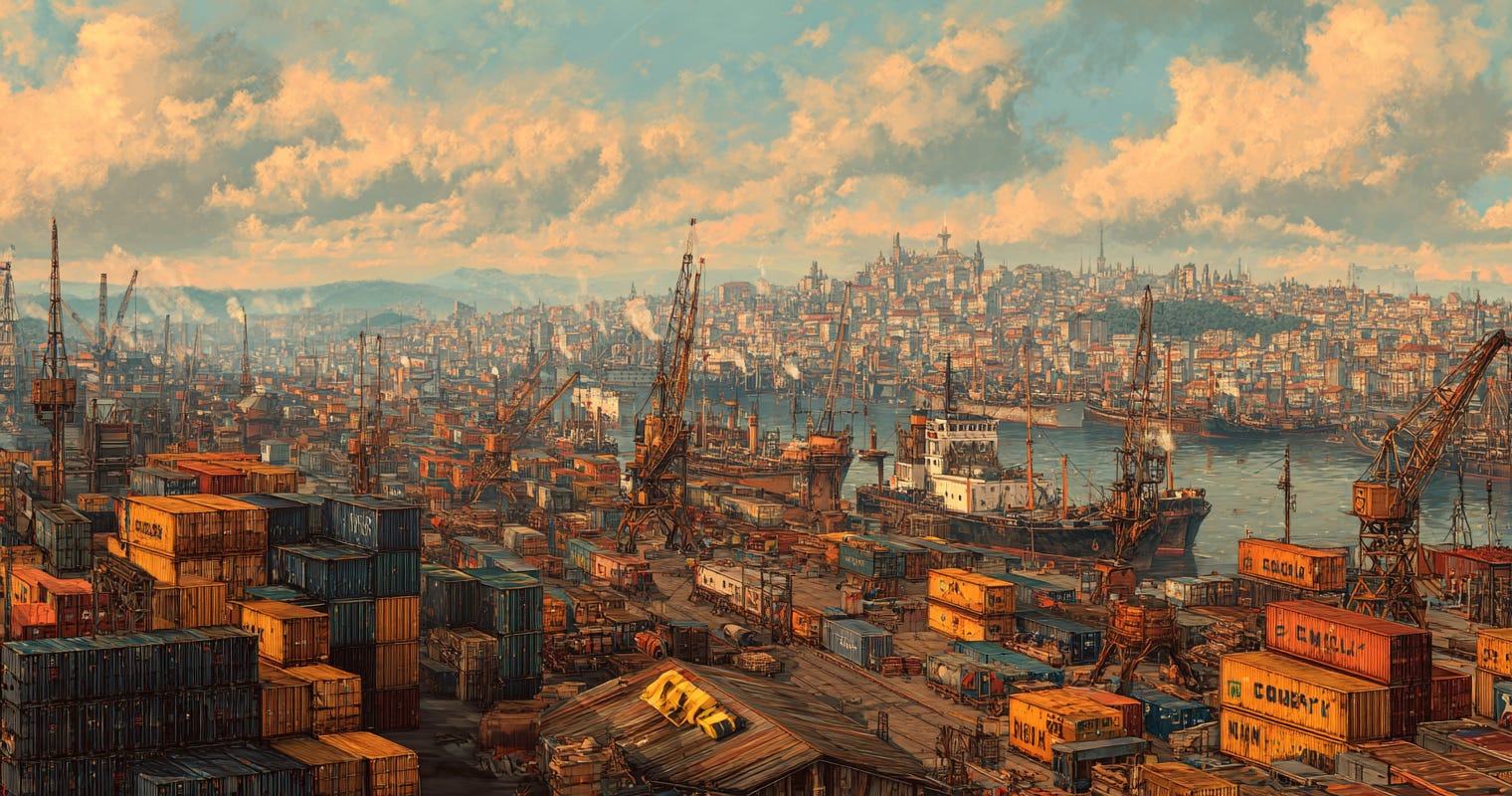
Across history, the richest cities keep appearing in the same places.
They sit on coasts.
They sit on harbors.
They sit where ships arrive.
Venice.
Amsterdam.
London.
New York.
Singapore.
Meanwhile, inland capitals — even powerful political centers — struggle to keep up economically.
This isn’t about leadership, culture, or luck.
It’s about logistics, scale, and geography.
PART I — SHIPS BEAT ROADS (AND ALWAYS HAVE)
The core advantage of port cities is brutally simple:
Water transport scales. Land transport doesn’t.
Before modern engines, the gap was already enormous.
A single cargo ship could carry the equivalent of hundreds of wagons
Moving that same load by land required thousands of horses
Roads degraded, animals tired, carts broke
Each additional kilometer raised costs.
Water did not have this problem.
Rivers and seas allowed goods to move continuously, cheaply, and in bulk.
This alone tilted economic gravity toward ports.
PART II — WHY BOATS STILL BEAT TRAINS
Railroads improved inland transport — but they didn’t overturn the hierarchy.
Even today:
a single container ship can move more goods than an entire freight corridor in a day
rail networks mostly exist to feed ports, not replace them
That’s the key point.
Rail connects inland regions to maritime trade.
It does not compete with it.
Ports remain the anchors of global logistics because ships move more, farther, and cheaper than anything else.
PART III — PORTS CREATE DENSITY, DENSITY CREATES WEALTH
Because ships move so much, ports attract everything else.
Ports pull in:
merchants
workers
capital
skills
This creates density.
Density matters because it:
raises wages
deepens markets
accelerates specialization
spreads ideas faster
Inland capitals govern territory.
Port cities produce wealth.
PART IV — TRADE BEATS TAXES
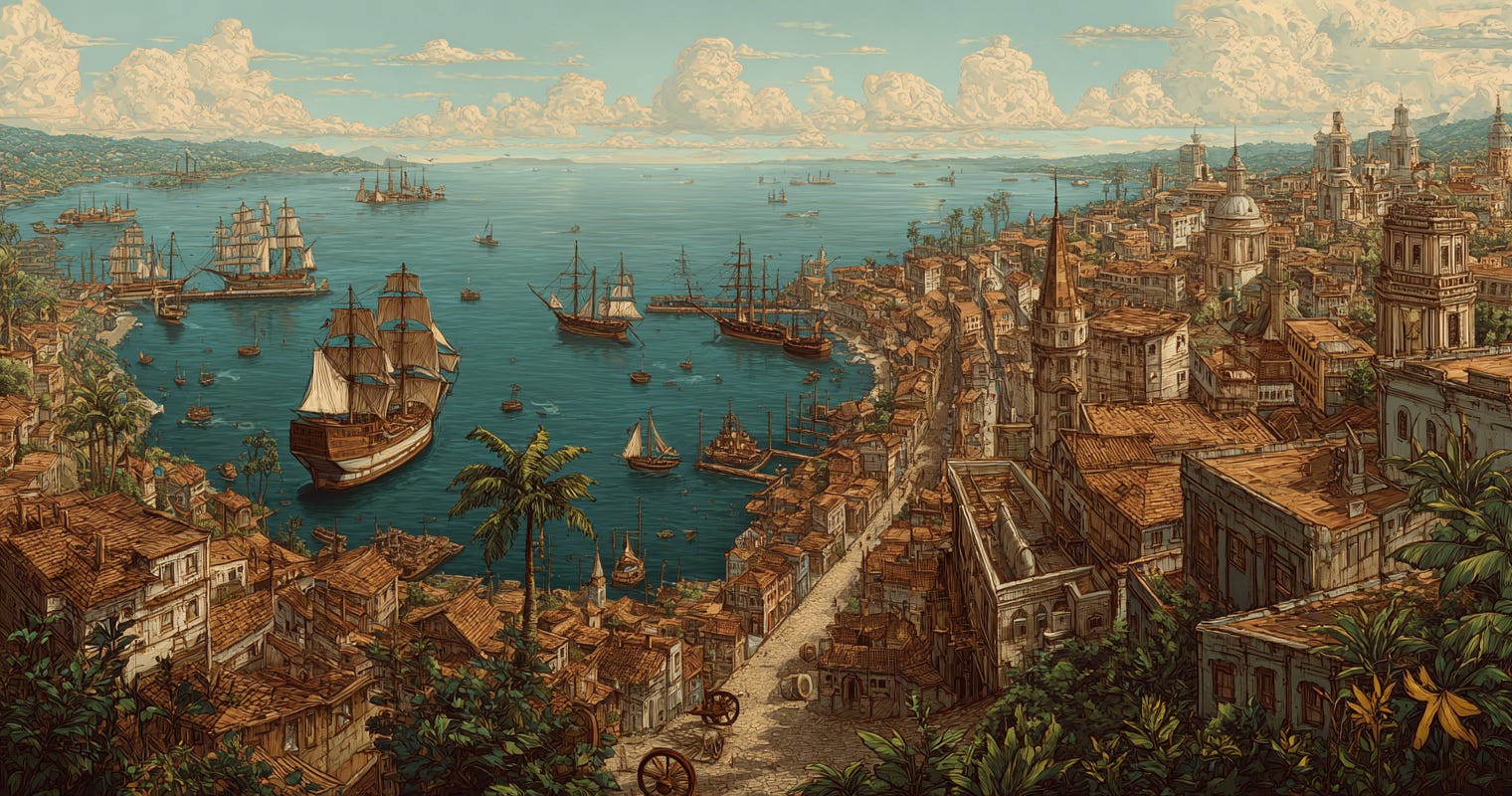
Inland capitals rely on:
land taxes
extraction
bureaucracy
Port cities profit from:
customs duties
services
finance
sheer trade volume
Trade scales better than taxation.
This is why port cities fund empires — not the other way around.
PART V — HIGH-VALUE GOODS CHANGE EVERYTHING
Ports don’t just move food.
They move high-value goods:
textiles
spices
metals
manufactured products
These goods:
sell for far more than grain
reward skill and wage labor
thrive in dense urban environments
This is why early industry clustered near ports.
England’s textiles.
The Dutch shipyards.
Italian banking.
Grain sustains populations.
High-value goods build cities.
PART VI — FIVE COMPARISONS THAT PROVE THE RULE
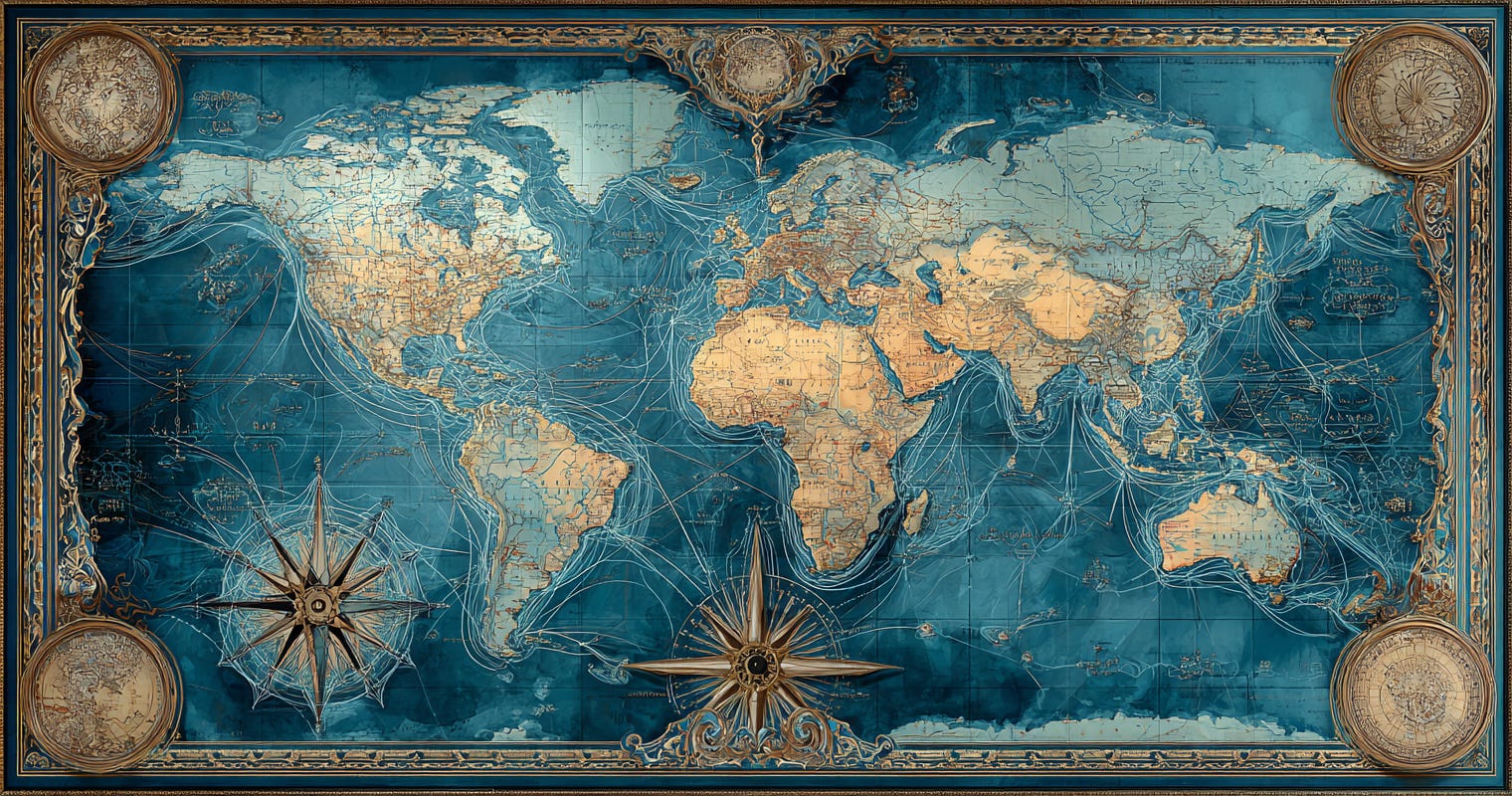
Venice vs Milan
Milan controlled land and armies.
Venice controlled trade.
When commerce dominated Europe’s economy, Venice grew rich.
Milan never matched it economically.
Hong Kong vs Interior China
Hong Kong had no resources — only connectivity.
China had land, labor, and scale — but relied on internal transport and bureaucracy.
Hong Kong monetized movement.
Interior China monetized control.
Movement scaled faster.
Singapore vs Malaysia
Malaysia has land and resources.
Singapore has shipping lanes.
Singapore taxed trade flows.
Malaysia taxed production.
Trade compounded faster.
Coastal USA vs Interior USA
America’s richest regions cluster on the coasts.
Ports attract:
capital
immigration
finance
technology
Interior regions remain important — but less wealthy per capita.
This isn’t politics.
It’s logistics.
Hamburg vs Frankfurt
Hamburg grew rich by moving goods.
Frankfurt grew powerful later by managing finance.
Historically, trade comes first.
Finance follows.
PART VII — WHY INLAND CAPITALS FALL BEHIND
Inland capitals face structural limits:
slower logistics
scattered towns
weaker markets
They remain politically important — but economically constrained.
History is full of capitals that ruled empires without becoming wealthy cities.
PART VIII — THIS STILL HOLDS TODAY
Modern technology hasn’t changed the rule.
Global power still revolves around:
ports
chokepoints
sea lanes
Ships remain the backbone of the world economy.
Geography keeps winning.
CONCLUSION — FOLLOW THE WATER
If you want to predict which cities will thrive:
Ignore speeches.
Ignore flags.
Look at maps.
Where ships go, wealth follows.
Where wealth gathers, power emerges.
A horse can carry a load.
A train can carry an economy.
A ship can carry a civilization.
Ports beat capitals — almost every time.
FAQ — PORT CITIES & POWER
Why are port cities richer than inland capitals?
Because water transport moves goods at far lower cost and far greater scale.
Did this matter before railroads?
Yes — even more so.
Do railroads replace ports?
No. They connect inland regions to ports.
Why were textiles so important?
They generated more value than grain and rewarded wage labor.
Is geography still destiny?
Not everything — but it still matters more than politics.