
Intro — Similar Starts, Very Different Outcomes
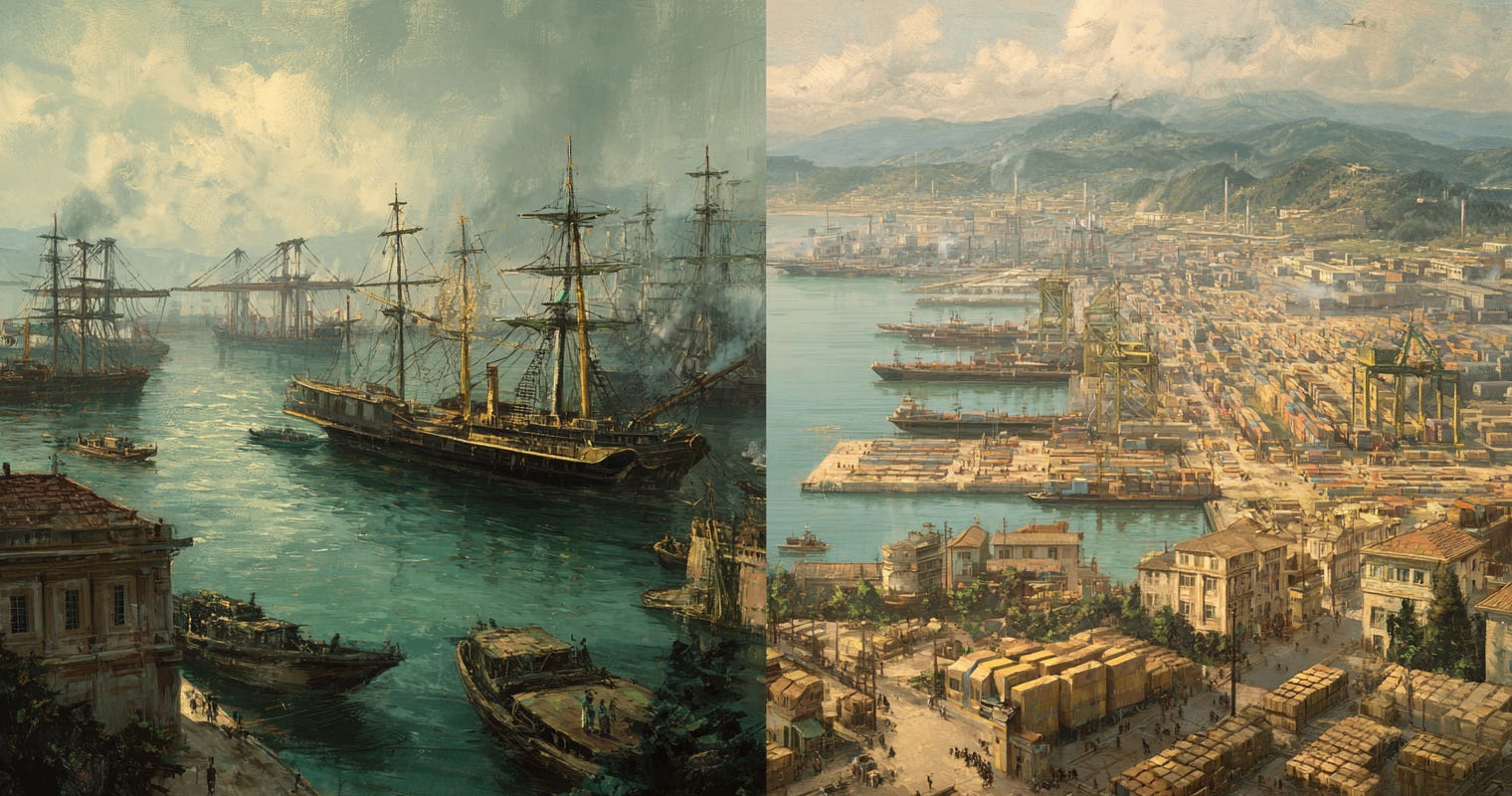
At the start of the 20th century, Latin America and East Asia were not worlds apart.
In some cases, Latin America was ahead.
Argentina rivaled European living standards.
Mexico exported globally.
Brazil had land, scale, and population.
East Asia, meanwhile, was:
poor
war-torn
colonized or semi-colonized
short on land and resources
A century later, the roles reversed.
East Asia surged into industrial and technological leadership.
Latin America stalled in the middle-income range.
The difference wasn’t culture, intelligence, or effort.
It was how scarcity and abundance shaped incentives — and whether growth was forced to compound.
1. Resources Shape Behavior
Latin America entered modern capitalism with something East Asia lacked: resources.
The region had:
fertile agricultural land
minerals
oil
exportable commodities
This made early growth easier.
But it also shaped behavior.
Resource-based growth:
concentrates wealth
creates powerful elites
produces rents instead of productivity
reduces pressure to innovate
When income comes from land and extraction, not factories, the urgency to industrialize weakens.
East Asia had the opposite problem.
It had almost nothing.
2. East Asia’s Core Problem: Survival Without Resources
Most East Asian economies were resource-poor.
Japan lacks oil, iron, and most minerals
South Korea lacks iron ore, coal, and energy
Taiwan has little land or raw materials
Singapore has none
There was no commodity fallback.
East Asia had only one viable path:
import raw materials, add value, export finished goods.
Failure meant stagnation.
Success meant survival.
Scarcity imposed discipline.
3. South Korea — Steel Without Iron, Power Without Oil
South Korea is the clearest example of scarcity-driven industrialization.
After the Korean War, South Korea was extremely poor.
It had:
no iron ore
no oil
no coal
hostile neighbors
Yet it built one of the most advanced industrial economies on Earth.
This was the Miracle on the Han River.
The Korean state:
selected key industries
provided cheap credit
protected firms temporarily
forced exports
Support was conditional.
Firms had to perform or lose backing.
POSCO: Steel Without Resources
POSCO is emblematic.
South Korea had no domestic iron ore — yet built one of the world’s most efficient steel producers.
The government:
financed early construction
guaranteed demand
enforced efficiency
Steel became the base for:
shipbuilding
automobiles
heavy industry
Once steel existed, industrial depth followed.
Samsung: Forced Into Global Competition
Samsung began as a small trading firm.
It became dominant because:
it was pushed into manufacturing
it was forced to export
it competed globally early
Government support existed — but failure was not tolerated.
Protection was temporary.
Competition was permanent.
4. Taiwan — Subsidized Precision, Not Extraction
Taiwan followed a different but related path.
It focused on:
electronics
precision manufacturing
later, semiconductors
The state:
subsidized R&D
built industrial parks
invested heavily in engineering education
TSMC did not emerge accidentally.
It was created deliberately to solve Taiwan’s lack of:
resources
land
strategic depth
Taiwan replaced scarcity with technological specialization.
5. Hong Kong — Laissez-Faire With Perfect Geography
Hong Kong is the exception.
It relied less on industrial planning and more on:
free trade
minimal regulation
entrepreneurial dynamism
But geography did the work.
Hong Kong became:
a shipping hub
a textile exporter
a light manufacturing center
Later, it shifted into:
finance
logistics
services
It never relied on resources — only on trade and position.
6. Singapore — Controlled Capitalism Under Scarcity
Singapore chose controlled growth.
The state:
planned land use
managed labor
built government-linked companies
But it remained:
open to trade
friendly to capital
export-focused
Singapore specialized in:
shipping
refining
advanced manufacturing
finance
Scarcity forced discipline.
Planning replaced chance.
7. Latin America — Agriculture First, Industry Later (If Ever)
Latin America followed a different trajectory.

The region focused on:
agriculture
commodities
resource extraction
This produced:
early wealth
powerful landowners
political capture
Agriculture:
employs fewer people
generates lower productivity growth
does not force innovation
Industrialization was attempted — but often:
protected
inward-looking
disconnected from exports
When firms are shielded from competition, productivity stalls.
8. Corruption, Logistics, and Distance
Resource extraction also created logistical and political problems.
Much of Latin America suffers from:
inland extraction far from ports
difficult terrain
weak transport networks
This reinforced reliance on:
bulk commodities
low value-to-weight exports
East Asia built:
port-centric economies
dense urban manufacturing zones
efficient shipping networks
Value moved easily.
Goods moved cheaply.
9. Why the Gap Kept Growing
Once East Asia built manufacturing ecosystems, growth compounded.
They moved into:
machinery
electronics
advanced technology
Latin America remained vulnerable to:
commodity cycles
price shocks
political resets
Catching up became harder each decade.
Conclusion — Scarcity Forced Success
Latin America had:
land
minerals
opportunity
East Asia had:
pressure
discipline
necessity
Resource abundance made it easier to delay reform.
Resource scarcity made reform unavoidable.
History rewarded the region that had no choice.
FAQ — Latin America vs East Asia
Did Latin America industrialize at all?
Yes, but often in protected, inward-looking ways that limited productivity.
Why did resource-poor countries succeed?
Scarcity forced export discipline and innovation.
What role did governments play in East Asia?
They supported industry but demanded performance.
Is corruption linked to resource extraction?
Often. Rents concentrate power and weaken incentives to innovate.
Can Latin America still catch up?
Yes — but it requires moving beyond extraction and improving logistics and institutions.
The point on inward looking industrialization is key. The model many countries adopted (import substitution) just wasn’t going to work out very well compared to a focus on exports. Interestingly, many Latin American countries (like Brazil) DID see a lot of economic growth for a time, before the weaknesses of import substitution started playing a bigger role.