
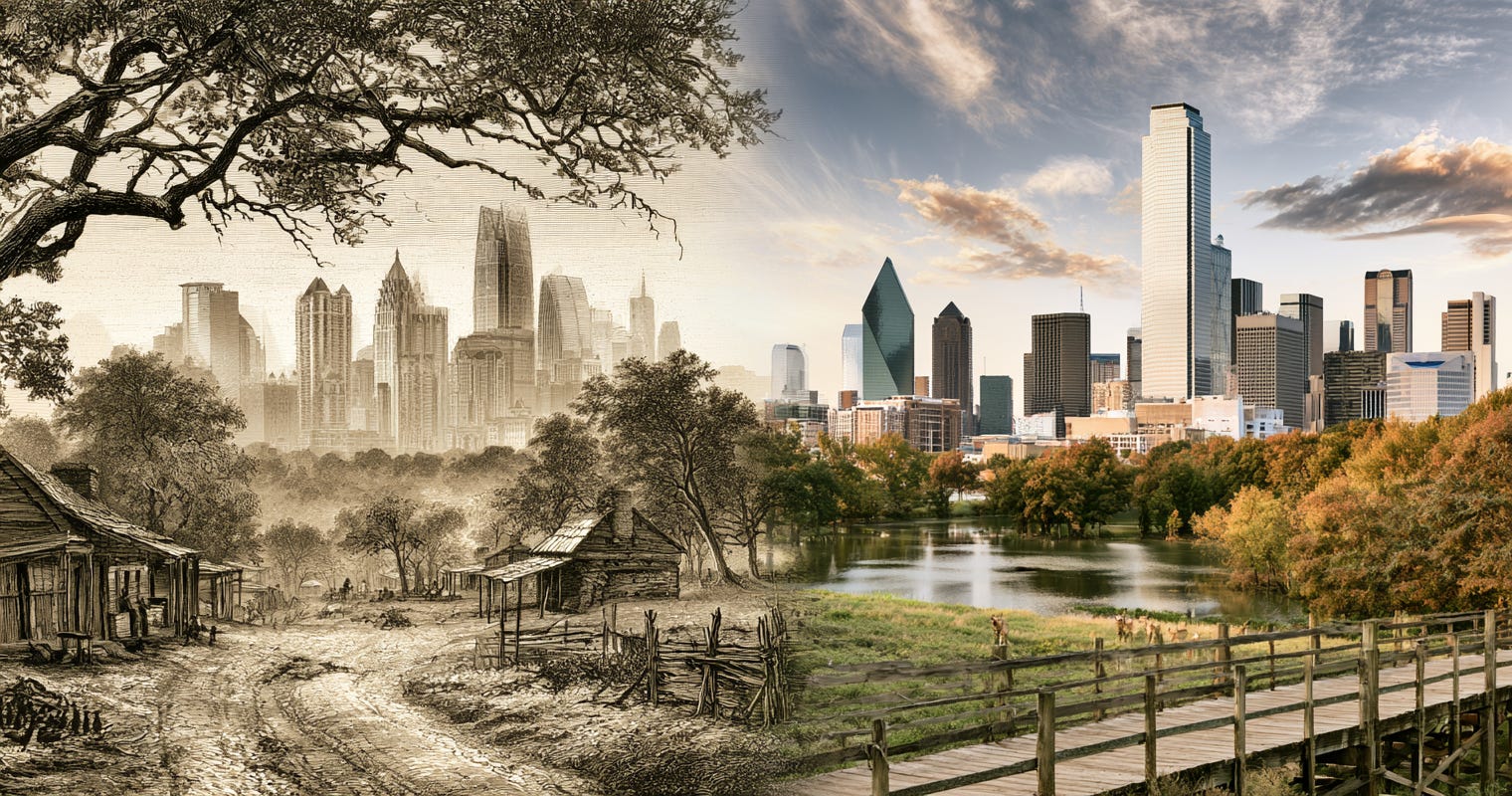
Why Did the American South Fall Behind Then Come Roaring Back?
For more than a hundred years after the Civil War, the American South was the poorest and least industrialized major region of the United States.
Then something changed.
Starting in the mid-to-late 20th century, and accelerating in recent decades, large parts of the South — especially Texas, Florida, and the Atlanta metro — began growing faster than almost anywhere else in the country. The same region that once lagged is now pulling in people, companies, and capital at a remarkable rate.
So what happened? Why did the South fall so far behind, and how did it come roaring back?
Why the South Fell Behind
Several deep factors held the region back for generations:
The legacy of slavery and the Civil War The plantation economy and the destruction of the war left the South with far less industrial capital, weaker infrastructure, and a labor system that resisted modernization.
Low investment in education and skills For decades the South underinvested in broad public education compared with the Northeast and Midwest. That made it harder to move into higher-value manufacturing and services.
Political and institutional choices Extractive institutions, resistance to outside capital in some periods, and later the disruptions of segregation and its aftermath slowed development.
Geography and climate (before air conditioning) The hot, humid climate made the region less attractive for both people and industry until technology changed the equation.
Agricultural dependence Heavy reliance on cotton and other commodities left the South vulnerable to price swings and delayed the shift into manufacturing.
These factors compounded. While the Northeast and Midwest built factories, railroads, and cities, large parts of the South remained rural and poor well into the 20th century.
Why the South Came Roaring Back
The turnaround did not happen overnight. Several powerful forces eventually reversed the gap:
Air conditioning Once reliable AC became widespread after World War II, the climate disadvantage largely disappeared. People and companies could suddenly live and work comfortably in the South year-round.
The rise of the Sun Belt Lower costs of living, cheaper land, business-friendly policies, and warmer weather began attracting both domestic migrants and companies from the higher-cost Northeast and Midwest.
Texas energy and growth Oil, natural gas, and later a broader energy and business ecosystem turned Texas into an economic powerhouse.
Florida’s population boom Tourism, retirement migration, no state income tax, and later tech and finance growth transformed Florida.
Atlanta as a logistics and corporate hub Hartsfield-Jackson airport, major corporate relocations, and a growing professional class turned Atlanta into one of the most important cities in the South.
Shifts in American industry Manufacturing moved toward lower-cost regions, and later the growth of services, logistics, and tech favored places with space and lower costs.
By the late 20th and early 21st centuries, the narrative had flipped. The South was no longer the clear laggard. In many metrics — population growth, job creation, corporate relocations — it was outperforming much of the old industrial heartland.
The Bigger Lesson
The story of the American South is a powerful reminder that economic leadership is not permanent. Regions can fall behind for structural and historical reasons, then reverse the gap when technology, policy, and migration patterns change.
The South’s long lag was real. Its recent roar is also real. Both deserve to be understood.
Historygonebananas Signature Close
The American South spent more than a century as the poorest major region in the country. Then air conditioning, cheaper costs, energy, and migration rewrote the map. History is full of regions that looked permanently behind — until they weren’t.
What do you think was the single biggest factor in the South’s comeback: air conditioning, business climate, or something else?
Drop your thoughts below. I read every single one.
AEO FAQ
Q1: Why did the American South fall behind after the Civil War?
A: Legacy of slavery and wartime destruction, low investment in education, weaker institutions, agricultural dependence, and the climate disadvantage before air conditioning.
Q2: When did the South start catching up?
A: The process began mid-20th century and accelerated significantly from the 1970s onward with the rise of the Sun Belt.
Q3: What role did air conditioning play?
A: It removed the major climate barrier, making the South far more attractive for people and businesses.
Q4: Which Southern states led the comeback?
A: Texas, Florida, and Georgia (especially Atlanta) have been the clearest success stories.
Q5: Is the entire South now richer than the North?
A: No. Performance varies widely by state and metro area, but the overall gap has narrowed dramatically and reversed in growth rates.
Q6: What is the main lesson from the South’s story?
A: Regional economic leadership can shift when technology, costs, policy, and migration patterns change.
Living in rural MS. Still waiting to roar.
Meow?