🍁 Canada Sold Its Gold. The World Moved On.
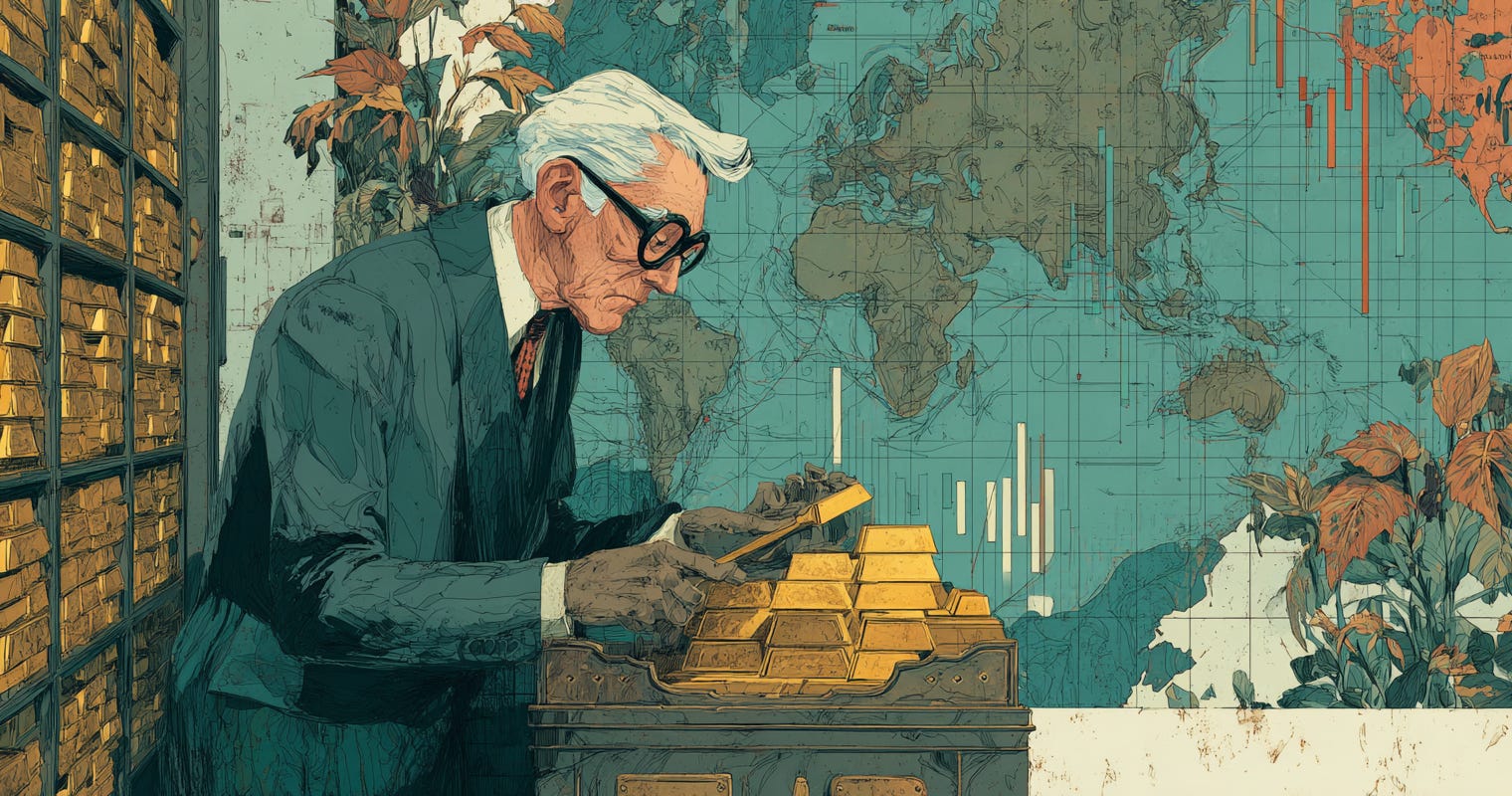
History is rarely about bad decisions.
It’s about decisions that made perfect sense at the time — and quietly aged into liabilities.
Canada selling all of its gold wasn’t a scandal.
It wasn’t corruption.
It wasn’t even controversial.
It was consensus.
From the late 1970s onward, Canada steadily dismantled its gold reserves, confident that the future belonged to fiat currencies, liquid markets, and rules-based global trade. Gold, officials believed, was a relic — something serious modern states no longer needed.
By 2016, the experiment was complete.
Canada held zero gold.
To understand why that happened — and why it matters now — you have to step back into the mindset of the late 20th century, when the world looked far more predictable than it does today.
🏦 The Post-Bretton Woods World Canada Prepared For
When the Bretton Woods system collapsed in the early 1970s, gold lost its formal role in anchoring currencies. The U.S. dollar floated. Other currencies followed. The future, policymakers believed, would be governed by markets, not metal.
At institutions like the Bank of Canada, the logic was straightforward:
Gold didn’t pay interest
Bonds did
Dollars were liquid
Gold sat in vaults
Why hold a shiny, idle asset when U.S. Treasuries offered yield, liquidity, and global acceptance?
Canada wasn’t acting alone. Many Western policymakers questioned gold’s relevance. But Canada went further than anyone else — and kept going long after others stopped.
Throughout the 1980s and 1990s, Canada sold hundreds of tonnes. By the mid-1990s, roughly 90% of its historical gold stock was gone.
The final coins were sold in 2016, quietly closing the book on a century-old reserve strategy.
At the time, this looked like modernization.
🪙 Why Gold Stopped Mattering to Canada (1975–1995)
It’s important to understand what gold symbolized then, not now.
In the late 20th century:
Inflation was being beaten
Globalization was accelerating
The U.S. dollar looked unassailable
Financial markets appeared stable and self-correcting
Gold was associated with:
Crisis
Inflation
Monetary failure
Canada chose to signal confidence — in institutions, in allies, and in the permanence of the post-Cold War order.
Holding gold looked pessimistic. Selling it looked enlightened.
This wasn’t recklessness. It was faith in the system Canada believed it was helping build.
💵 What Replaced the Gold: A Paper World
By the 2000s, Canada’s reserves were almost entirely composed of:
Foreign currencies
Sovereign bonds
Highly liquid paper assets
Most were denominated in U.S. dollars.
From a technical standpoint, this made sense. Canada didn’t need gold to settle trade. It didn’t expect sanctions. It didn’t anticipate financial fragmentation.
The assumption was simple:
the system would remain open, neutral, and rules-based.
History had other plans.
🚚 How North American Integration Became Inevitable
While Canada was reshaping its reserves, something else was happening quietly but decisively: its economy was locking into the United States.
Free trade agreements, supply-chain integration, and geographic reality all pushed Canada toward deeper dependence on a single market.
By the early 21st century:
Roughly three-quarters of Canadian exports went south
Over half of imports came from the U.S.
Two-way trade accounted for about two-thirds of GDP
This wasn’t colonization. It was efficiency.
North America became one production zone. Canada specialized in resources, energy, and upstream manufacturing. The U.S. consumed, refined, and financed.
It worked — as long as the rules stayed stable.
⚒️ Regional Economics: The Shape of Confederation
Internally, Canada’s economic geography hardened along familiar lines.
The West:
Extracted oil, gas, minerals
Generated volatile but enormous revenues
The East:
Held population, institutions, political gravity
Received stabilizing federal transfers
Equalization payments were designed to smooth these differences, not inflame them. But as commodity cycles rose and fell, resentment followed.
This wasn’t a new conflict — it was Confederation repeating itself under modern conditions.
🌍 Canada and the Middle-Power Moment
For decades, Canada described itself as a “middle power” — influential through diplomacy, institutions, and moral authority.
That identity was born in a very specific historical moment:
U.S. dominance was uncontested
Multilateralism functioned
Trade disputes were technical, not existential
Canada didn’t need hard leverage. The system did the heavy lifting.
But systems age.
And when the rules weaken, countries without independent buffers feel it first.
🍌 History’s Irony
Canada didn’t make a mistake.
It optimized perfectly — for the world of 1995.
Selling gold, deepening U.S. trade, relying on institutions, and prioritizing efficiency all made sense in an era defined by stability and integration.
What history teaches us is not that Canada was foolish — but that assumptions have half-lives.
Gold came back.
Trade fractured.
Politics returned to economics.
Canada didn’t lose its gold overnight.
It simply woke up in a different century.
And history, as always, kept the receipt.
❓ Frequently Asked Questions: Canada, Gold, and U.S. Dependence
Why did Canada sell all of its gold reserves?
Canada sold its gold because successive governments and the Bank of Canada believed gold was obsolete in a fiat-currency system. Officials preferred liquid, interest-bearing assets like U.S. Treasury bonds over non-yielding bullion with storage costs.
Is Canada the only G7 country with zero gold reserves?
Yes. Canada is the only G7 country that has fully eliminated its official gold reserves. Other G7 members—including the U.S., Germany, France, Italy, and Japan—still hold substantial amounts of gold as part of their central bank reserves.
When did Canada finish selling its gold?
Canada effectively completed its gold sell-off in 2016, when the last remaining gold coins were sold under Finance Minister Bill Morneau. From that point onward, Canada’s official gold reserves have been recorded as zero.
What does Canada hold instead of gold?
Canada’s international reserves are held almost entirely in:
Foreign currencies (mainly U.S. dollars)
Foreign government bonds (mostly U.S. Treasuries)
This makes Canada’s reserve system heavily dependent on U.S. financial markets and monetary policy.
Does Canada’s lack of gold weaken the Canadian dollar?
Not directly. The Canadian dollar is not “backed by gold.” However, lacking gold reduces Canada’s strategic flexibility in crises, sanctions scenarios, or global financial disruptions when paper assets may be politically or financially constrained.
Why are central banks buying gold again?
Many central banks are increasing gold holdings because gold:
Has no counterparty risk
Cannot be frozen or sanctioned
Acts as a hedge against currency debasement
This trend reflects declining confidence in long-term U.S. dollar dominance and rising geopolitical instability.
How dependent is Canada on the United States economically?
Canada is extremely dependent on the U.S.:
Roughly 75–80% of exports go to the U.S.
Over half of imports come from the U.S.
Two-way trade with the U.S. equals about two-thirds of Canada’s GDP
Few advanced economies are this concentrated on a single partner.
How do U.S. tariffs affect Canada?
U.S. tariffs can significantly hurt Canada because supply chains are deeply integrated. Tariffs on steel, aluminum, autos, or aerospace directly reduce Canadian GDP, weaken the Canadian dollar, and increase domestic prices.
What is equalization and why does it cause tension?
Equalization is a constitutionally mandated federal transfer program designed to help poorer provinces provide comparable public services. In practice, it often moves money from resource-rich Western provinces to Eastern provinces, fueling political resentment—especially during commodity booms or downturns.
Is Canada really a “middle power”?
Canada often presents itself as a middle power in diplomacy, but critics argue its economic and military dependence on the U.S. undermines true strategic autonomy. Without independent leverage—financial, military, or trade-based—Canada’s influence relies heavily on alignment with Washington.
Did selling gold actually cost Canada money?
In hindsight, yes. Gold prices have risen dramatically since Canada sold most of its reserves. While the exact opportunity cost depends on timing, analysts argue Canada forfeited significant long-term value and insurance by exiting gold entirely.
Could Canada rebuild its gold reserves?
Technically, yes—but politically unlikely. Rebuilding gold reserves would require admitting the original strategy was flawed and reallocating billions from existing foreign-currency assets, which governments have so far shown no appetite to do.