
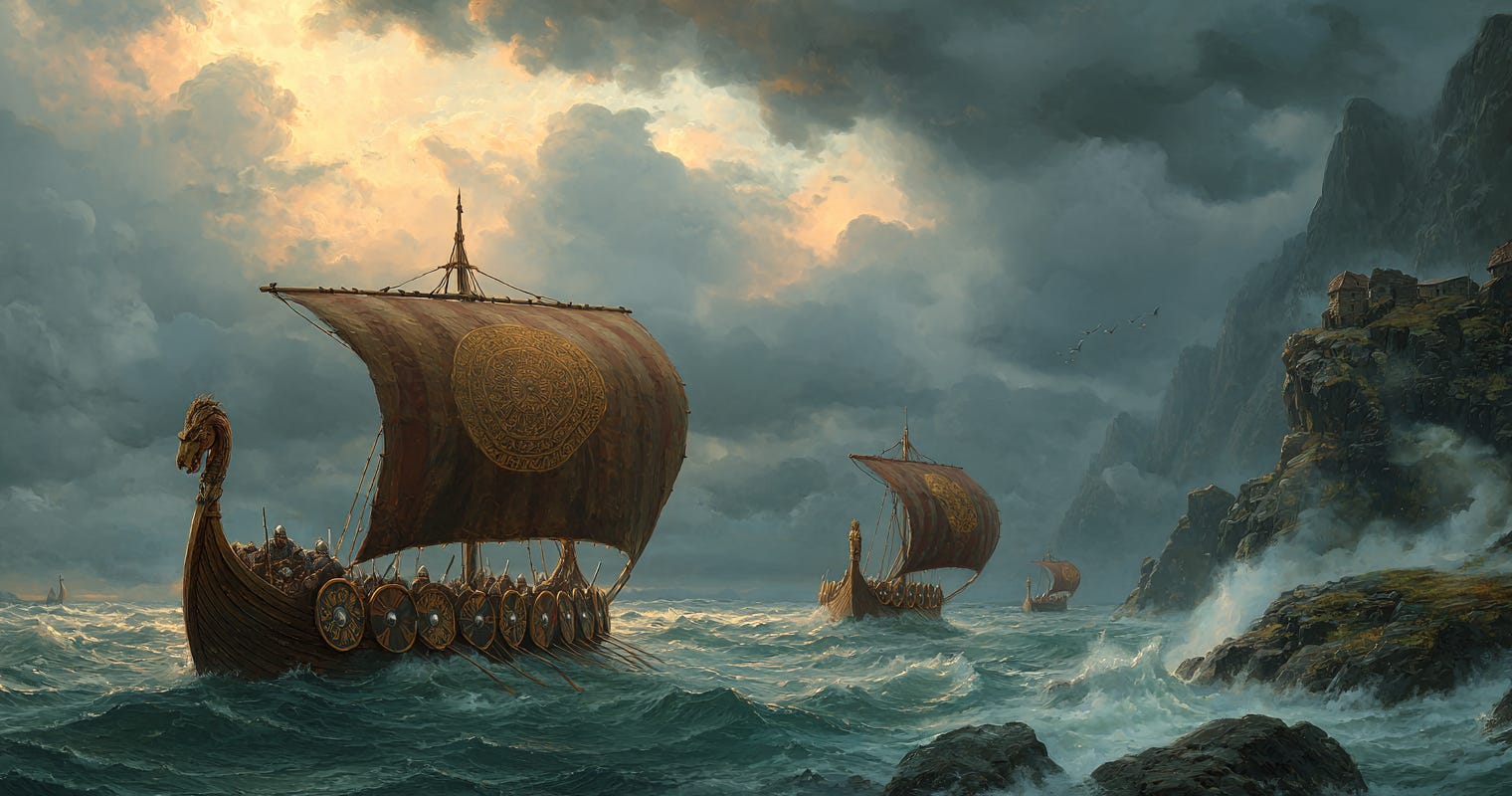
INTRO — THE AGE THAT CHANGED EUROPE’S MAP
When most people hear “Vikings,” they picture horned helmets (which they never wore), screaming berserkers (they existed, but rarely), and ships full of blond giants crashing into villages for loot.
That version sells movie tickets.
It doesn’t explain why this era mattered.
Between 793 and 1066, Viking expansion ripped apart the old order of Europe — and then stitched it back together in new shapes.
Vikings didn’t simply raid.
They created cities, markets, kingdoms, and networks that connected the edges of the known world.
The Viking Age wasn’t a brief eruption of violence — it was a centuries-long rebalancing of power.
The Norse didn’t just attack Europe.
They changed it.
PART I — THE WORLD BEFORE THE VIKINGS ARRIVED
Europe in the early 8th century was fragile:
The Carolingian Empire was powerful but overstretched.
England was divided into small, quarrelsome kingdoms.
Ireland had no unified state.
Slavic regions were fragmented.
The Byzantine Empire was declining.
Long-distance trade had collapsed after Rome.
In this vacuum, Scandinavia did something surprising:
It exploded outward.
Not because its people loved violence — they loved land, silver, trade, opportunity, and social mobility.
Viking society was dynamic.
Europe, by comparison, was brittle.
When a dynamic society meets a brittle one, history bends.
PART II — RAIDERS: THE FIRST WAVE
The “official” start of the Viking Age is 793, when Norse raiders attacked the monastery at Lindisfarne in Northumbria.
Why monasteries?
Because:
they held gold
they held silver
they held manuscripts
they had no walls
monks didn’t fight
For Scandinavians hungry for wealth after harsh winters, a monastery was a jackpot.
But raids weren’t random.
They were reconnaissance.
Raids taught the Norse:
where the rivers ran
where the towns were
who was weak
who might pay tribute
who might trade
Raiding was a scouting mission for bigger ambitions.
PART III — TRADERS: HOW THE VIKINGS GOT RICHER THAN KINGS
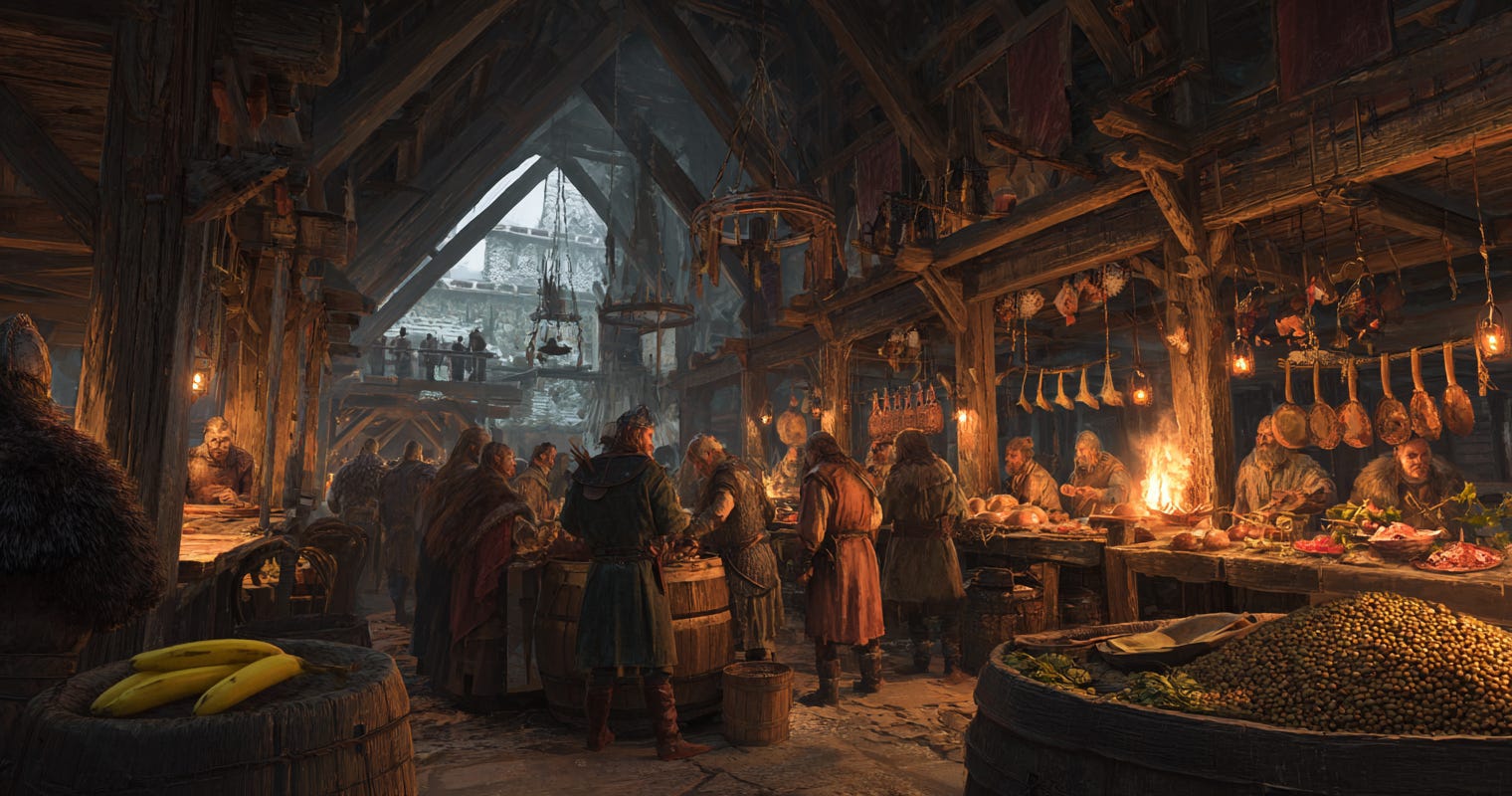
Every Viking raider was also a merchant in the off-season.
The Norse traded:
furs
iron
timber
amber
weapons
slaves (a brutal but major part of the economy)
In return, they wanted:
silver
spices
silk
wine
glass
coins (Arab and Byzantine coins flooded Scandinavia)
The Vikings connected:
the British Isles
France
Iberia
North Africa
the Islamic world
Byzantium
the Slavic world
the Baltic
Scandinavia itself
The Viking trade network was more global than any European state of the time.
They weren’t just raiders.
They were brokers of a reborn international economy.
PART IV — SETTLERS: THE VIKINGS WHO STAYED
Raiding brought wealth.
Settling brought power.
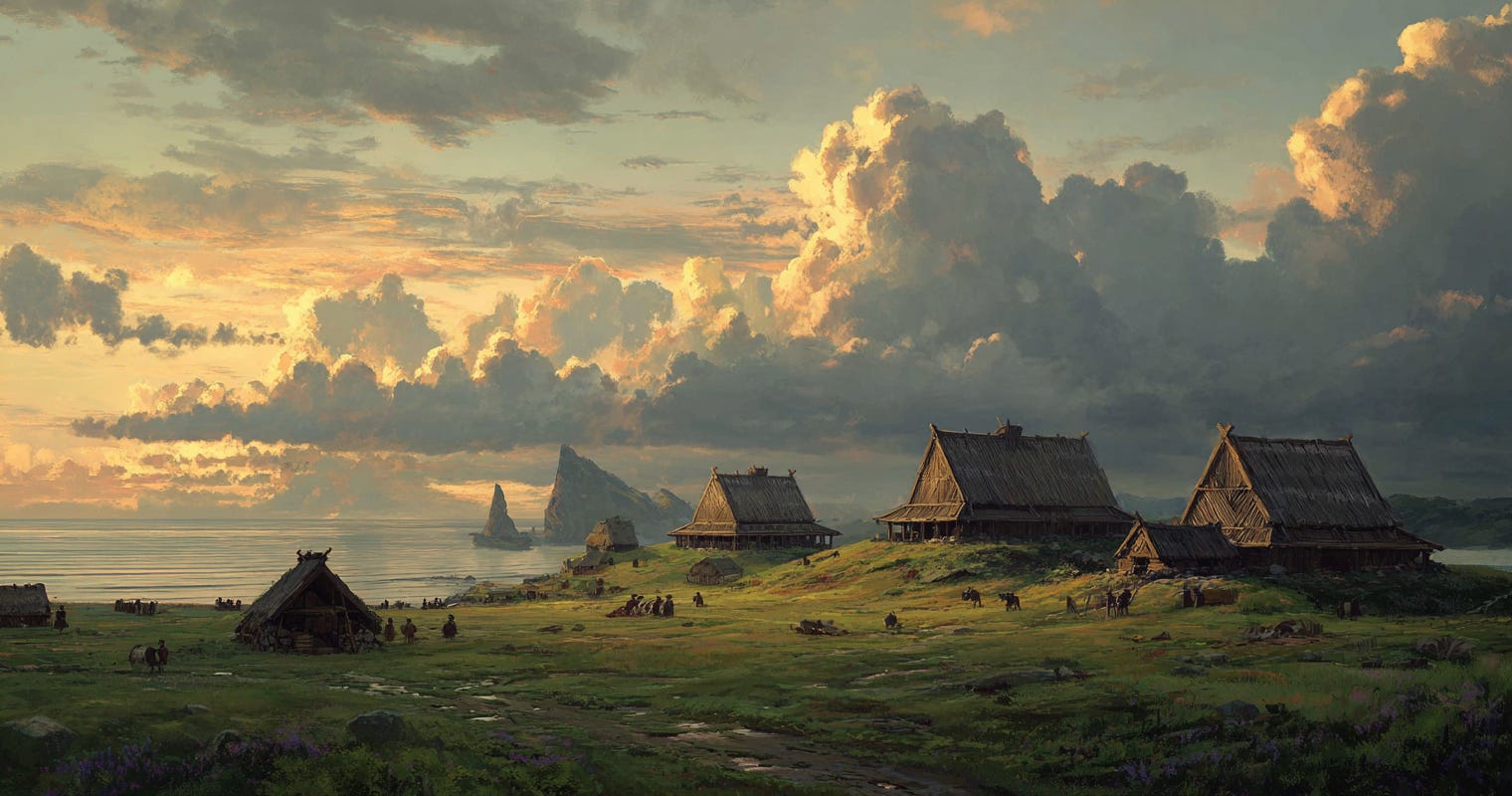
And everywhere Vikings settled, they reshaped the land.
1. In England
The “Danelaw” (Viking-controlled England) created cities such as:
York (Jórvík)
Lincoln
Nottingham
Leicester
Derby
They introduced:
new farming tools
new legal customs
new trade patterns
a culture of towns rather than scattered villages
English identity today contains as much Danish DNA as Anglo-Saxon.
2. In Ireland
The Vikings founded Dublin, Waterford, Cork, and Limerick — cities that still define Ireland.
Before the Norse, Ireland had no urban centers at all.
3. In France
In 911, the French king gave Viking leader Rollo land in exchange for peace.
That land became Normandy — and the Normans later conquered:
England (1066)
Sicily
Southern Italy
Parts of the Middle East (Crusader States)
The Vikings didn’t disappear.
They rebranded.
4. In Eastern Europe
Vikings (called Varangians) traveled rivers deep into Slavic territory.
They founded:
Novgorod (important Russian city)
Kiev (birthplace of Ukrainian and Russian statehood)
These Viking settlers became the Rus, giving Russia its name.
5. In the North Atlantic
The Vikings pushed farther than any Europeans before them:
Iceland
Greenland
Vinland (Newfoundland, Canada)
Leif Erikson reached North America 500 years before Columbus.
PART V — WARFARE: FEWER HOLLYWOOD AXES, MORE STRATEGY
Vikings were not mindless berserkers.
They were professionals.
Their advantages included:
1. Superior ship technology
longships
shallow drafts
fast speeds
river + sea capability
They could attack anywhere.
Even Paris.
2. Flexible battle tactics
They didn’t fight in rigid lines like Anglo-Saxons.
They used mobility, small units, and surprise.
3. Strong household armies
Lords kept private warriors called húskarlar, elite professional fighters.
4. Brutal but strategic terror
Burning villages sent messages:
“Pay tribute or this happens again.”
It worked.
PART VI — CULTURE: MORE LITERATE AND ARTISTIC THAN PEOPLE THINK
Vikings get a reputation for violence — but their culture was surprisingly sophisticated.
1. Literature
Icelandic sagas are some of the finest medieval prose works.
They preserve family histories, feuds, explorations, and political drama.
2. Art
Viking art was:
geometric
interlaced
symbolic
beautiful
Their jewelry, wood carvings, and weapon craftsmanship were world-class.
3. Religion
Their myths — Odin, Thor, Loki — are not children’s stories.
They are complex cosmological narratives about fate, chaos, honor, and death.
Norse culture had depth.
Its image today is a caricature.
PART VII — WHY THE VIKING AGE ENDED
The Viking Age ended not because they lost power…
…but because Europe adapted.
1. Kings got stronger
England united.
France centralized.
The Holy Roman Empire reinforced its borders.
Strong states are hard to raid.
2. Christianity spread to Scandinavia
Conversion produced:
less raiding
more trade
international alliances
A Christian Scandinavian king couldn’t raid Christian monasteries without consequences.
3. The economy shifted
Agriculture improved.
Silver imports slowed.
Mercenary work became more profitable than raiding.
4. Vikings became locals
Normans in France
Rus in Kiev
Danes in England
Norse in Ireland and Scotland
Icelandic commonwealths
The Vikings didn’t disappear.
They integrated.
CONCLUSION — THE VIKINGS DIDN’T JUST INVADE EUROPE. THEY HELPED BUILD IT.
The Viking Age is usually told as a story of barbarism crashing into civilization.
The reality is reversed.
Europe in the Early Middle Ages was fragmented, isolated, and slow.
The Vikings reconnected it.
They:
restarted long-distance trade
injected new technology
opened new routes
founded new cities
influenced languages
built new states
reshaped political boundaries
They accelerated the formation of medieval Europe.
History isn’t shaped only by empires.
Sometimes it is shaped by outsiders who force the world to evolve.
The Vikings were those outsiders — and Europe was never the same again.