
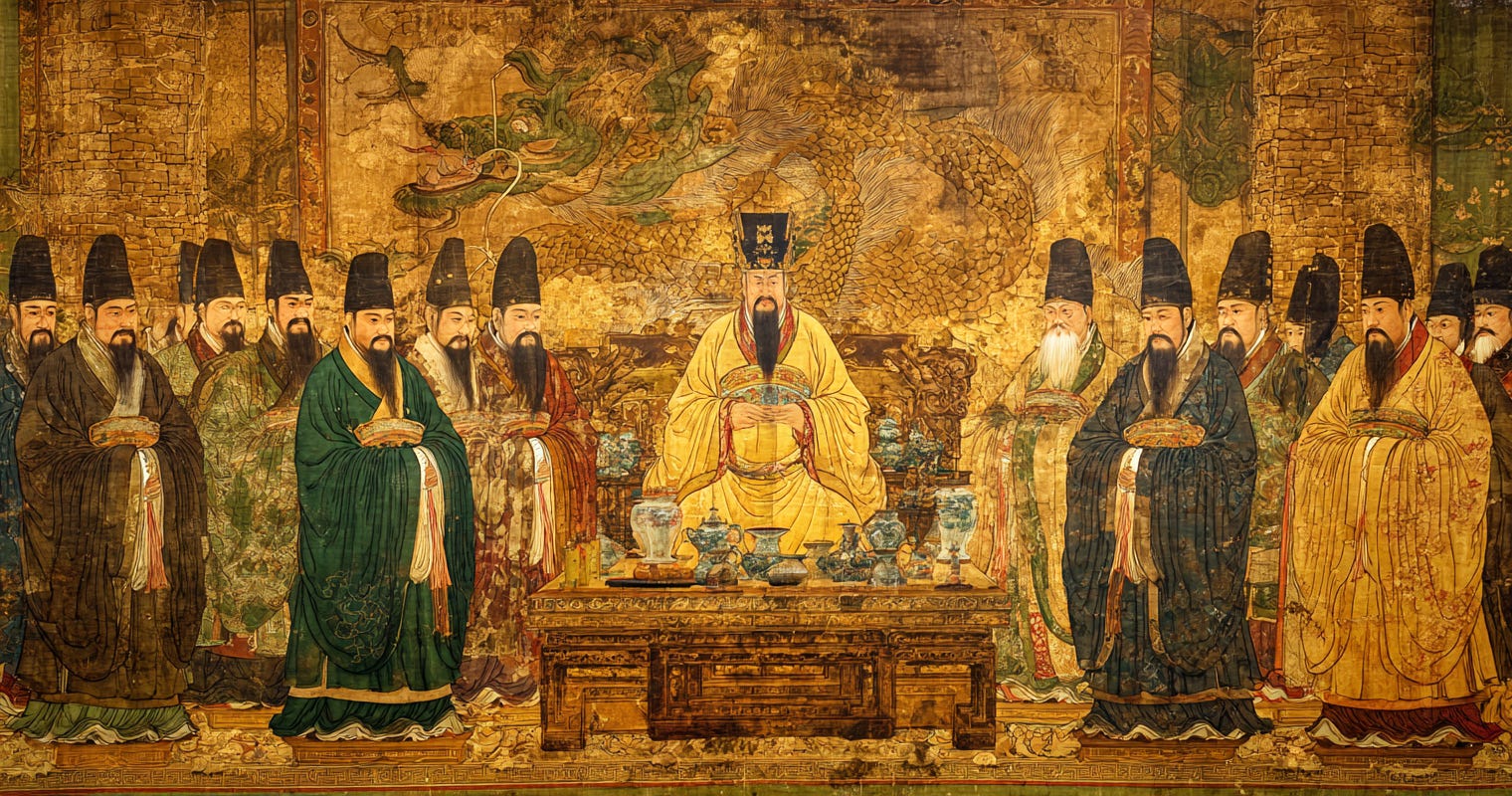
INTRO — THE EMPIRE THAT DEFINED CHINESE CIVILIZATION
In the year 618, China didn’t look destined for greatness.
The Sui Dynasty had collapsed under heavy taxes, failed wars with Korea, and massive rebellions. Millions died. The empire fractured. The Mandate of Heaven seemed lost.
Then the Tang rose.
What followed was not just a dynasty — it was a transformation.
For nearly 300 years, China became:
the world’s richest economy
the most populated civilization
the most advanced scientific powerhouse
the diplomatic center of Asia
the cultural trendsetter of the known world
The Tang Dynasty wasn’t merely strong — it was magnetic.
Its ideas, fashions, religions, and technologies flowed across the Silk Road like water.
This is the story of the golden age that defined East Asia.
PART I — THE RISE OF A NEW EMPIRE
The Tang began with Li Yuan, a nobleman who rebelled against the collapsing Sui.
Yet it was his son, Li Shimin, who truly built the dynasty.
Shimin was brilliant, ruthless, and charismatic.
In 626, he executed his rivals (including his own brothers) in the Xuanwu Gate Incident and took the throne as Emperor Taizong.
Under Taizong, the Tang became a model of governance:
reduced taxes
restored farmlands
reformed laws
expanded infrastructure
stabilized borders
revived the Silk Road
He built a government that was both powerful and flexible — the ideal engine for growth.
Within a generation, the Tang ruled an empire stretching from the Korean Peninsula to Central Asia.
China had not been so powerful since the Han Dynasty.
PART II — CHANG’AN: THE GREATEST CITY ON EARTH
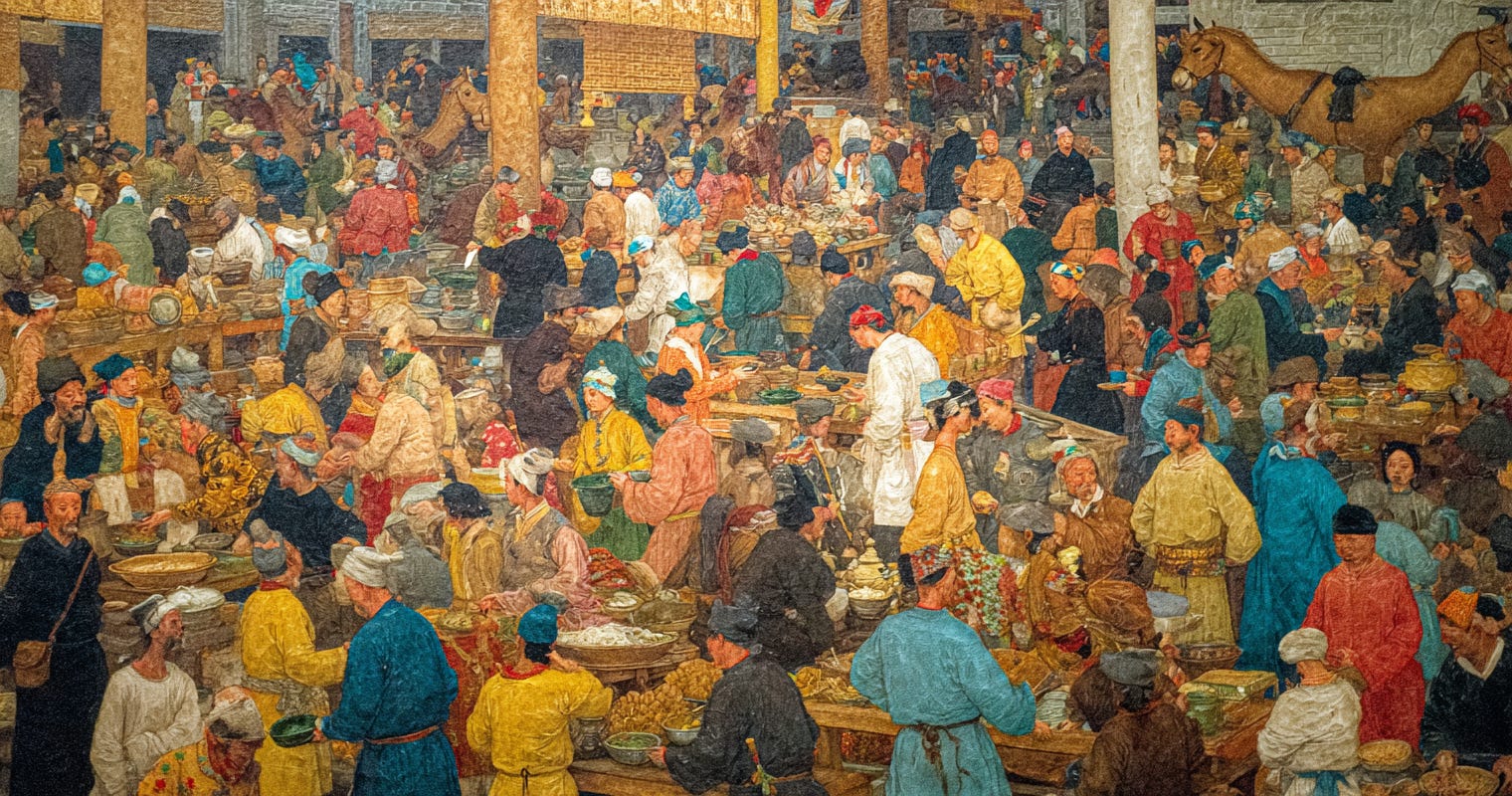
At the heart of this empire stood Chang’an, one of the most extraordinary cities in world history.
It was:
a metropolis of up to 2 million
larger than Constantinople, Baghdad, or any European capital
perfectly grid-planned
full of markets, temples, theaters, and embassies
home to Persians, Turks, Indians, Arabs, Koreans, Japanese, and more
Foreign merchants walked its streets daily.
Students from Japan and Korea studied in its academies.
Monks from India translated Buddhist sutras.
Dancers from Central Asia performed in its taverns.
Chang’an wasn’t a Chinese city.
It was an Asian city.
A global capital long before globalization existed.
PART III — CULTURE: POETRY, MUSIC, ART & FASHION EXPLODED
The Tang Dynasty produced cultural giants whose influence echoes today.
Poetry
Tang poetry is still memorized by schoolchildren across East Asia:
Li Bai — the drunken immortal who wrote in flashes of brilliance.
Du Fu — the realist poet who captured war, suffering, and humanity.
Wang Wei — the painter-poet of Buddhist stillness.
No other era in Chinese history produced so many literary titans at once.
Art & Painting
Tang artists blended:
Chinese brushwork
Buddhist imagery
Persian motifs
Central Asian clothing
Silk Road themes
Result: a vibrant art style full of color and cosmopolitan energy.
Fashion & Music
Tang women wore bold, colorful dresses influenced by Persian and Turkic styles.
Court music featured lutes, harps, drums, and foreign rhythms.
The empire wasn’t culturally conservative —
it was proudly hybrid.
PART IV — RELIGION: A SPIRITUAL RENAISSANCE
The Tang Dynasty was surprisingly open to foreign religions.
Buddhism
This was Buddhism’s golden age in China.
Monks like Xuanzang traveled to India, returned with hundreds of texts, and reshaped Chinese Buddhism.
Daoism
Supported by the Tang royal family, Daoism thrived and influenced medicine, art, and philosophy.
Foreign Faiths
Tang China welcomed:
Zoroastrianism
Nestorian Christianity
Judaism
Manichaeism
Islam
The empire didn’t fear foreign ideas.
It absorbed them.
PART V — THE SILK ROAD: CHINA’S GATEWAY TO THE WORLD
Under the Tang, the Silk Road reached its peak.
Caravans from:
Sogdia
Persia
Arabia
Tibet
Central Asia
India
all flowed into Chang’an.
China exported:
silk
porcelain
paper
medicine
art
tea
It imported:
horses
glassware
spices
precious stones
textiles
new technologies
The Tang economy wasn’t isolated —
it was global.
PART VI — MILITARY POWER: A MULTI-ETHNIC IMPERIAL ARMY
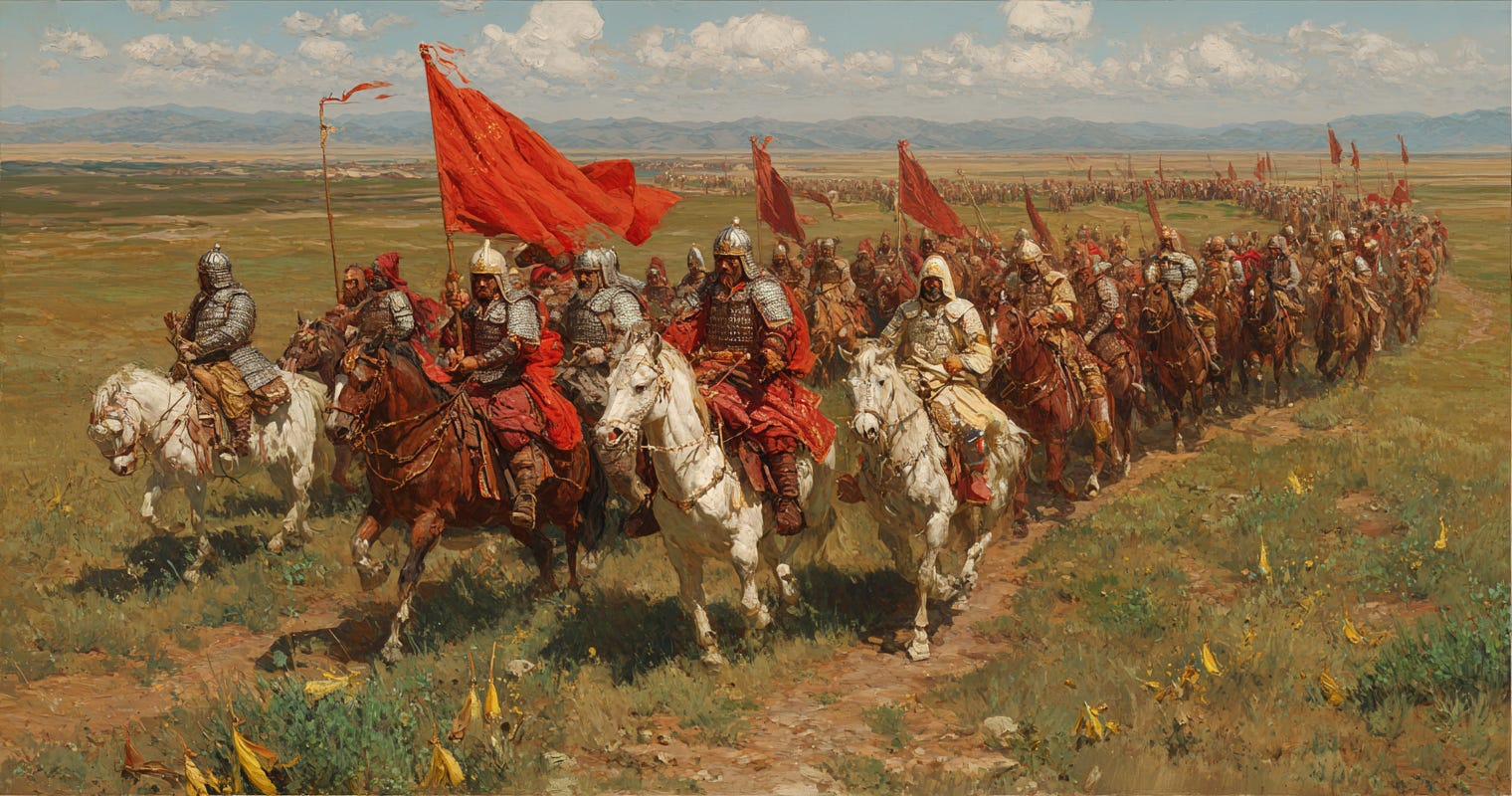
Tang China fielded one of the best armies of the medieval world.
What made it special?
1. Multi-ethnic composition
The Tang recruited:
Turks
Sogdians
Tibetans
Mongols
Koreans
Chinese soldiers
It was an empire of diversity, not purity.
2. The Fubing System
A militia-style system where farmers trained part-time as soldiers.
Cheap, effective, and loyal.
3. Cavalry dominance
Tang cavalry was elite, especially in Central Asian campaigns.
4. Major victories
The Tang defeated:
Eastern Turks
Tibetans
Khitans
Western Turks
They even rivaled the Islamic Caliphate for control of Central Asia.
PART VII — WOMEN IN THE TANG: A RARE ERA OF FREEDOM
Tang women had freedoms unmatched in many other periods of Chinese history.
They:
rode horses
played polo
wore foreign fashions
owned property
led business operations
participated in culture
And of course, the Tang produced China’s only female emperor:
Wu Zetian
A brilliant, ruthless ruler who expanded the empire, strengthened the civil service, and dominated court politics.
Tang China wasn’t just open to foreign ideas —
it was open to strong women.
PART VIII — DECLINE: THE AN LUSHAN REBELLION
No golden age lasts forever.
In 755, General An Lushan, a mixed Sogdian-Turkic officer, launched a massive rebellion.
It devastated the empire:
13–36 million died
The economy collapsed
Central authority weakened
The Fubing system broke
The Silk Road faltered
Foreign religions faced backlash
China survived —
but it was changed forever.
The Tang limped on for another century, but its golden age was over.
CONCLUSION — WHY THE TANG DYNASTY STILL MATTERS
If you want to understand Chinese civilization, start with the Tang Dynasty.
It was:
multicultural
artistic
powerful
innovative
global
confident
open to the world
No other era balanced strength and creativity so perfectly.
The Tang showed what China could be at its best —
a civilization that didn’t fear new ideas, but embraced them.
The golden age ended.
Its legacy did not.
China — and much of East Asia — still lives in the Tang Dynasty’s shadow.