
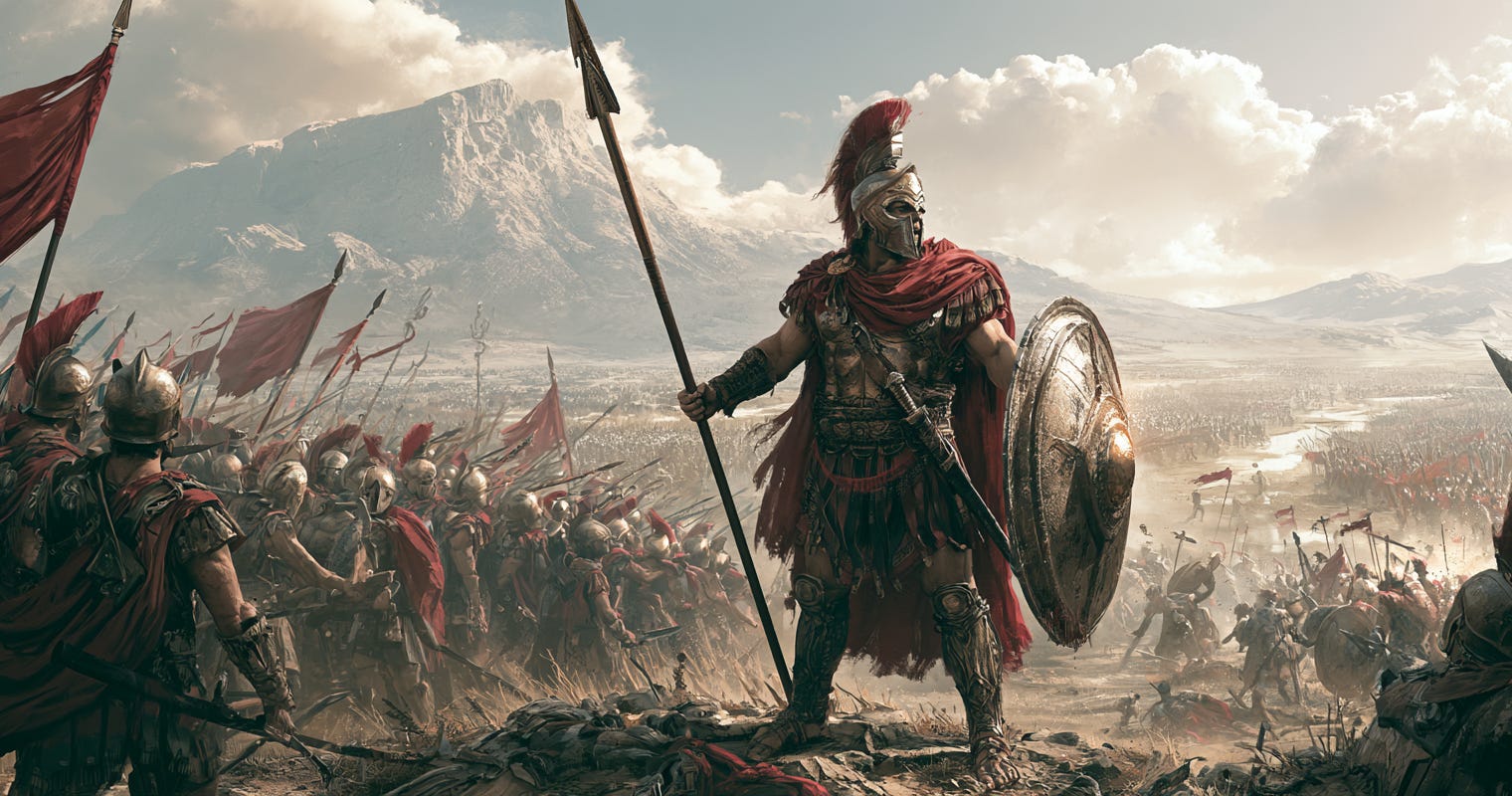
The Rise of Thebes: How a Small City Crushed Sparta and Changed Ancient Greece
Sparta had just won the Peloponnesian War. They were the undisputed masters of Greece. Their army was feared across the ancient world.
Then, in just a few decades, a relatively obscure city called Thebes rose up and shattered Sparta’s power forever.
This is the dramatic, underdog story of how Thebes briefly became the strongest power in Greece — and why their victory mattered so much.
The Setup: Sparta at Its Peak
After defeating Athens in 404 BC, Sparta seemed invincible. They installed puppet governments, demanded tribute, and acted like the police of Greece.
But their rigid system was already cracking. The population of full Spartan citizens was shrinking. Their reliance on helots made them paranoid. And constant warfare was exhausting their limited manpower.
Meanwhile, Thebes — in Boeotia — was growing stronger. They had fertile land, a large population, and a growing resentment toward Spartan arrogance.
The Genius: Epaminondas
The hero of Thebes was Epaminondas — a brilliant general, philosopher, and statesman who was way ahead of his time.
While most Greek armies fought in standard phalanx formations (deep blocks of hoplites), Epaminondas revolutionized tactics:
He created an oblique order — deliberately making one wing much stronger and deeper.
He used cavalry and light troops more creatively.
Most importantly, he commanded the elite Sacred Band of Thebes — a unit of 150 pairs of male lovers who swore to fight to the death for each other. This was one of the most feared and effective fighting units in ancient history.
The Battle of Leuctra (371 BC): Sparta’s Worst Day
The decisive moment came at Leuctra. Sparta invaded Boeotia with what they thought was a superior force.
Epaminondas did something shocking:
He put his strongest troops (including the Sacred Band) on the left wing instead of the traditional right.
He made that wing 50 men deep — an incredibly deep formation for the time.
He refused to engage the weaker parts of his line.
The result was a slaughter. Sparta lost around 400 full Spartan citizens (a catastrophic number for them) including their king Cleombrotus. The Theban victory was total.
Aftermath: The End of Spartan Hegemony
Leuctra shattered the myth of Spartan invincibility. Thebes liberated Messenia (Sparta’s main helot source), crippling Sparta’s economy and manpower base forever.
For a few years, Thebes was the dominant power in Greece. But their supremacy was short-lived — internal politics, the death of Epaminondas at Mantinea (362 BC), and the rise of Macedon under Philip II and Alexander the Great ended Theban dominance.
Why Thebes Mattered
Thebes showed that innovation, morale, and brilliant leadership could overcome traditional military superiority. Their victory accelerated the decline of the old city-state system and helped pave the way for Alexander’s conquests.
Sparta never really recovered. Their rigid system — once their greatest strength — became their downfall.
Historygonebananas Signature Close
Thebes proves that even the mightiest powers can be toppled by a smarter, more motivated underdog. Sparta’s fall after Leuctra is one of history’s great “what if” moments.
So tell me, dear reader: Was Epaminondas one of the greatest generals of antiquity? Could Sparta have survived if they had reformed their system earlier? And what modern parallels do you see?
Drop your thoughts below. I read every single one.
SEO/AEO FAQ
Q1: Who was Epaminondas?
A: The Theban general and statesman who revolutionized Greek warfare and defeated Sparta at Leuctra.
Q2: What was the Sacred Band of Thebes?
A: An elite unit of 150 pairs of male lovers who fought as a cohesive, highly motivated force.
Q3: What happened at the Battle of Leuctra?
A: In 371 BC, Thebes used innovative tactics to crush a larger Spartan army, killing their king and many citizens.
Q4: How did this affect Sparta?
A: The loss of citizens and the liberation of Messenia (their helot source) crippled Sparta permanently.
Q5: How long did Thebes dominate Greece?
A: Only a few years — their power faded after Epaminondas’ death in 362 BC.
Q6: What’s the main lesson?
A: Rigid military systems can win for a while, but innovation and adaptability eventually win out.
I see these illustrations of massive armies fighting on sunlight days in arid or humid Mediterranean climates. Anybody who has been through the rigors of summer football practices, been in a physical fight with adrenaline pumping, etc. knows you can’t keep a sustained fight or flight response going for long.
My question: What did these soldiers do for water, the only thing that would sustain them for long? I recall Bloody Pond at Shiloh where the wounded crawled to drink from the pond and turned it the color of blood.