
INTRO — THE EMPIRE THAT FORGOT HOW TO EMPIRE
Rome didn’t fall in one night.
It wasn’t toppled by a single barbarian, a single battle, or a single emperor who was particularly useless (though trust me, there were several contenders).
Instead, Rome collapsed the way most great things do:
slowly…
then suddenly.
It was an empire that looked invincible on the outside:
millions of citizens
armies across three continents
marble cities
aqueducts stretching like arteries
wealth pouring in from everywhere
But beneath the surface?
Years of strain were piling up like unsent tax forms.
This article breaks down what actually happened, using the latest historical research — and of course, the trademark semi-serious HistoryGoneBananas tone.
Let’s peel this banana.
PART I — THE MYTH OF THE “ONE-DAY FALL”
Most people imagine the fall of Rome as:
“One day the barbarians climbed over the walls and the empire exploded like a bad sequel.”
Reality:
Rome didn’t “fall” — it dissolved, mutated, rotted, and rearranged itself over centuries.
Different key dates get thrown around:
410 AD — Rome is sacked by Alaric
455 AD — Rome is sacked again (awkward)
476 AD — The last Western Roman Emperor is deposed
1453 AD — The Eastern Empire finally falls
Historians argue because the collapse wasn’t a moment.
It was a process.
Rome didn’t die.
It slowly forgot how to be Rome.
PART II — ECONOMIC DECAY: THE EMPIRE THAT INFLATED ITSELF TO DEATH
When an empire covers 5 million square kilometers, things get expensive.
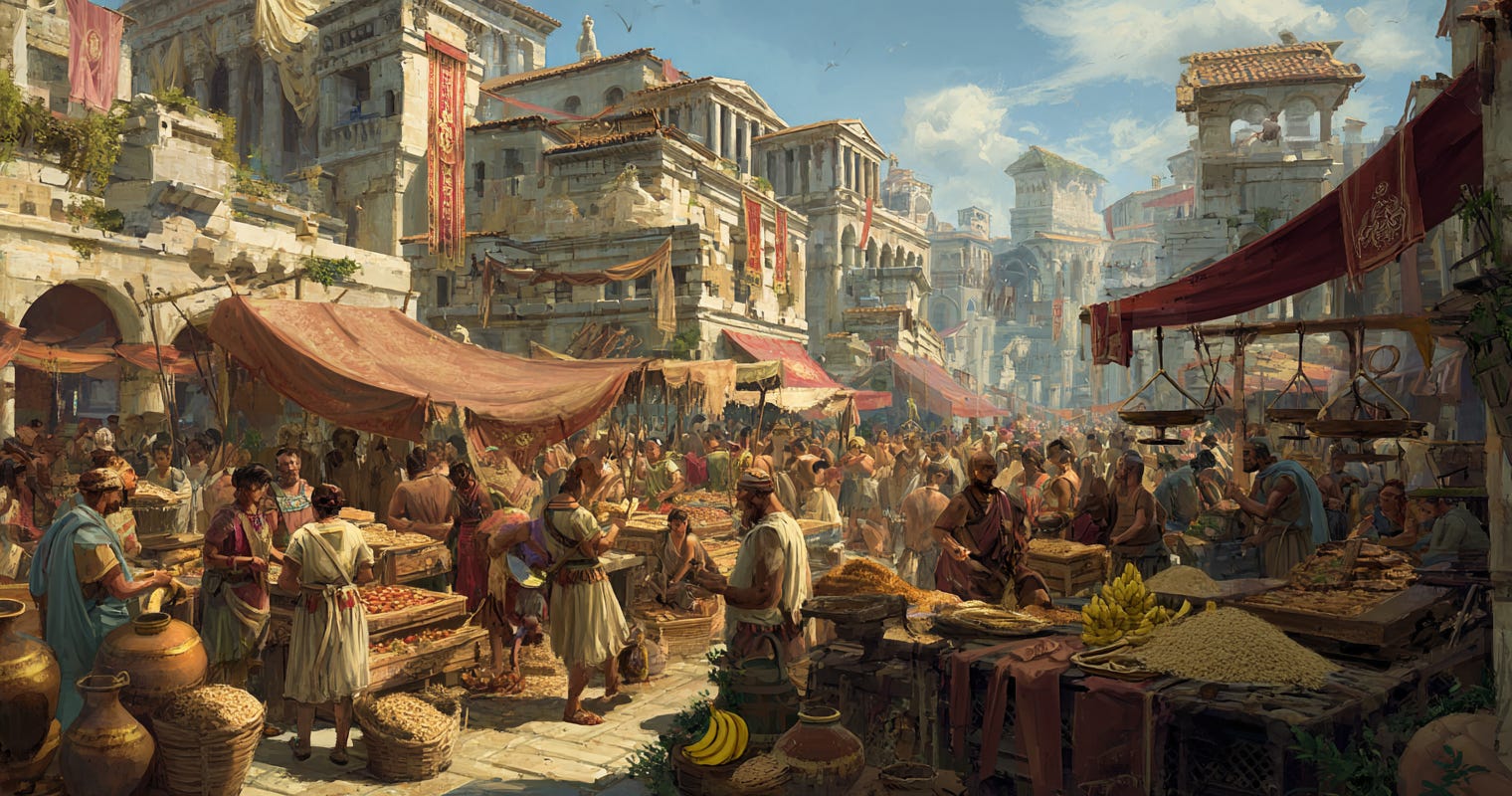
Rome spent more on:
soldiers
roads
grain supply
borders
bribes
more soldiers
more bribes
…than it brought in through taxes.
So emperors began using humanity’s favorite financial cheat code:
Printing more money.
They reduced silver content in coins, changing them from valuable currency to “shiny metal disappointment.”
Inflation soared.
Prices skyrocketed.
Trust in money collapsed.
Peasants bartered instead of using coins.
Trade slowed.
Taxation became harder.
The empire got poorer.
Sound familiar?
Rome wasn’t destroyed by enemies.
It was economically dehydrated.
PART III — POLITICAL CHAOS: HOW TO LOSE AN EMPIRE IN 22 EMPERORS
After Emperor Commodus died in 192 AD (good riddance), Rome entered a period affectionately known as:
“The Crisis of the Third Century.”
Highlights include:
22 emperors in 50 years
Most assassinated
A few died naturally (shocking)
Several civil wars
Rival generals fighting over titles
Provinces breaking away
The empire almost collapsing entirely
Imagine your workplace having a new CEO every two months, each one immediately getting fired, stabbed, or both.
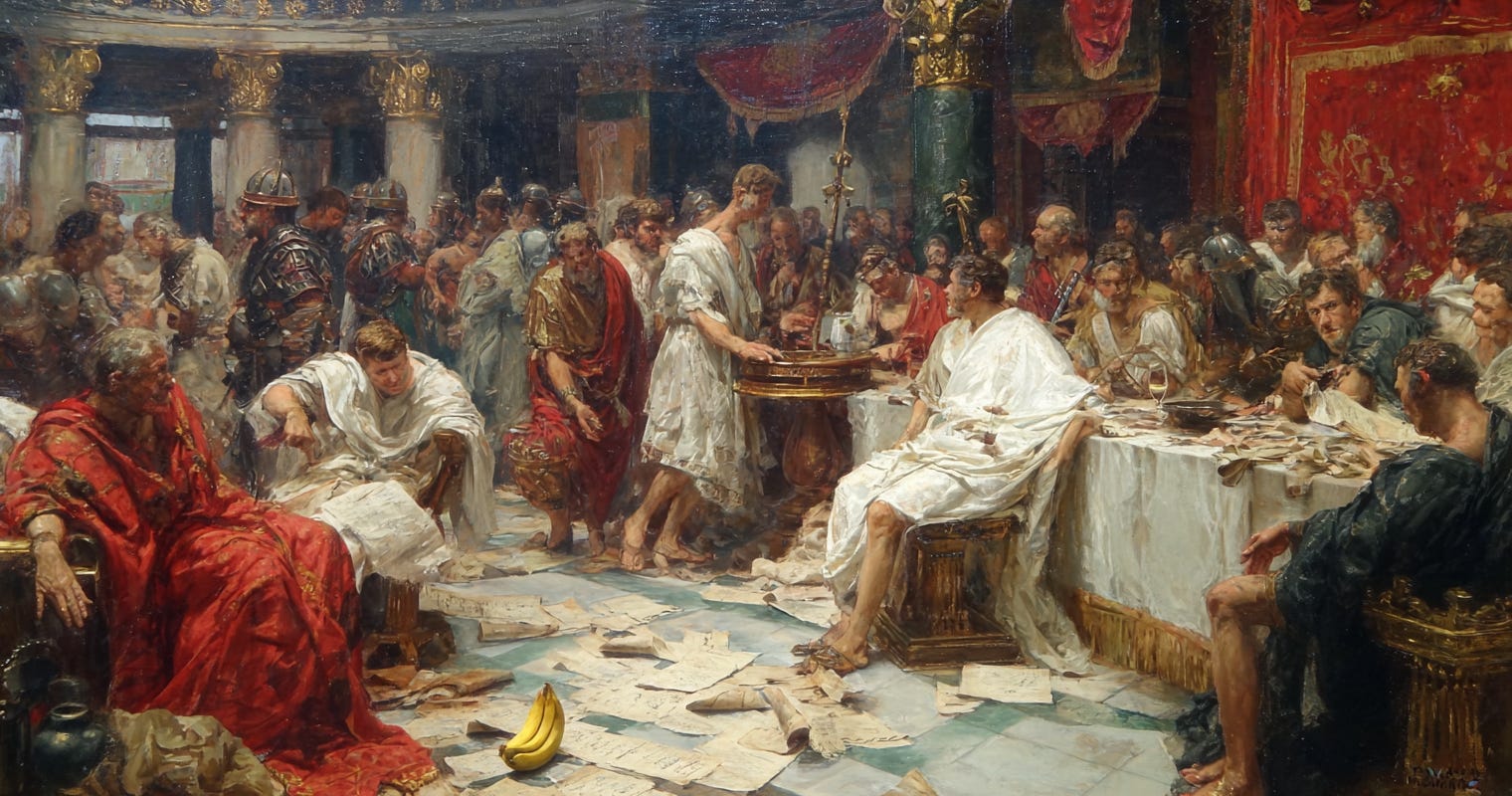
The government was unstable, corrupt, and incapable of long-term planning.
Empires don’t survive political carnivals.
PART IV — MILITARY OVERSTRETCH: TOO MUCH BORDER, NOT ENOUGH EMPIRE
Rome at its height had:
1. British border
2. German border
3. Danube border
4. Caucasus border
5. Arabian desert border
6. Egyptian desert border
7. North African border
8. Entire coastlines full of pirates
Keeping all of that secured required:
money
manpower
logistics
commanders who weren’t idiots
As Rome’s population shrank due to plague and economic decline, it had fewer soldiers.
To make things worse, Rome:
Started hiring mercenaries from the very tribes attacking them.
You know your empire is in trouble when your job posting reads:
“Wanted: Skilled warrior. Unrelated detail — please do not invade us.”
PART V — BARBARIAN MIGRATIONS: NOT INVADERS, BUT REFUGEES WITH ATTITUDE
Popular myth:
“Barbarians invaded Rome!”
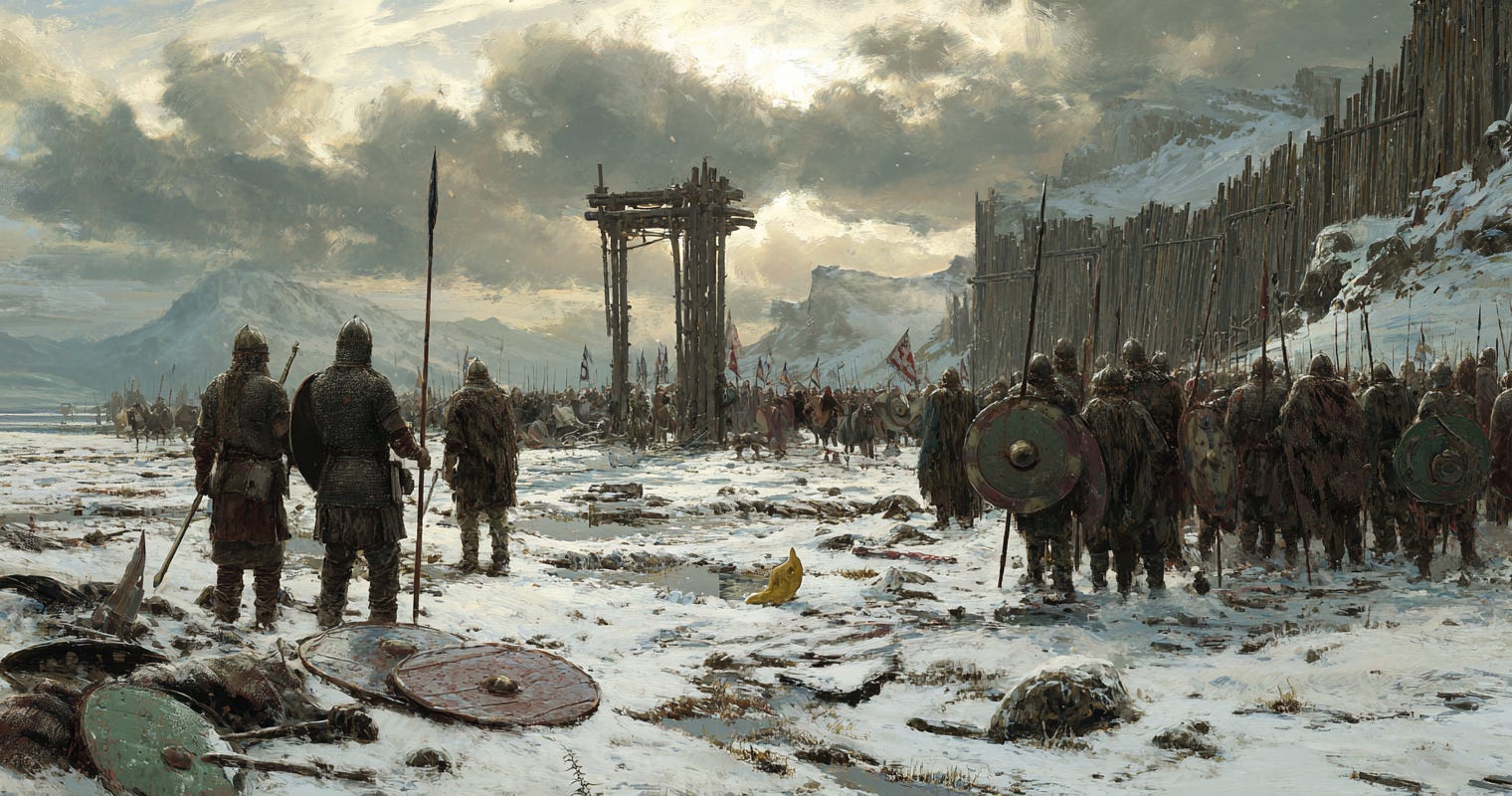
Reality is far more nuanced — and honestly more tragic.
Many groups (Visigoths, Ostrogoths, Vandals, Huns) were refugees fleeing the Huns, who were bulldozing Eastern Europe.
These tribes showed up at Roman borders saying:
“Hi, can we settle here peacefully?”
Rome responded with:
corruption
exploitation
starvation-level rations
broken agreements
Eventually, the mistreated groups rebelled.
Rome created its own attackers.
Instead of “barbarian invasion,” think:
“Refugee crisis mismanaged so badly it became a military disaster.”
PART VI — CULTURAL DEGENERATION? HISTORIANS SAY… SORT OF.
Older historians blamed:
decadence
moral decay
laziness
luxury
bathhouses
wine
orgies (always orgies)
Modern historians reject the moralizing, but they do agree on this:
Rome built such a wealthy, urban, comfortable world that it lost the harder, survival-driven character that earlier generations had.
Comfort isn’t bad…
but it can weaken large systems.
When crisis hit, nobody wanted to sacrifice:
aristocrats clung to luxury
elites dodged taxes
soldiers demanded higher pay
governors looked out for themselves
The empire fracturing into self-interest groups is the real “decadence.”
PART VII — THE PLAGUES: WHEN PANDEMICS SPEEDRUN COLLAPSE
There were multiple plagues, but the worst was the Antonine Plague:
possibly smallpox
lasted 15+ years
killed millions
wiped out legions
devastated the economy

Then came the Cyprian Plague (250s AD), which caused:
crop failures
food shortages
mass panic
religious unrest
Imagine supply chains collapsing when your empire depends on grain from Africa to feed Italy.
Rome couldn’t handle multi-year pandemics, and its administrative system shredded under the strain.
PART VIII — THE DIVISION OF THE EMPIRE: WHEN TWO ROMES = ZERO UNITY
Diocletian tried to fix Rome by splitting it into:
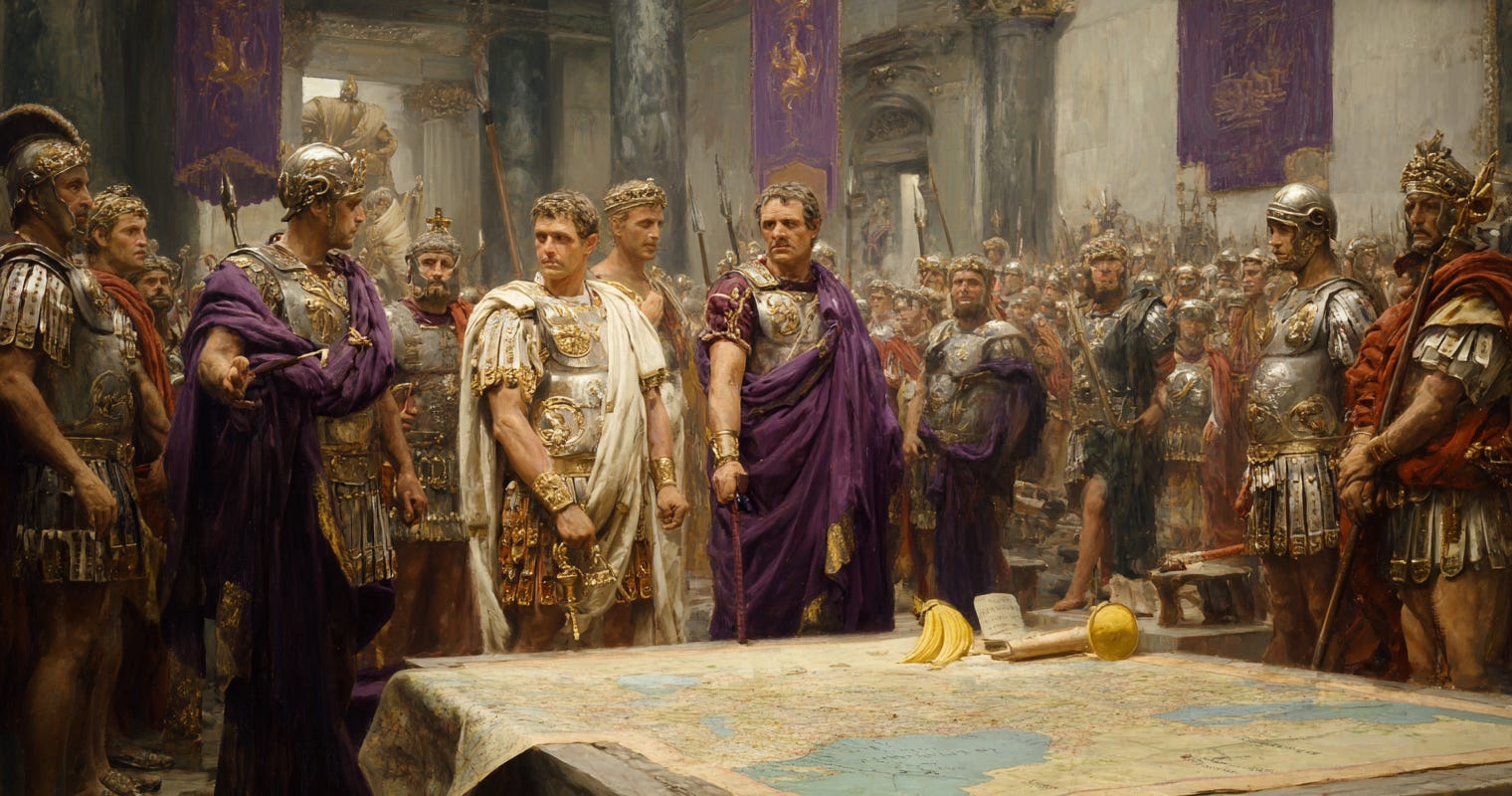
East Rome (rich, stable, Greek-speaking)
West Rome (poor, chaotic, Latin-speaking)
The East thrived (and later became Byzantium for 1,000 more years).
The West spiraled into:
bankruptcy
border collapse
incompetent kings
endless invasions
civil wars
Gothic migrations
kidnappings of emperors
By splitting the empire, Diocletian inadvertently ensured:
One half lived. One half died.
PART IX — WHEN DID ROME ACTUALLY FALL?
Most historians use 476 AD:
Romulus Augustulus, last Western emperor, gets fired
Odoacer (Germanic general) becomes King of Italy
No one in Rome really notices because real power already moved to Constantinople
But that’s not the real end.
It’s just the paperwork.
The real fall was when:
cities de-urbanized
trade networks collapsed
populations fled
literacy declined
law enforcement disintegrated
tax systems fell apart
infrastructure (roads, aqueducts, ports) stopped being maintained
If your empire can’t maintain plumbing, it’s over.
Rome didn’t die in 476.
It died village by village, road by road, tax collector by tax collector.
It was death by erosion.
PART X — THE REAL LESSON: HOW EMPIRES COLLAPSE IN REAL LIFE
Rome shows that empires don’t collapse because of one catastrophe.
They collapse because of:
✔ long-term overstretch
✔ slow economic decay
✔ administrative rot
✔ elite corruption
✔ political instability
✔ demographic decline
✔ external pressures
✔ internal fragmentation
✔ loss of shared identity
In other words —
**empires commit suicide in slow motion.
Enemies simply finish the job.**
CONCLUSION — ROME DIDN’T FALL. IT TRANSFORMED.
What we call “the fall” of Rome was really:
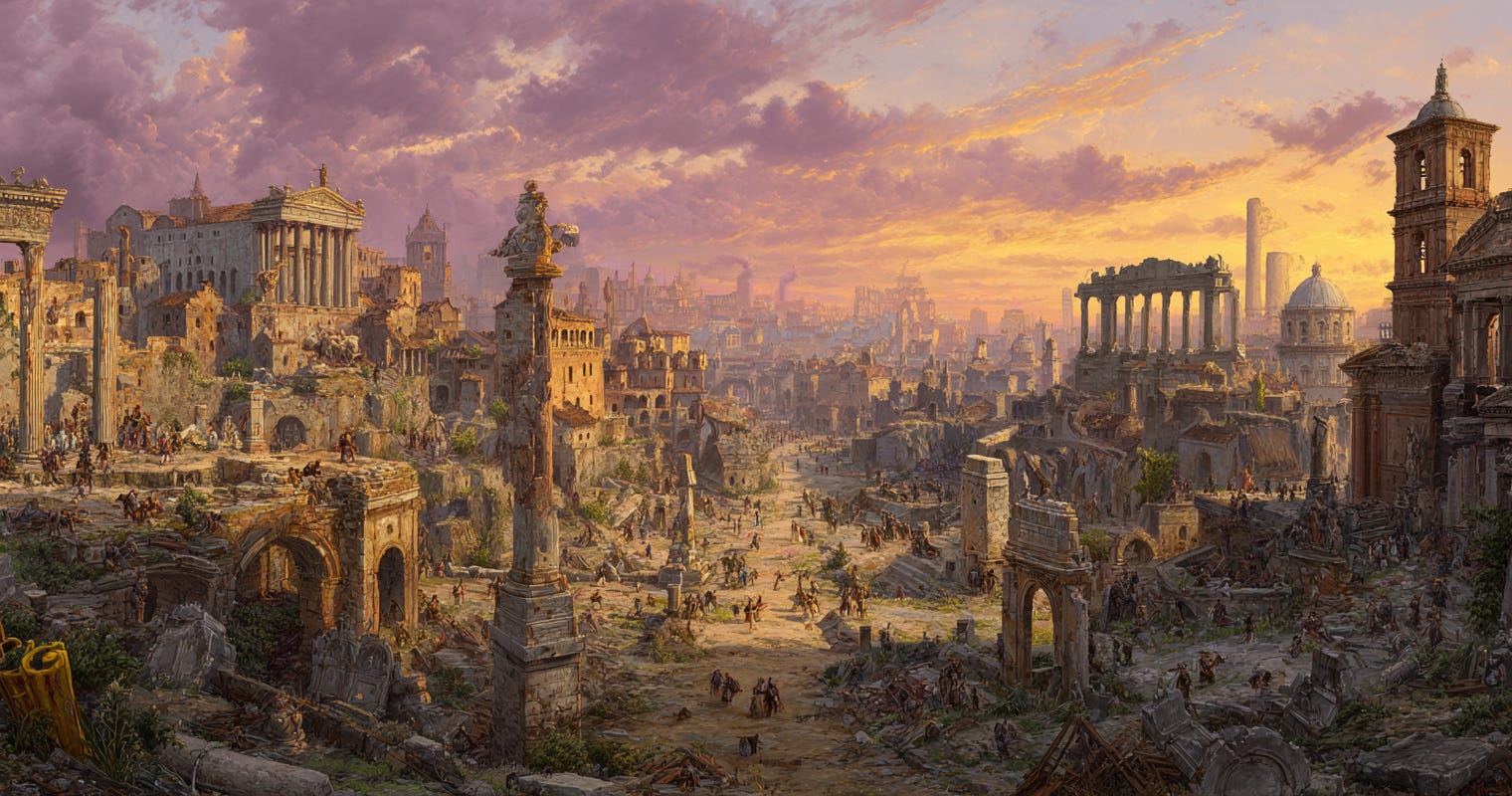
a political collapse
an economic contraction
a cultural transformation
and the birth of medieval Europe
Rome didn’t vanish.
It simply became something else:
kingdoms
duchies
tribes
crusader states
the Byzantine Empire
and eventually modern Europe
Rome is everywhere —
in languages, laws, architecture, cities, even alphabets.
The empire ended.
But Rome never really left.
CALL TO ACTION — You Made It to the End!
Thank you for supporting HistoryGoneBananas as a paid subscriber.
Your subscription keeps the banana-fueled time machine running.