
INTRO — A FRONTIER BAND THAT BECAME AN EMPIRE
The Ottoman Empire began in the least likely way:
as a tiny warrior clan on the edge of the crumbling Byzantine world.
In 1299, Osman I ruled a small beylik in northwest Anatolia.
No one believed this frontier faction would one day conquer:
Constantinople
Egypt
Syria
The Balkans
Mesopotamia
North Africa
Yet for over 600 years, the Ottomans shaped the politics, economics, and culture of a vast region.
How did they last so long?
Why did they rise?
And why, eventually, did they fall?
To understand the modern Middle East and southeastern Europe, you must understand the empire that ruled them for centuries.
⭐ PAYWALL BEGINS HERE
PART I — HOW THE OTTOMANS ROSE: WAR, OPPORTUNITY & LUCK
The late Byzantine world was a mess:
civil wars
economic collapse
rival claimants to the throne
Turkish migrations across Anatolia
The Ottomans thrived because they filled the vacuum.
1. They were flexible.
Ottoman rulers welcomed:
Christians
Greeks
Turks
Slavs
Armenians
Jews
Their empire absorbed diversity instead of destroying it.
2. They used diplomacy as well as force.
The Ottomans regularly married into other dynasties, hired foreign experts, and forged alliances.
3. They adopted technology fast.
They fielded cannons before many European powers did.
4. They recruited the best administrators.
Merit, not birth, was often the path to power.
This adaptability is why they rose while other states fell apart.
5. A ruthless system of succession (fratricide)
Unlike European monarchies, the Ottoman throne had no fixed rule of succession.
To prevent civil war, many sultans used fratricide — killing their brothers to secure the throne.
This brutal system horrifies modern readers, but it kept the empire stable by avoiding constant succession wars.
Only later — in the 17th century — was fratricide replaced by imprisoning potential heirs in the palace “Cage.”
This shaped Ottoman politics profoundly.
PART II — 1453: THE FALL OF CONSTANTINOPLE
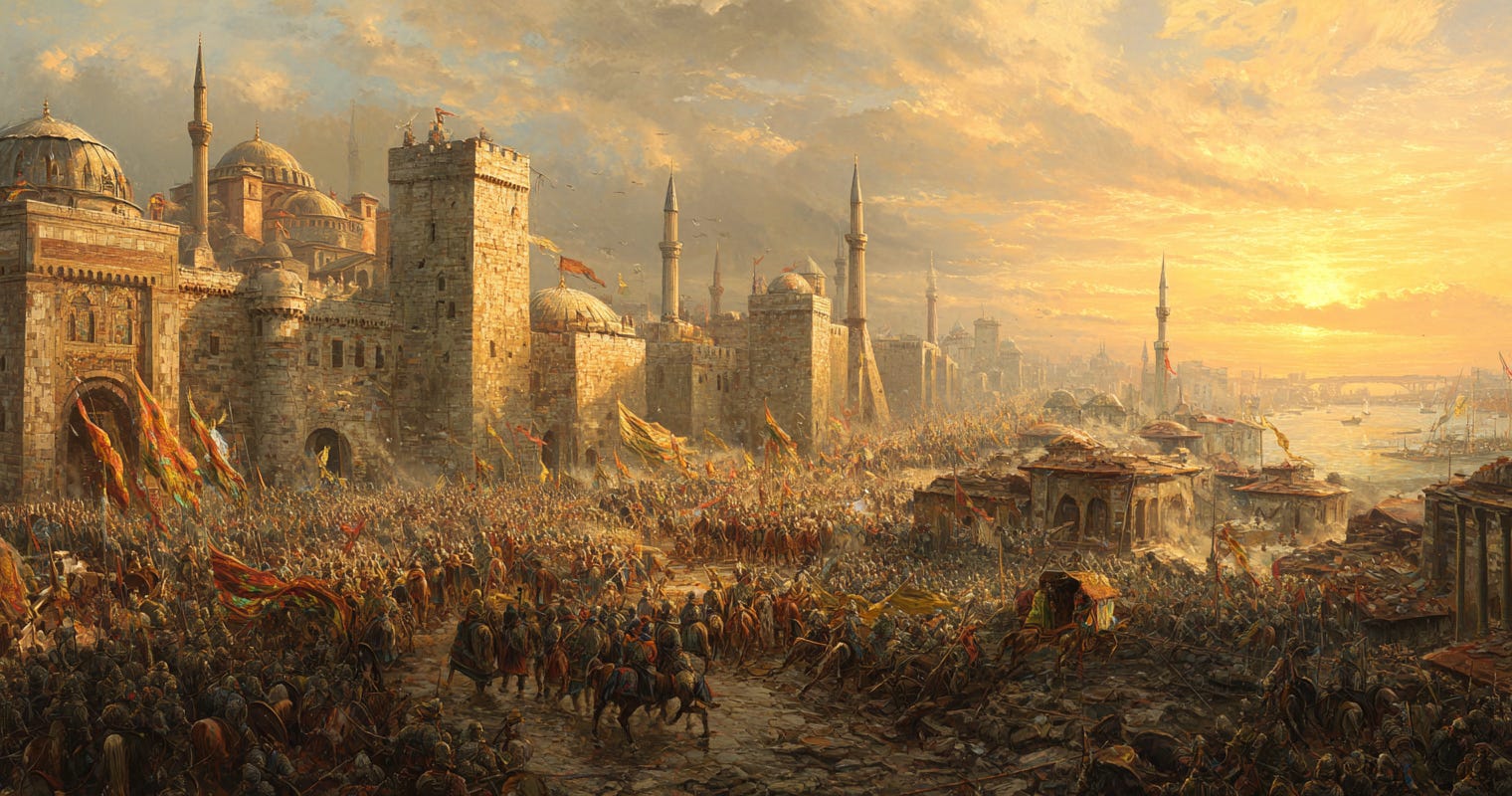
On May 29, 1453, Sultan Mehmed II captured Constantinople, ending the Byzantine Empire.
This was more than a battlefield victory.
It was a civilizational shift.
The Ottomans now controlled:
the greatest city in Eastern Europe
the bridge between Asia and Europe
a strategic naval empire
Mehmed didn’t destroy the city — he revived it.
He turned Constantinople into Istanbul, a multicultural capital filled with:
Greek merchants
Armenian artisans
Jewish refugees from Spain
Arab scholars
Turkish officials
The city became one of the world’s most important trading ports.
⭐ (Insert Image #1 — Constantinople)
PART III — THE OTTOMAN SYSTEM: ORDER OUT OF CHAOS
The empire survived centuries of war because its internal system was brilliant.
1. The Millet System
Different religious communities governed themselves:
Orthodox Christians
Armenians
Jews
Catholics
Muslims
They paid taxes but kept their own laws, judges, and traditions.
This created stability in a diverse empire.
2. The Devshirme System
Christian boys from the Balkans were recruited, educated, converted, and turned into:
elite soldiers (Janissaries)
high-ranking administrators
sometimes even grand viziers
It was controversial but effective.
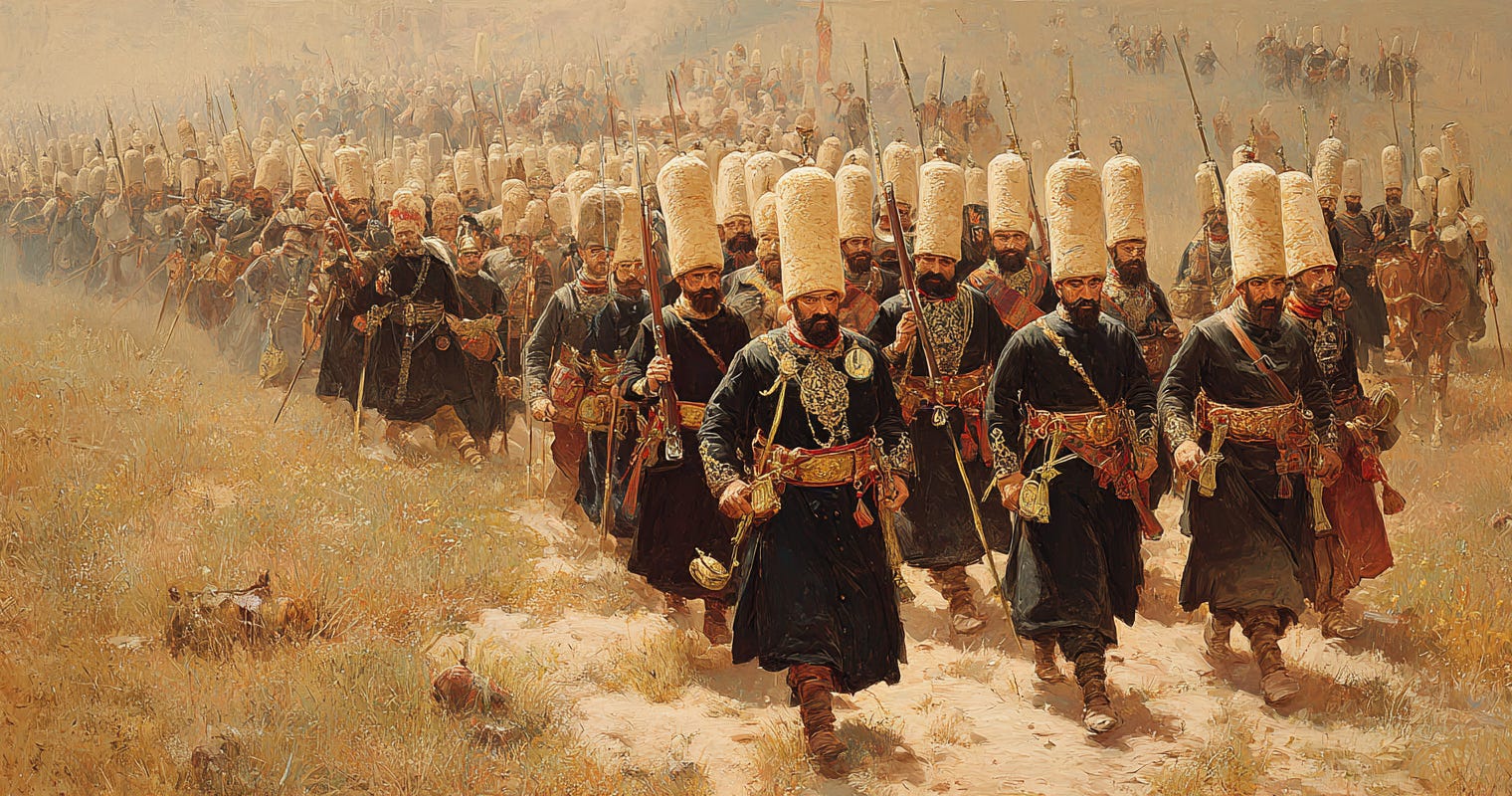
3. The Janissaries
The world’s first standing infantry with firearms.
They were:
disciplined
loyal
modern
feared
For centuries, they were unmatched in the region.
4. Strong bureaucracy
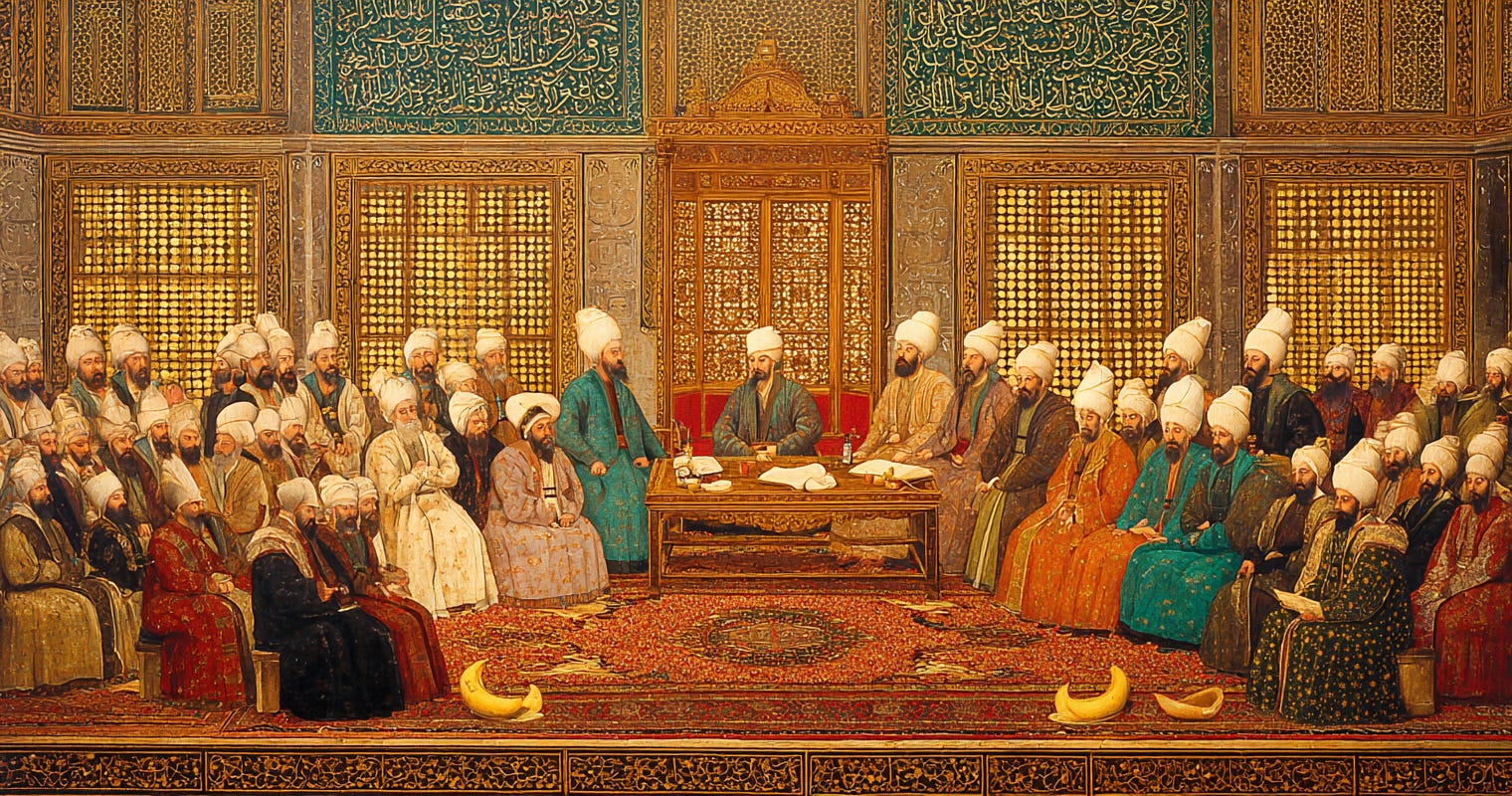
Ottoman scribes and administrators kept immense records, taxes, and legal systems running smoothly.
The empire was a machine.
PART IV — THE AGE OF CONQUEST: 1500–1700
Under sultans like:
Mehmed II
Selim I
Suleiman the Magnificent
the empire expanded massively.
Conquests included:
The Balkans — Greece, Serbia, Bosnia, Bulgaria, Albania
The Middle East — Syria, Palestine, Egypt, Iraq
North Africa — Algeria, Tunisia, Libya
The Black Sea region — Crimea
Hungary — key parts absorbed
Persian frontier — battles with the Safavids
At its height, the empire stretched from Budapest to Mecca.
Suleiman the Magnificent
Often considered the Ottoman apex:
legal reforms
military victories
architectural masterpieces
golden age of culture
Suleiman’s rule made the Ottomans a global superpower.
PART V — WHY THE OTTOMANS LASTED SO LONG
Many empires burn fast and die.
The Ottomans endured because they:
allowed local autonomy
blended cultures
taxed efficiently
embraced trade
balanced military and bureaucracy
used talent from all backgrounds
Their secret wasn’t brutality.
It was administrative intelligence.
PART VI — DECLINE: WHY THE OTTOMAN EMPIRE FELL
The Ottoman Empire survived for six centuries, but after 1700 the cracks became undeniable.
Several forces combined to erode the foundations that once made the empire strong.
1. The succession system turned from efficient to chaotic
The old system of fratricide had prevented civil war, but when it was abolished:
princes were confined to the palace
future sultans grew up with no administrative or military experience
real power shifted to palace elites, viziers, eunuchs, and janissary officers
Many sultans were effectively hostages of court politics.
Skilled rulers became rare.
Favorite advisors and inner-court factions dominated policy — often prioritizing personal power over reform.
2. Sultans kept favorites (kullar, harem factions, and viziers) close to the capital
By the 1600s–1700s, the empire was often run by:
harem advisors
favored pages
the grand vizier’s household
janissary commanders
palace bureaucratic families
Instead of strong frontier governors, the real power clustered around Istanbul, leading to:
corruption
factionalism
neglect of the provinces
late, inconsistent reforms
This centralization weakened the empire’s responsiveness.
3. The Ottomans fell behind in commerce
Before 1500, the Ottoman world was the crossroads of global trade:
Silk Road
Spice routes
Mediterranean networks
Indian Ocean merchants
But after 1500–1600, Europe discovered sea routes around Africa, bypassing the Middle East entirely.
This was catastrophic:
ports like Alexandria and Basra declined
taxes from land caravans evaporated
Ottoman merchants lost strategic importance
Europe’s rising merchant capitalism had no Ottoman equivalent.
This meant:
fewer banks
fewer joint-stock companies
fewer manufacturing centers
less capital circulation
weaker commercial class
Commerce is the bloodstream of innovation.
Without it, the Ottomans slowly stagnated economically.
4. The Industrial Revolution widened the gap
Europe industrialized.
The Ottomans did not.
The empire fell behind in:
shipbuilding
firearms
factories
railroads
mass production
banking
scientific institutions
While the Ottomans still fielded large armies, European powers had:
steamships
rail logistics
industrial arsenals
telegraphs
modern medicine
explosive manufacturing
The military gap grew enormous.
5. The center of the world economy shifted to the Atlantic
After 1600, the global economy moved west:
Indian Ocean → Atlantic → North Sea
This pivot made the Middle East less important in global trade.
Europe’s rising powers — Spain, Portugal, the Netherlands, Britain — built:
overseas empires
global shipping networks
colonial wealth extraction
Atlantic commercial hubs (Lisbon, Amsterdam, London)
The Ottoman Empire, tied to old Silk Road patterns, became economically peripheral.
6. Nationalism fractured the empire
In the 1800s, independence movements spread across the Balkans:
Greeks
Serbs
Bulgarians
Albanians
Romanians
Combined with:
Russian aggression
British and French interference
internal revolts
…the empire steadily shrank.
7. Reforms came too late
The Tanzimat reforms (1839–1876) modernized:
law
taxation
education
military organization
But by then:
Europe was too powerful
the Ottoman economy was too indebted
nationalist movements were too strong
World War I dealt the final blow.
In 1922, the Ottoman Empire ended — replaced by modern Turkey.
CONCLUSION — AN EMPIRE TOO IMPORTANT TO IGNORE
The Ottoman Empire shaped:
the borders of modern Europe
the politics of the Middle East
the fall of Byzantium
the rise of modern Turkey
the spread of Islam into Europe
centuries of trade and diplomacy
It was not simply a “Turkish empire.”
It was a multi-ethnic, multi-religious, multi-continental machine that endured longer than nearly any empire in history.
Understanding the Ottomans is understanding how the world we live in was formed.