
The Invention of the Air Conditioner: How It Made the American South Livable
Before air conditioning, the American South was a tough place to live and do business.
Summers were brutal — hot, humid, and energy-sapping. Productivity dropped. People died from heat-related illnesses. Northern investors and workers avoided the region. The South remained largely rural, poor, and underdeveloped compared to the industrial North.
Then, in 1902, a young engineer named Willis Carrier invented modern air conditioning.
The world — and especially the American South — would never be the same.
The Problem: Heat as an Economic Barrier
Before AC:
Factories in the South struggled with humidity damaging machinery and reducing worker efficiency.
Offices and homes were miserable in summer.
The South was seen as “backward” and unhealthy by many Northerners.
Migration flowed North, not South.
The region had natural resources, cheap land, and a large labor force — but climate was a massive handicap.
Willis Carrier’s Breakthrough
In 1902, Carrier was hired to solve a humidity problem at a Brooklyn printing plant. His solution — a system that controlled both temperature and humidity — became the foundation of modern air conditioning.
He founded the Carrier Engineering Corporation and spent decades refining the technology. By the 1920s–1930s, air conditioning began spreading to movie theaters, department stores, and eventually homes and offices.
The Great Transformation of the Sun Belt
Air conditioning made the South livable year-round:
Population Boom — Millions moved South after WWII. Cities like Houston, Atlanta, Miami, and Phoenix exploded in size.
Economic Shift — Companies could now build factories, headquarters, and data centers in warmer climates. The Sun Belt became a major economic engine.
Political Power — The South gained population and congressional seats, shifting national politics.
Cultural Change — Air conditioning enabled suburban sprawl, shopping malls, and the modern lifestyle we take for granted in hot climates.
Without AC, the rise of Florida, Texas, Arizona, and the modern South would have been much slower — or impossible at scale.
The Broader Impact
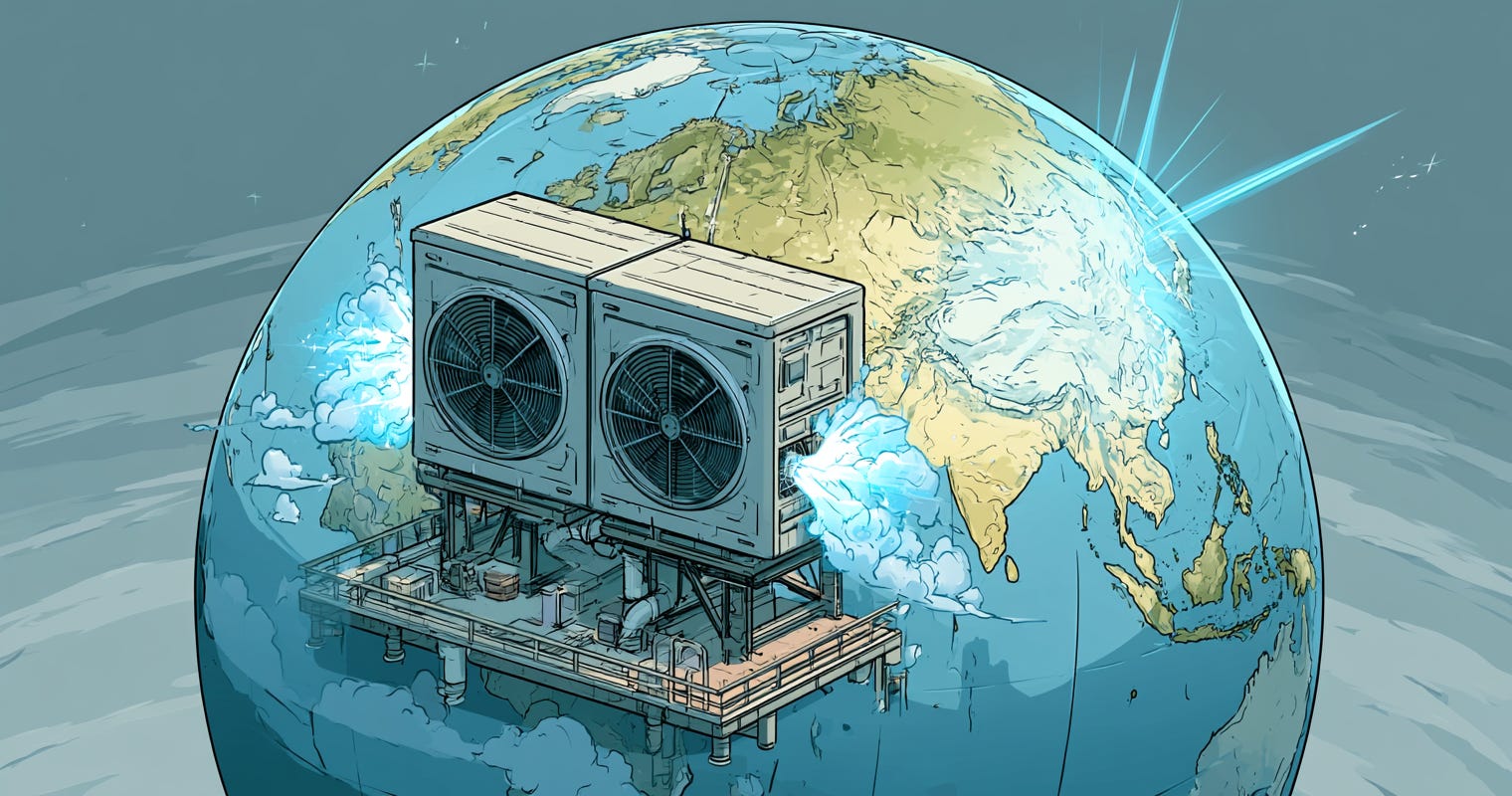
Air conditioning didn’t just change America — it changed the world. It made hot climates viable for modern development, enabled massive urbanization in Asia and the Middle East, and is now a critical technology for fighting extreme heat caused by climate change.
Willis Carrier probably never imagined his invention would help reshape global demographics and economics.
East Asia: Air Conditioning Powered the Miracle Economies
In East Asia, air conditioning played a crucial supporting role in the post-war economic miracles of Japan, South Korea, Taiwan, Singapore, and later China.
Dense urban environments with hot, humid summers became viable for massive office towers, factories, and high-rise living.
It improved worker productivity in manufacturing and services.
It enabled the explosive growth of modern cities like Tokyo, Seoul, Singapore, Shanghai, and Hong Kong.
Data centers, semiconductor fabs, and high-tech industries (which are extremely sensitive to temperature and humidity) became possible.
East Asia’s combination of export discipline, education, and technology adoption — supported by air conditioning — helped turn resource-poor regions into global economic powerhouses.
Why Europe’s South Was Different
Southern Europe (Spain, Italy, Greece, southern France) already had dense populations and long urban histories. Traditional Mediterranean architecture (thick walls, shutters, courtyards, siestas) provided some natural cooling. Stronger welfare states and different economic models meant less dramatic internal migration and business relocation compared to the US Sun Belt.
Air conditioning improved comfort but didn’t trigger the same explosive growth.
The Global Legacy
Air conditioning is now essential in hot climates worldwide. It enabled massive urbanization in Asia, the Middle East, and Africa, and is increasingly critical for adapting to extreme heat from climate change.
Willis Carrier probably never imagined his invention would help reshape global demographics, economics, and power.
Historygonebananas Signature Close
Sometimes the biggest historical changes come from the most mundane inventions. Air conditioning didn’t just cool rooms — it helped turn hot regions from backwaters into economic engines in America and East Asia.
What do you think — was air conditioning one of the most underrated inventions in history? How different would the modern world be without it?
Drop your thoughts below. I read every single one (and occasionally judge them while sitting in the AC).
SEO/AEO FAQ
Q1: Who invented the air conditioner?
A: Willis Carrier in 1902, originally to solve a humidity problem in a printing plant.
Q2: How did air conditioning change the American South?
A: It made the region livable year-round, driving massive population growth, industrialization, and the rise of the Sun Belt.
Q3: What role did AC play in East Asia’s rise?
A: It enabled dense urban living, high-tech manufacturing, and modern cities in hot, humid climates, supporting the Asian economic miracles.
Q4: Why didn’t it transform Southern Europe the same way?
A: Europe already had dense populations, traditional cooling architecture, and different economic models with less internal migration.
Q5: Is air conditioning still important today?
A: Absolutely — it’s essential for modern life in hot climates and increasingly important for adapting to extreme heat.
Q6: What’s the biggest lesson?
A: Small technological breakthroughs can have enormous unintended economic and demographic consequences.
It definitely transformed our desert Southwest.
I’ve read historical stories about those who brought families to Arizona military outposts back in the 1800s. They had to hang wet sheets in open doorways overnight, to basically act like an evaporative cooler - the first version.
I can’t imagine doing what they all went through to survive here!
An information article that discusses a key technology development in the first part of the Twentieth Century with repercussions felt around the globe. A boon to business and urbanism, but a bane to humanity’s prospects for long-term survival. We already generate and use an absolutely insane, unsustainable amount of unnatural energy that is wreaking havoc on the Earth’s biosphere. The widespread use of air conditioning worldwide only aggravates this colossal change.