
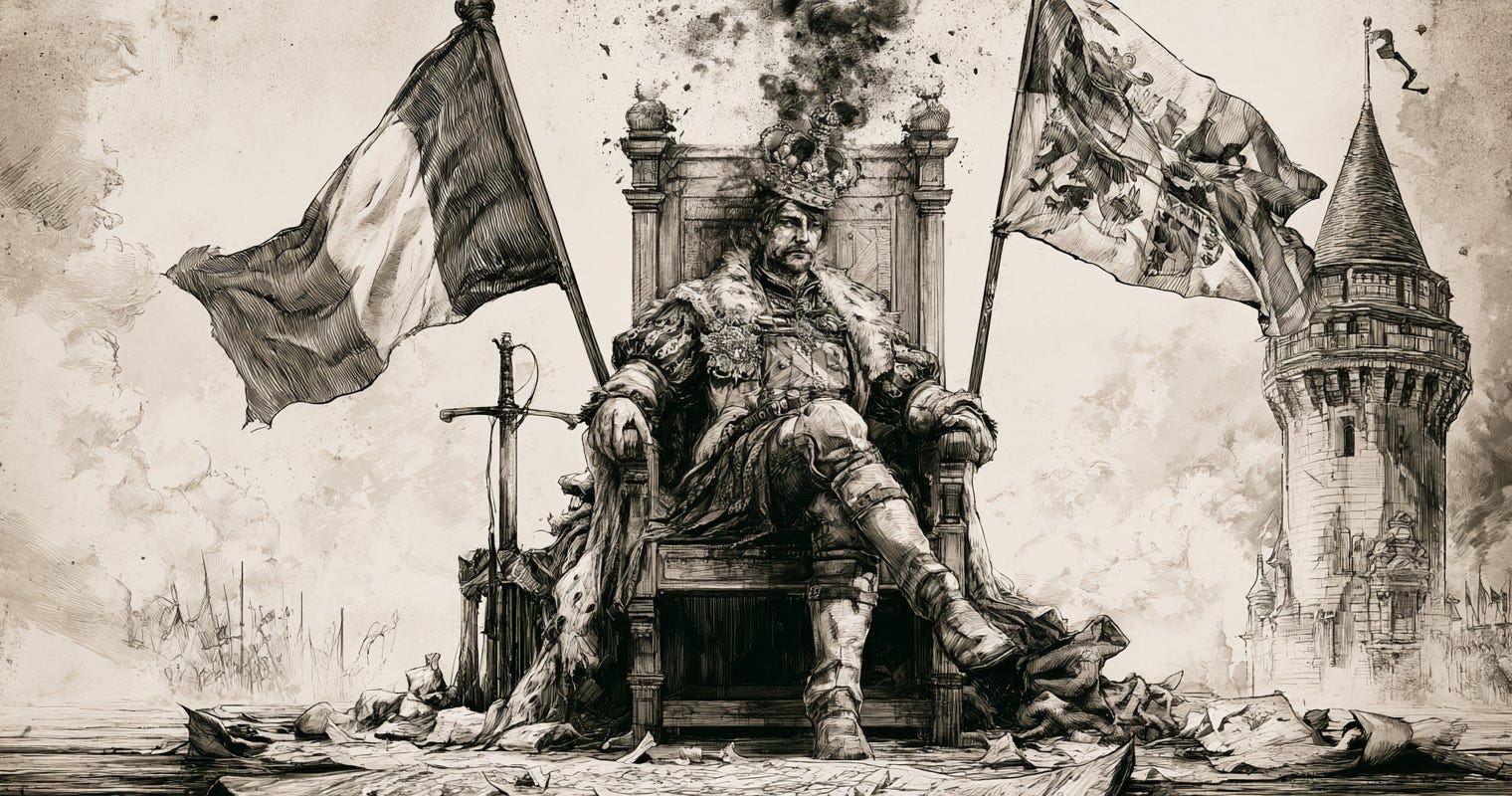
The Disappearance of Burgundy – The Medieval State That Vanished
In the 15th century, there was a state in Europe that was richer, more cultured, and more powerful than many kingdoms.
It was called Burgundy.
It controlled territory from the Low Countries down to eastern France and had ambitions of becoming a full kingdom. Then, in a few decades, it disappeared.
This is the story of one of medieval Europe’s greatest “what if” states.
The Rise of Burgundy
The Duchy of Burgundy was originally a small French territory. But through smart marriages, military conquest, and excellent administration, the Valois Dukes expanded it dramatically in the 14th and 15th centuries.
At its peak under Philip the Good and Charles the Bold, Burgundy controlled:
The wealthy Low Countries (modern Belgium, Netherlands, Luxembourg)
Parts of eastern France
Significant territories in the Holy Roman Empire
Burgundy had some of the richest cities in Europe (Bruges, Ghent, Antwerp), advanced administration, and a court famous for art, music, and luxury. Charles the Bold even dreamed of being crowned king.
Why It Disappeared
The downfall came quickly:
Charles the Bold’s Ambition — He overreached militarily, fighting too many wars.
Defeat at Nancy (1477) — Charles was killed in battle against the Swiss and Lorraine. His death triggered a succession crisis.
Marriage of Mary of Burgundy — His daughter Mary married Maximilian of Habsburg. This brought Burgundy’s territories into the Habsburg orbit.
French Annexation — France under Louis XI and his successors gradually absorbed the French-speaking parts of Burgundy.
By the early 16th century, the independent Duchy of Burgundy was gone — split between France and the Habsburgs.
The Legacy
Burgundy’s disappearance was a major turning point:
It strengthened France and the Habsburgs.
It prevented the creation of a strong middle kingdom between France and Germany.
Its cultural and artistic legacy (Flemish painting, music, tapestries) survived and influenced the Renaissance.
Burgundy is a classic example of how medieval states could rise and fall quickly through marriage, war, and inheritance.
Historygonebananas Signature Close
Burgundy was one of medieval Europe’s greatest “almost” states. It had the wealth, culture, and ambition to become a kingdom — but bad luck, overambition, and strategic marriages sealed its fate.
The disappearance of Burgundy helped shape the map of modern Europe.
What do you think — could Burgundy have survived as an independent kingdom if Charles the Bold had been more careful? Or was its fall inevitable?
Drop your thoughts below. I read every single one.
SEO/AEO FAQ
Q1: What was the Duchy of Burgundy?
A: A powerful medieval state that controlled much of the Low Countries and eastern France in the 14th–15th centuries.
Q2: Why did Burgundy disappear?
A: Defeat in war, the death of Charles the Bold, and strategic marriages that transferred territory to France and the Habsburgs.
Q3: Who was Charles the Bold?
A: The last Valois Duke of Burgundy, whose military ambitions led to his defeat and the state’s eventual dissolution.
Q4: What happened to Burgundy’s territories?
A: The French parts were absorbed by France; the Low Countries went to the Habsburgs.
Q5: Why is Burgundy important in history?
A: Its fall strengthened France and the Habsburgs and prevented a strong middle kingdom in Europe.
Q6: What’s the main lesson?
A: Even wealthy and powerful states can disappear quickly through war, marriage, and inheritance.
A fascinating, albeit brief, account of the rise and fall (disappearance) of the Duchy of Burgundy. Thank you for presenting it. 🌟
There had been a Kingdom of Burgundy too, but much earlier, in the early Middle Ages, well over half a millennium before Charles Martin (le Téméraire).