
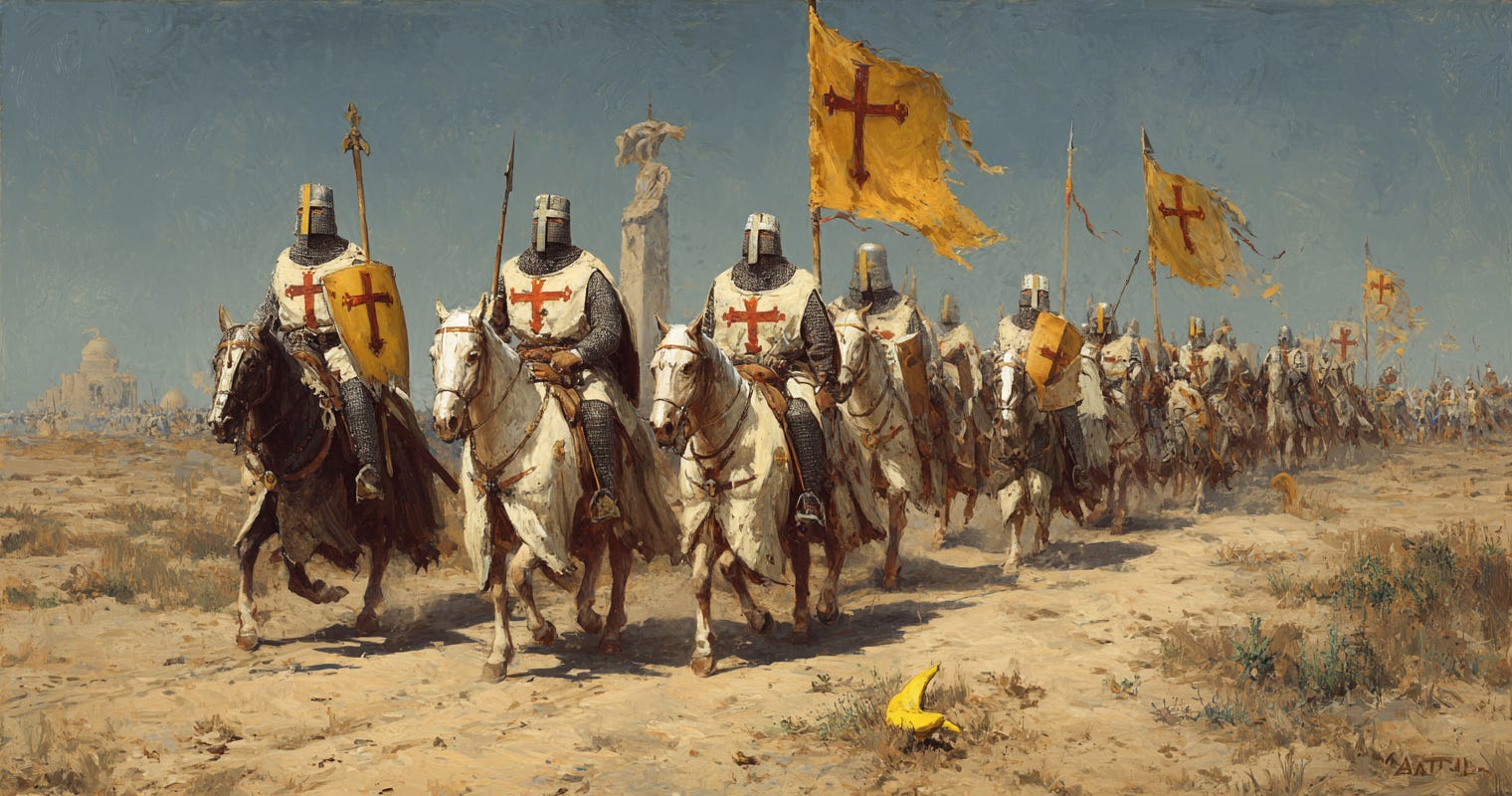
INTRO — WHY EVERYTHING YOU LEARNED ABOUT THE CRUSADES IS WRONG
The Crusades might be the most misunderstood wars in world history.
Modern films make them look like random Christian invasions.
Others simplify them into “good vs. evil” narratives that flatten centuries of geopolitics into a single slogan.
The real story is more complicated — and far more global.
The Crusades did not start the conflict between Christian Europe and the Islamic world.
They were a response to a world already transformed by four centuries of Islamic expansion.
From the 630s to 1000 AD, the Islamic Caliphates conquered:
The entire Near East (Syria, Palestine, Jerusalem, Lebanon)
Egypt and North Africa
Persia (the Sassanian Empire — Byzantium’s greatest rival)
Almost all of Spain
The island of Sicily
Major cities: Jerusalem, Alexandria, Antioch, Carthage
In less than 120 years, Christianity went from dominating the Mediterranean to losing half of its historic territory.
By the time the Crusades began, the Eastern Roman (Byzantine) Empire — the oldest Christian state on earth — was collapsing.
The Crusades were not spontaneous.
They were Western Europe’s answer to a centuries-old geopolitical crisis.
PART I — BEFORE THE CRUSADES: THE WORLD THAT VANISHED
Most modern people don’t realize just how much the early Islamic empires conquered.
Between 630–750 AD, the Rashidun and Umayyad Caliphates expanded with unprecedented speed, creating one of history’s largest empires.
Christian lands lost before the First Crusade:
✔ Jerusalem
✔ Antioch
✔ Alexandria
✔ Carthage
✔ All of North Africa
✔ All of the Levant
✔ All of Syria
✔ Most of Spain
✔ Sicily
And while Persia was not Christian, it was the ancient rival that helped constrain the Byzantine Empire.
Its collapse left Byzantium exposed.
By 1000 AD, Christian territory had shrunk dramatically.
The old Mediterranean Christian world was gone, replaced by the Islamic world stretching from Spain to India.
This wasn’t forgotten.
It was the context that shaped medieval Christian thinking for centuries.
PART II — THE COLLAPSE OF BYZANTIUM
If the early Islamic conquests were the first blow, the second — the crisis that triggered the Crusades — was the rise of the Seljuk Turks.
In 1071, at the Battle of Manzikert, the Seljuks:
crushed the Byzantine army
captured the emperor
overran most of Anatolia (modern Turkey)
cut Byzantium off from its grain and manpower base
Anatolia wasn’t just territory.
It was the heart of the Byzantine military system.
Losing it meant the empire was dying.
In desperation, Emperor Alexios I Komnenos wrote to Western Europe:
“Send help. Or Constantinople falls next.”
He did not expect what happened next.
PART III — WHY EUROPE RESPONDED (THE REAL REASONS)
Pope Urban II’s call for the First Crusade in 1095 was not just about religion.
Europe had several powerful motivations:
1. Protecting Byzantium
If Byzantium fell, Europe had no buffer.
The Crusades were partly self-defense by proxy.
2. Recapturing Jerusalem
For centuries, Christian pilgrims traveled to the Holy Land.
Control shifted many times, but by the late 1000s, Christian access was declining.
3. Europe’s internal chaos
Feudal nobles were constantly fighting each other.
A foreign campaign gave them purpose.
4. Opportunity
Younger sons with no inheritance saw the Crusades as a path to land, wealth, or glory.
5. Rising papal authority
The Pope saw a chance to unite Europe under spiritual leadership.
The First Crusade wasn’t a random outbreak of religious fury.
It was the convergence of geopolitics, survival, economics, and faith.
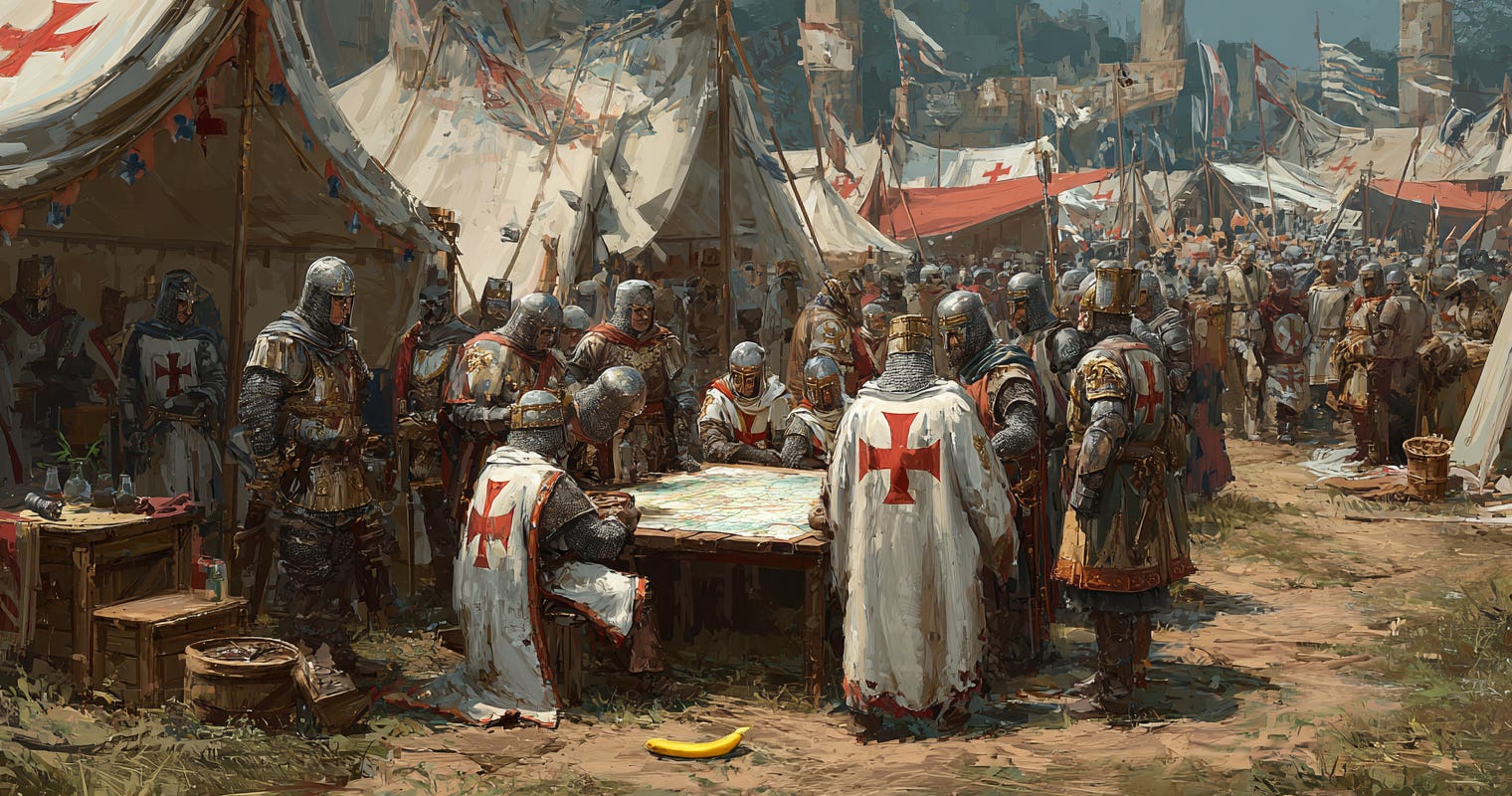
PART IV — THE FIRST CRUSADE: THE ONLY GREAT SUCCESS
The First Crusade (1096–1099) was chaotic, badly supplied, and half-starved.
But through a combination of Byzantine support, Turkish disunity, and sheer stubbornness, the Crusaders achieved astonishing victories:
captured Nicaea
defeated the Seljuks at Dorylaeum
survived the march across Anatolia
took Antioch after a brutal siege
stormed Jerusalem in 1099
The Crusaders established:
The Kingdom of Jerusalem
The Principality of Antioch
The County of Tripoli
The County of Edessa
These were not European colonies.
They became hybrid societies blending European, Greek, Armenian, Syrian, and Arab cultures.
The First Crusade succeeded because:
the Seljuk Empire was fragmented
Byzantium temporarily stabilized
no Muslim leader unified resistance
Crusaders had nothing to lose
But this success was fragile.
PART V — THE MUSLIM COUNTERATTACK
Over the next century, the Islamic world regained political unity under strong leaders:
Zengi
Nur ad-Din
Saladin
These leaders rebuilt armies, fortified cities, and coordinated resistance.
The turning point was 1187, when Saladin captured Jerusalem after the Crusaders suffered disaster at the Horns of Hattin.
This led to:
The Third Crusade (Richard the Lionheart vs. Saladin)
renewed European involvement
attempts to regain the Holy City (unsuccessful)
Despite Richard’s victories, he could not retake Jerusalem.
The balance of power had shifted.
PART VI — THE LATER CRUSADES: DECLINE AND STRANGE DETOURS
After the Third Crusade, things went downhill:
The Second Crusade
A complete failure.
The Fourth Crusade (1204)
One of the most infamous disasters in medieval history.
Instead of fighting Muslims, the Crusaders:
✔ marched on Constantinople
✔ sacked the largest Christian city in the world
✔ looted Byzantium
✔ split its territories
This permanently crippled the Byzantine Empire and arguably doomed Eastern Christianity.
A Crusade meant to save Byzantium instead destroyed it.
Fifth–Seventh Crusades
More failures, political distractions, and declining interest.
The Crusading movement faded gradually, more from exhaustion than defeat.
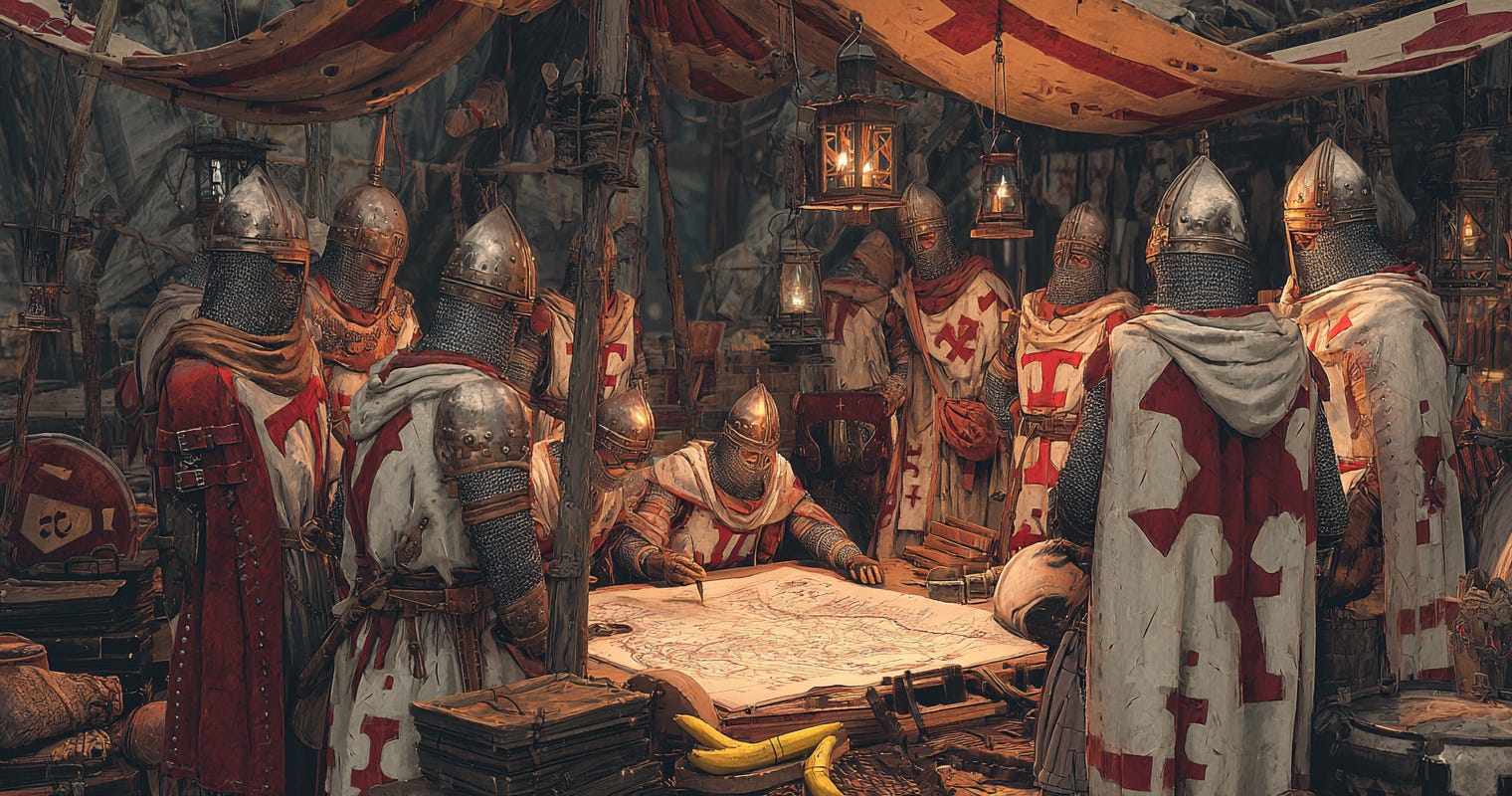
PART VII — WERE THE CRUSADES AGGRESSIVE OR DEFENSIVE?
The truth is uncomfortable for both sides — because it’s mixed.
From the Christian perspective:
They were responding to:
centuries of lost territory
pressure on Byzantium
the fall of Jerusalem
fear of total collapse
The Crusades were seen as reconquest and survival, not conquest.
From the Muslim perspective:
The Crusaders were foreign invaders.
Even if the wars began as reactions, the behavior of Crusader armies — brutality, plunder, religious zeal — left deep scars.
Historically:
Both sides fought for:
land
power
holy sites
trade routes
prestige
geopolitical advantage
There were no pure heroes or pure villains.
History rarely offers those.
PART VIII — WHAT THE CRUSADES ACTUALLY CHANGED
The Crusades reshaped the medieval world:
1. Europe became more outward-facing
Trade expanded.
Ideas flowed.
Naval power increased.
2. Byzantium never recovered
The Fourth Crusade destroyed the empire’s future.
3. Islamic states became more unified
Leaders like Saladin brought political cohesion.
4. Christian and Muslim relations changed for centuries
The Crusades became part of both cultures’ historical memory — often for political purposes.
5. The Mediterranean world was permanently altered
Economically, religiously, and politically.
CONCLUSION — THE CRUSADES WERE NOT THE BEGINNING. THEY WERE THE AFTERMATH.
Most people think the Crusades started the conflict between Christian Europe and the Islamic world.
In reality, they were a late chapter, not the opening act.
The First Crusade happened centuries after:
Persia fell
Egypt fell
Jerusalem fell
North Africa fell
Spain fell
Sicily fell
The Byzantine Empire began collapsing
The Crusades were Europe’s attempt —
clumsy, brutal, ambitious, desperate —
to push back the tide of history.
They failed in the long run.
But they defined an era —
and they shaped the world we live in today.