
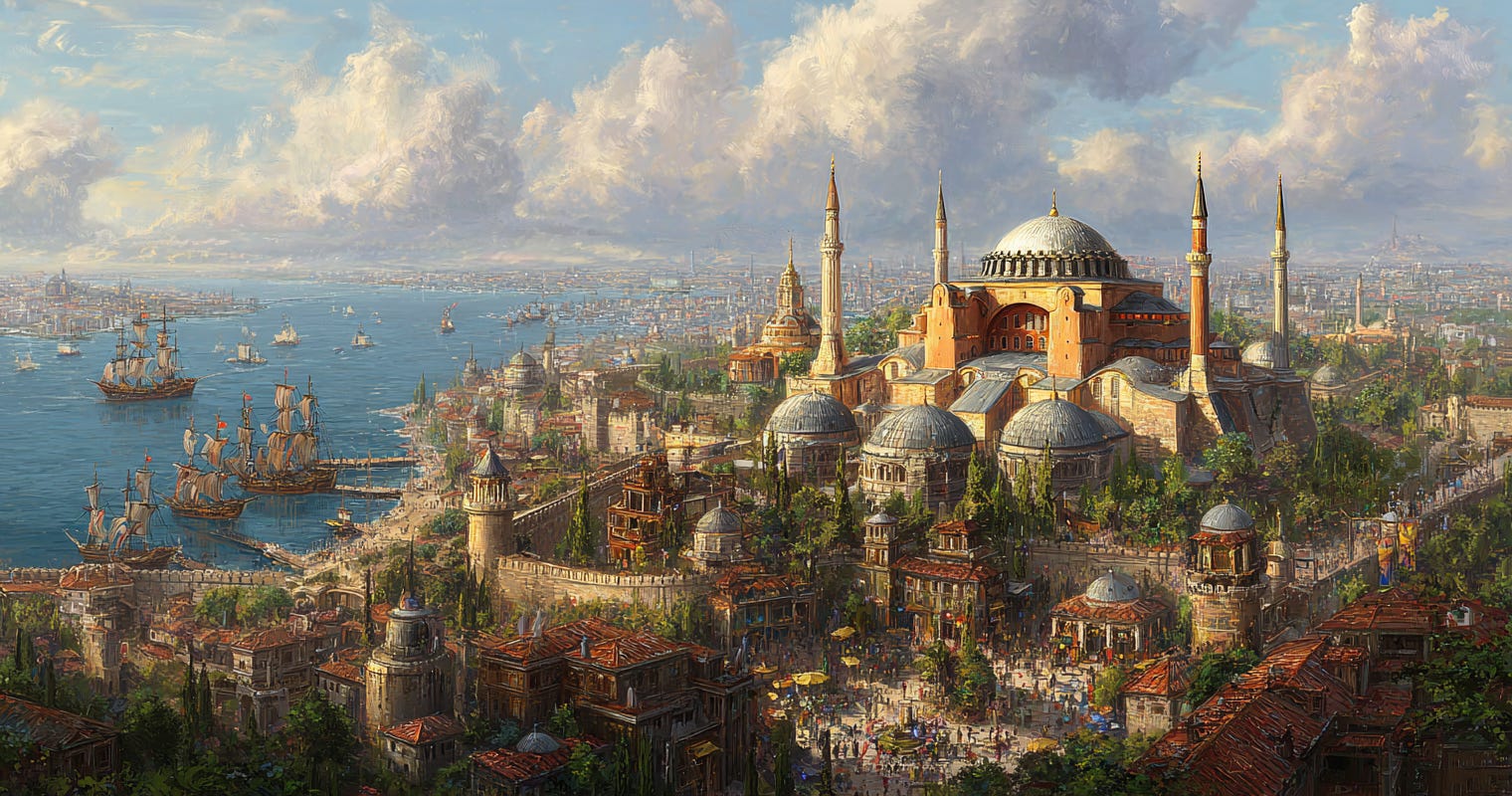
INTRO — THE EMPIRE THAT REFUSED TO DIE
Most people think Rome fell in 476 AD.
Wrong.
Only the Western half fell.
The Eastern half — Byzantium — kept going, fighting, scheming, praying, taxing, plotting, and reinventing itself for another 1,100 years.
It survived barbarians, Persians, Arabs, Crusaders, Bulgarians, plague, earthquakes, and more palace coups than Game of Thrones Season 1–8 combined.
The Byzantine Empire wasn’t just Rome’s leftover half —
it was Rome’s final form.
Its existence is one long lesson in how to survive when everything around you collapses.
PART I — CONSTANTINOPLE: THE CITY BUILT TO BE UNCONQUERABLE
Constantine didn’t choose Constantinople by accident.
It had:
✔ Natural triple defenses
Water on two sides
The Golden Horn protecting the harbor
Hills for elevation
Strategic Bosporus choke point
✔ Economic advantages
Silk Road access
Grain shipments
Major port trade
Tax revenue from three continents
✔ The Theodosian Walls
The greatest defensive fortification in the medieval world:
triple-layer system
moat
inner wall
outer wall
towers every 50–70 meters
high enough to mock siege towers
For 1,000 years, nothing broke these walls…
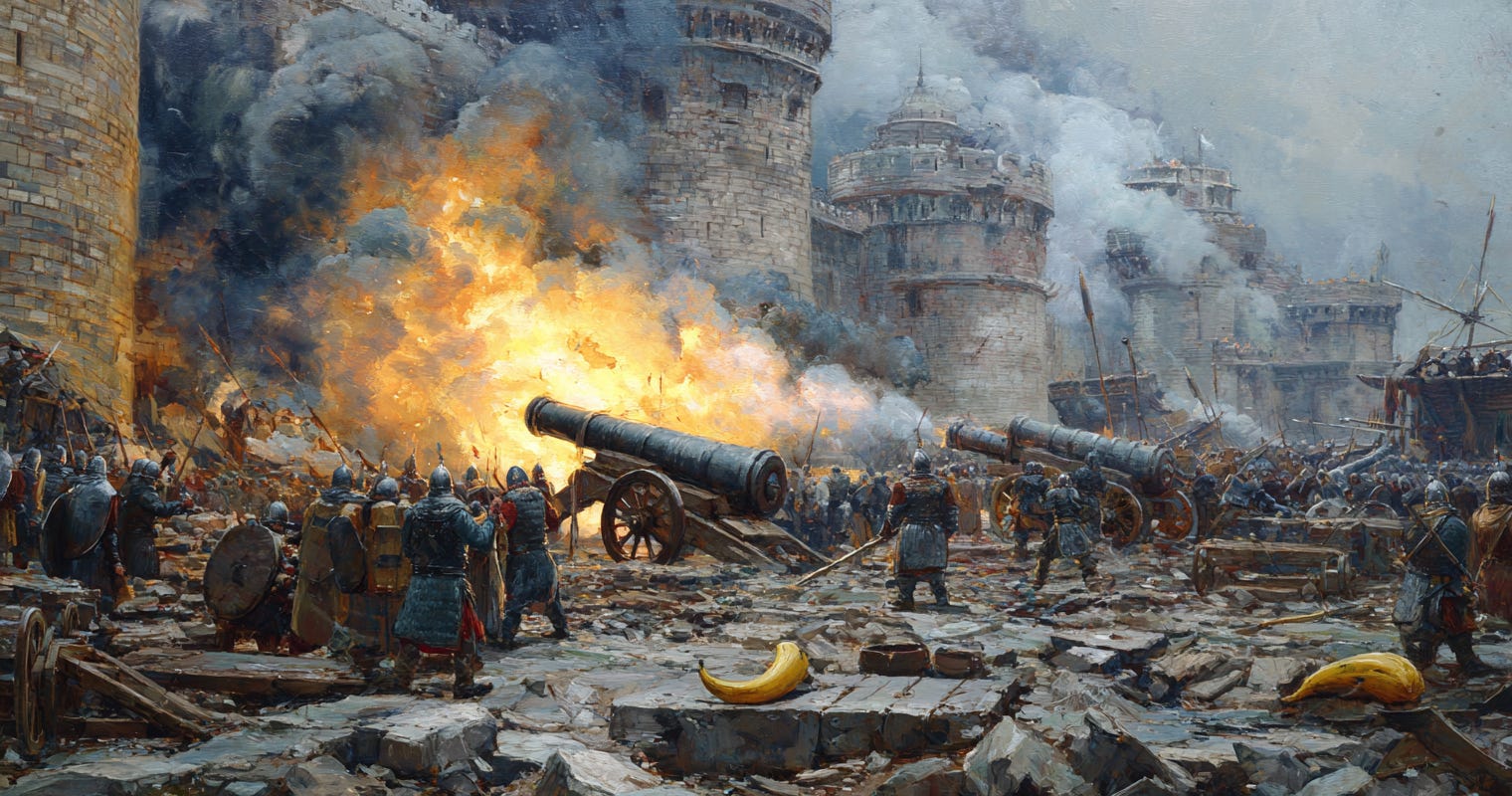
until cannons changed the game.
Without Constantinople’s geography and walls, Byzantium wouldn’t have lasted a century.
PART II — POLITICAL CHAOS: HOW THE EMPIRE FUNCTIONED WHILE CONSTANTLY ON FIRE
If your HR department is ever having a bad day, remind them:
Byzantine emperors had a 30% chance of getting assassinated by coworkers.
Emperors were:
blinded
poisoned
smothered
exiled
overthrown
replaced by relatives
replaced by in-laws
replaced by ambitious generals
dragged into monasteries to become forced monks
Yet the empire thrived.
Why?
Because institutions mattered more than individuals.
Even when emperors were clowns, fools, zealots, or teenaged disasters, the bureaucracy, theming system, and Church kept things running.
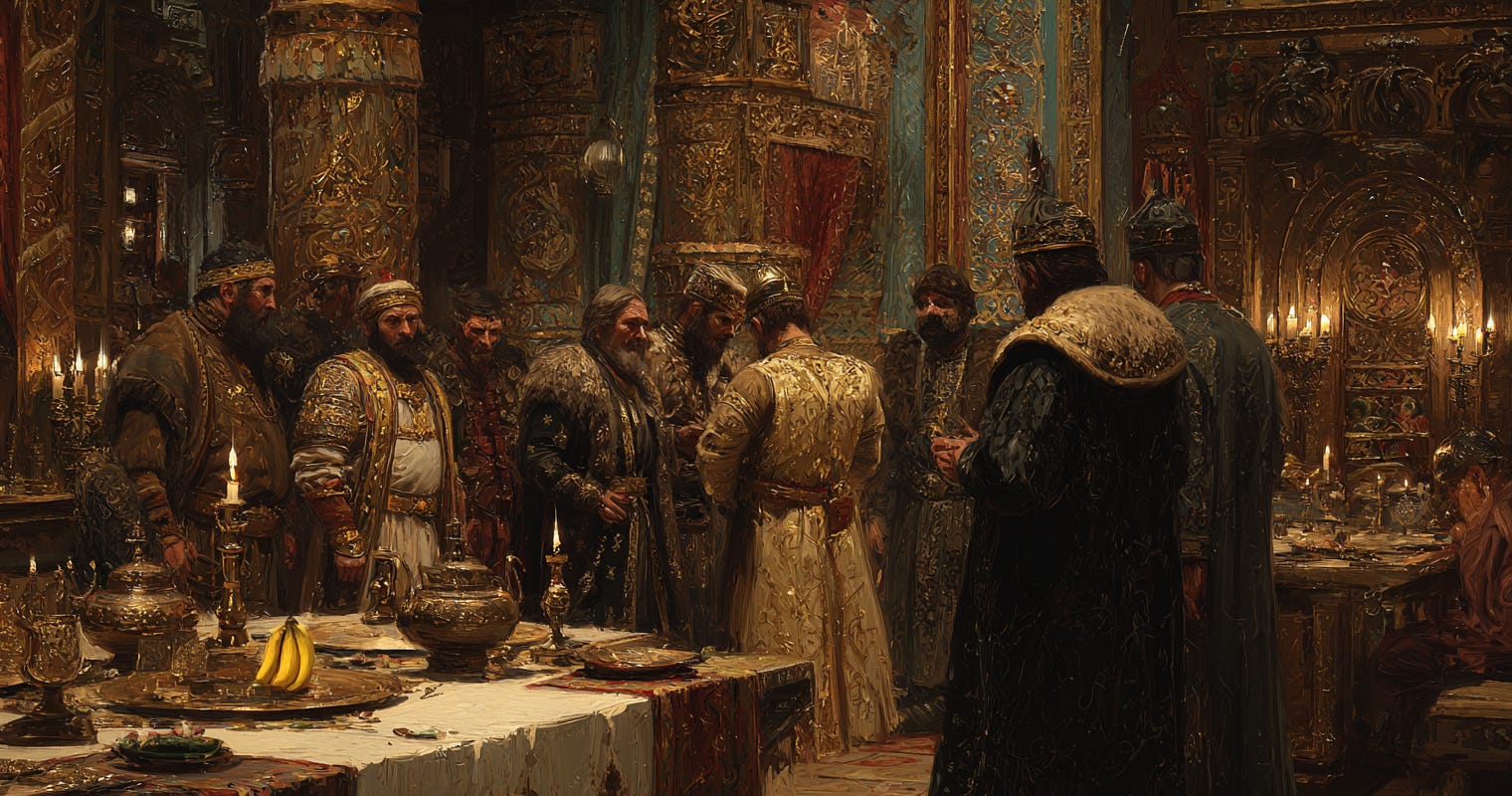
PART III — THE BYZANTINE BUREAUCRACY: PAPERWORK AS AN EMPIRE-BUILDING WEAPON
Byzantine administration was so complex that even modern historians get migraines reading the job descriptions.
But it worked.
The bureaucracy ensured:
tax collection
law enforcement
census records
grain distribution
military recruitment
religious arbitration
foreign diplomacy
property rights
The system was efficient, standardized, and staffed by educated elites.
This made Byzantium shockingly stable even when politics weren’t.
Where the Western Roman Empire collapsed into warlord rule, Byzantium remained an organized state.
A messy one, but a functional one.
PART IV — BYZANTINE DIPLOMACY: THE EMPIRE THAT OUT-THOUGHT ITS ENEMIES
No empire negotiated like Byzantium.
When surrounded by enemies, they did not fight everyone at once.
They used:
bribes
marriages
alliances
religious conversions
economic incentives
targeted assassinations
propaganda
mercenary contracts
They played nomads against nomads, Persians against Arabs, Bulgars against Russians.
Byzantium survived by making its enemies fight each other.
Diplomacy was a military weapon.
And they wielded it with genius.
PART V — THE THEMES: THE MILITARY SYSTEM THAT SAVED THE EMPIRE
After near-collapse in the 7th century, the Byzantines reorganized into themes — military provinces.
Each theme had:
soldiers
land grants
local commanders
defense responsibility
It was decentralized defensive readiness.
Themes allowed Byzantium to:
resist invasions
recover territory
survive Arab expansion
stabilize borders
reduce costs
It wasn’t glamorous, but it kept the empire intact.
PART VI — RELIGION, ICONS, AND IMPERIAL IDEOLOGY
Byzantium believed something revolutionary:
“We ARE the Roman Empire.”
Not heirs.
Not successors.
THE Roman Empire.
This ideology was:
political
religious
cultural
legal
administrative
It gave Byzantines a sense of continuity while the rest of Europe was reinventing itself.
Even the emperor was seen as God’s chosen administrator — which came with perks like:
supreme authority
fancy purple robes
immediate assassination when unpopular
The Church was a stabilizing force.
And occasionally an explosive one.
PART VII — BYZANTINE WARFARE: GREEK FIRE & MILITARY GENIUS
The Byzantines didn’t fight like Rome.
They fought like chess masters.
Their strategies included:
mobile cavalry
strategic retreats
fortified passes
delaying maneuvers
feigned withdrawals
Greek Fire (flamethrower naval weapon)
spy networks
mercenary auxiliaries
Greek Fire was so feared that enemies believed it was magic.
Even today, historians aren’t sure how it worked.
It could:
burn on water
stick to ships
explode on impact
ruin enemy morale
It kept the empire alive for centuries.
PART VIII — DECLINE: BAD LUCK, BAD EMPERORS, AND BAD NEIGHBORS
Even an empire of geniuses has limits.
The worst blows:
Manzikert (1071): catastrophic loss to Seljuk Turks
Fourth Crusade (1204): “allies” sack Constantinople
Civil wars draining the treasury
Ottoman rise
Artillery making the walls obsolete
Byzantium didn’t fall in a day.
It was chipped away over centuries.
PART IX — 1453: THE END OF THE ENDURANCE RUN
After 1,100 years, Constantinople faced the Ottomans:
80,000+ soldiers
elite Janissaries
massive cannons
naval blockade
The Theodosian Walls held… until the great cannon bombardment broke a section.
The last emperor, Constantine XI, died fighting.
The Roman Empire finally ended —
not dishonorably, but heroically.
CONCLUSION — THE GREATEST SURVIVOR STATE IN HISTORY
Byzantium wasn’t the empire that conquered the world.
It was the empire that refused to die.
For over a millennium, it survived through:
intelligence
bureaucracy
diplomacy
military innovation
cultural stability
strategic brilliance
Its story is not about glory.
It’s about endurance.
Byzantium outlived:
the Huns
the Goths
the Persians
the Caliphate
the Crusader States
the Bulgars
every medieval kingdom
Truly — the empire that shouldn’t have lasted,
but did.