
INTRO — THE PLAGUE THAT ENDED A WORLD
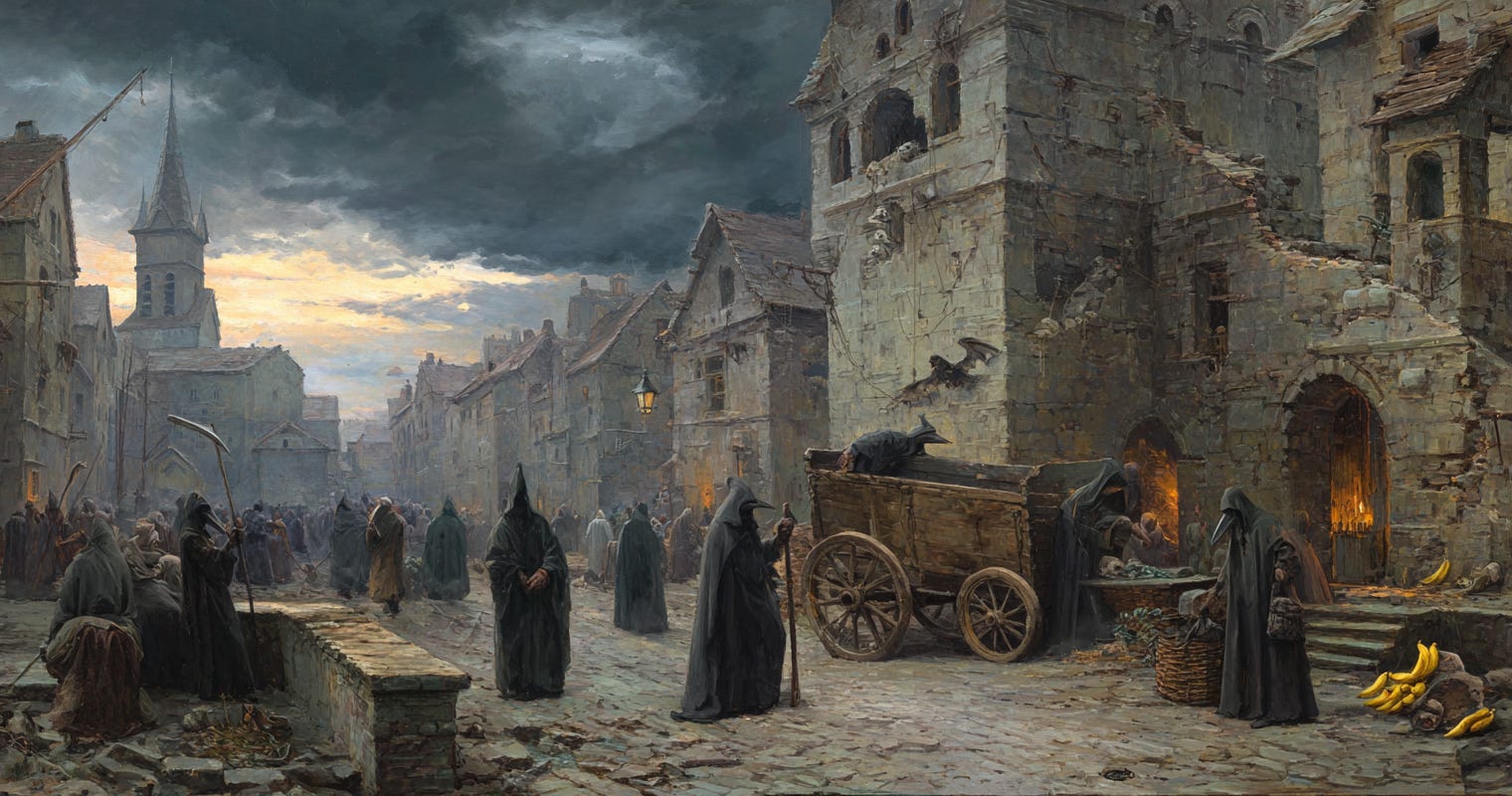
Between 1347 and 1351, Europe faced a catastrophe so profound that chroniclers could barely find words to describe it. Entire villages were erased. Cities emptied. Fields went untilled. Bells tolled endlessly, funerals became mass events, and clergy died faster than they could absolve the dying.
Yet the Black Death did more than kill.
It ended the medieval world — and unintentionally constructed the foundations of a new one.
The Black Death wasn’t just the deadliest pandemic in European history — it was a turning point. It shattered old systems, broke the power of the medieval elite, rewired the economy, and set Europe on a new course.
In the middle of catastrophe, a different world began to form.
PART I — WHERE IT CAME FROM
The plague’s origin remains debated, but most historians agree it emerged somewhere in Central Asia from the bacterium Yersinia pestis. It traveled along trade routes, hitchhiking on fleas carried by rodents. The Silk Road — the artery of Eurasia — became the unwitting superhighway of death.
When the plague reached Crimea in 1347, Italian merchants fleeing Genoese trading posts carried the disease into Mediterranean ports. From there, it jumped rapidly to Marseille, Florence, Barcelona, and Venice.
And once it reached the dense cities of medieval Europe, the devastation became unstoppable.
PART II — DAILY LIFE CRUMBLES
The medieval world was not built for pandemics. Houses were small and crowded. Cities were tight knots of streets, markets, and shared living spaces. Rodents thrived. Fleas multiplied. Sanitation was mostly theoretical.
When people began dying in staggering numbers, terror outpaced the disease. Chroniclers describe families abandoning sick relatives, priests refusing to administer last rites, and entire parishes left without clergy.
In Florence — the city of Dante and future home of the Renaissance — Boccaccio wrote:
“The sick died unattended, and the dead were buried without ceremony.”
People sealed themselves in homes. Merchants shut their shops. Guilds stopped meeting. Courts closed. The economic machinery froze.
Europe became a continent holding its breath.
PART III — HOW MANY DIED?
Modern estimates suggest the Black Death killed between 40% and 60% of Europe’s population — around 25 to 50 million people.
In some regions of England, the death rate reached 70%.
In the cities of Italy, entire neighborhoods became empty shells.
For medieval Europe — with no vaccines, no germ theory, and no public health system — it was a collapse unprecedented in its scale.
The social fabric tore, and no one knew how to repair it.
PART IV — THE ECONOMIC RESET
Here is the part where the world changes.
Before the plague, Europe was overcrowded with labor. The nobility owned vast estates worked by peasants and serfs who had almost no bargaining power. Wages were low, rents were high, and land hunger defined rural life.
When the plague wiped out a huge portion of the population, the system broke instantly.
There were suddenly:
too few workers
too much land
not enough tenants
vacant farms everywhere
Landlords panicked.
Laborers became valuable for the first time.
Peasants negotiated better wages.
Some left manorial estates entirely.
Others demanded lower rents.
The entire system of medieval serfdom — which had existed for centuries — began to unravel.
The plague killed millions, but it also killed feudalism.
PART V — WAGES RISE, POWER SHIFTS
With so few workers available, wages rose sharply. Surviving peasants found they could:
choose where to work
relocate to better conditions
demand fairer treatment
leverage scarcity
move into towns
learn trades
A new economic class began to emerge: workers with agency.
This shift terrified kings and nobles.
Governments tried to freeze wages, cap labor mobility, and restrict bargaining rights.
England passed the Statute of Labourers (1351), which attempted to force wages back to pre-plague levels. It failed.
When labor becomes scarce, laws cannot stop reality.
PART VI — CITIES RECOVER AND REINVENT THEMSELVES
Urban centers initially suffered the most — but they also recovered the fastest.
Fewer people meant:
more available housing
more opportunity
more demand for specialized trades
more upward mobility
Merchants and artisans gained influence.
Wealth became more diversified.
Guilds reorganized themselves.
New industries grew to replace the dead.
The late medieval economy didn’t crumble.
It evolved.
And it evolved into something far more dynamic than what existed before.
PART VII — THE CHURCH LOSES ITS GRIP
Nothing damaged the medieval Church’s authority more than the plague.
Clergy died at extraordinary rates — often more than the laity, because they cared for the sick. Institutions broke down. People lost faith in spiritual protection.
If priests died as easily as commoners, what did that say about divine favor?
The Church’s social and political dominance began to crack.
Criticism increased.
Reform movements gained traction.
Over the next century, a slow-burning crisis of legitimacy spread — eventually leading to the Reformation.
The seeds were planted in the plague years.
PART VIII — ART, LITERATURE, AND THE MIND OF A GENERATION
A cultural shift followed.
The medieval obsession with salvation deepened, but it also changed tone.
Art filled with skeletons, empty villages, danse macabre processions, and grim depictions of human fragility. Literature became personal, introspective, and fatalistic.
Yet in the ashes of despair came rebirth.
The Renaissance did not begin because of the plague —
but the plague created conditions that made the Renaissance possible:
wealth concentrated in fewer hands
labor mobility increased
cities reinvented their economies
patronage became more powerful
intellectual curiosity replaced rigid conformity
Death made space for innovation.
PART IX — WHY THE BLACK DEATH STILL MATTERS
Pandemics reveal what societies are built on.
The Black Death revealed:
Medieval Europe was brittle
Feudalism was unsustainable
Cities needed new governance
Labor had hidden power
The Church was not invincible
When the population dropped, the structure of society had to shift.
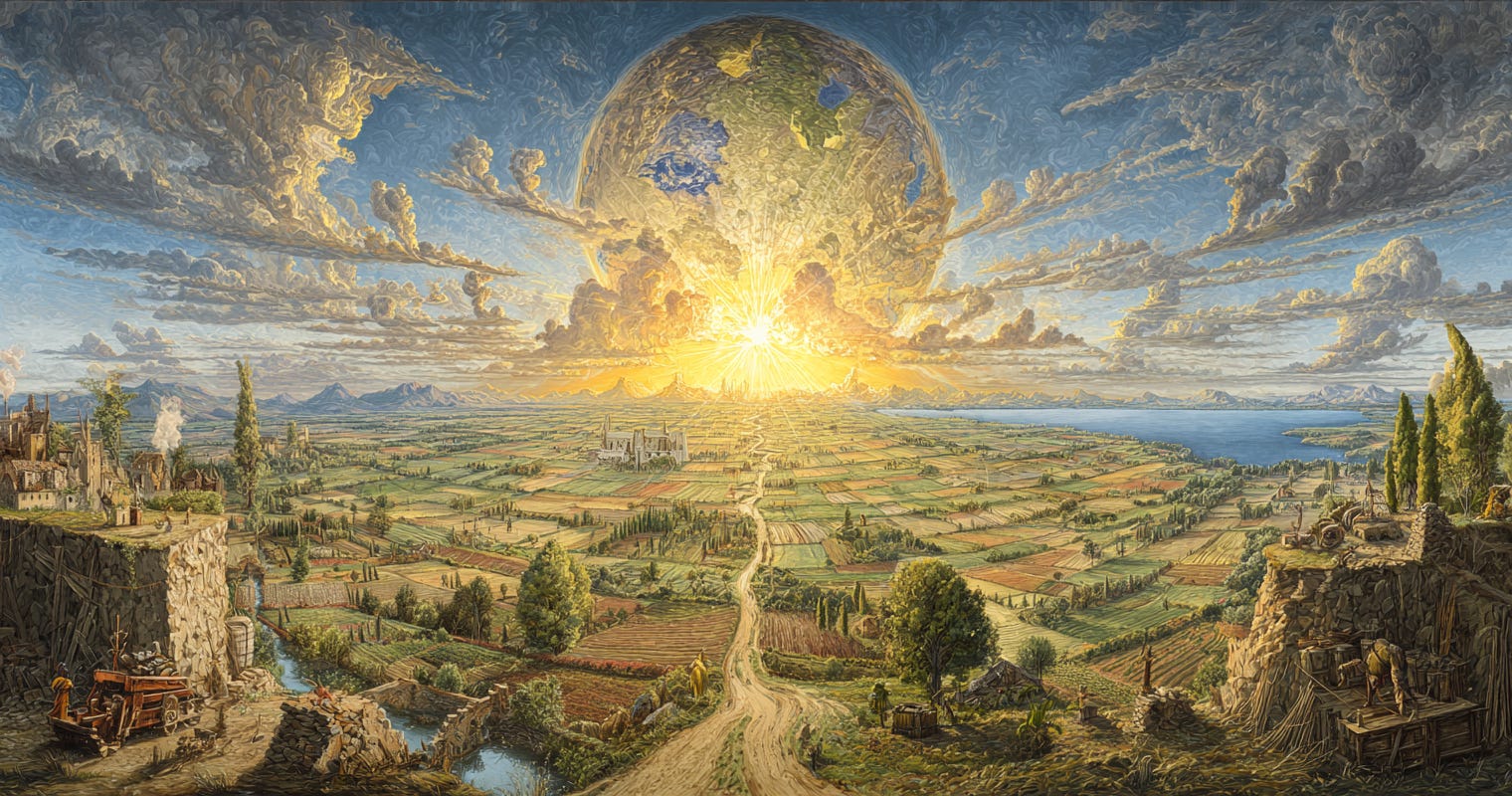
In rebuilding itself, Europe created something different:
stronger cities
more flexible labor markets
centralized states
rising merchant classes
the foundations of proto-capitalism
The plague was a tragedy.
But it was also a turning point.
CONCLUSION — THE DISEASE THAT BROKE A SYSTEM AND BUILT ANOTHER
The Black Death was not just a biological event.
It was a social, economic, political, and cultural rupture.
Its devastation forced a collapse of old systems — and accidentally created conditions for a more modern world.
Europe rebuilt itself not despite the plague,
but because the plague ended a world that could no longer sustain itself.
History doesn’t always move forward because of progress.
Sometimes it moves forward because disaster clears the path.
The Black Death was one of those moments.