
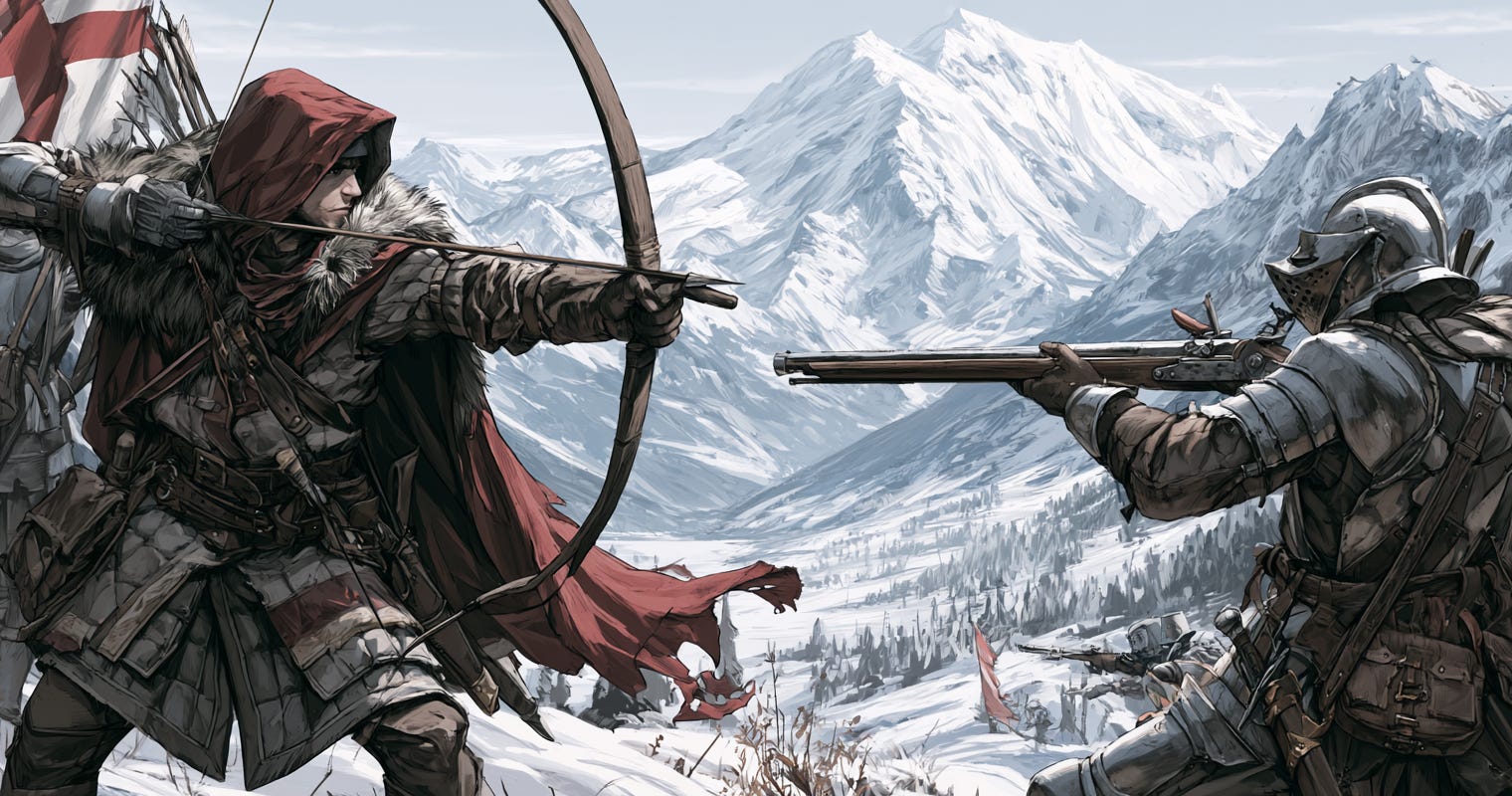
The Arquebus & Musket Revolution: Why Guns Beat Swords Forever
For centuries, the battlefield belonged to the sword, the spear, and the heavily armored knight.
Then, in the 15th and 16th centuries, a noisy, smoky, inaccurate new weapon changed everything.
The arquebus (and later the musket) didn’t just improve on bows and crossbows — it ended the age of the armored knight and transformed warfare forever.
The Old World: Knights & Armor
Medieval European warfare was dominated by heavily armored knights and professional infantry with swords and pikes. Armor was getting better — plate armor could stop arrows.
But it was expensive and required years of training.
The English Longbow: Superior but Impractical
The English longbow was actually better than early firearms in many ways:
Faster rate of fire
Greater range and accuracy in skilled hands
Cheaper to produce
English longbowmen famously devastated French knights at battles like Agincourt (1415).
But the longbow had a fatal flaw: it took a lifetime to master. Training a good longbowman started in childhood and required constant practice. You couldn’t quickly replace losses.
The Arquebus Arrives
The arquebus was slow to reload, inaccurate, and dangerous to the user.
But it had two massive advantages:
It could punch through armor.
It created psychological terror.
A common soldier with a few weeks of training could kill a knight who had trained his whole life.
The Shock of Firepower
When the first arquebusiers fired in battle, the effect was devastating — not just physically, but mentally.
The loud bang
The flash of fire
The thick smoke
The smell of gunpowder
To a medieval soldier who had never experienced anything like it, it felt like thunder from hell. Horses panicked. Formations broke. The psychological shock was often more important than the actual casualties in the early days.
The Musket Takes Over
The musket improved on the arquebus — longer barrel, better range, more power. By the 17th century, muskets (with bayonets) became the dominant infantry weapon.
Armies shifted from knights and pikemen to lines of musket-armed infantry. Drill and discipline became more important than individual skill with a sword.
Why Guns Won
Democratization of Warfare — Common soldiers could defeat armored elites.
Ease of Training — A musketman could be trained in weeks, not years.
Scalability — Easy to replace losses with new recruits.
Psychological Impact — The noise, smoke, and flash were terrifying.
Armor Penetration — Guns eventually outmatched even the best plate armor.
The longbow was superior in raw performance, but guns won because they were practical at scale.
The Age of the Knight was over. The Age of the Infantry had begun.
The Global Impact
The gun revolution helped European powers colonize much of the world. It changed the balance of power in Asia, Africa, and the Americas. It also led to the development of professional standing armies and modern military tactics.
Historygonebananas Signature Close
The arquebus and musket proved that technology can upend centuries of tradition. A cheap gun in the hands of a farmer could defeat a lifetime-trained knight — and the noise alone was often enough to break an army.
The longbow was better in skilled hands, but guns won the war of scalability.
The sword had its day. The gun took over — and never looked back.
What do you think — was the psychological shock of early gunfire the real game-changer, or was it the ease of training?
Drop your thoughts below. I read every single one.
SEO/AEO FAQ
Q1: What is an arquebus?
A: An early muzzle-loaded firearm used from the 15th to 17th centuries.
Q2: Why did guns replace swords and armor?
A: They could penetrate armor, were easier to train on, scalable, and created massive psychological terror.
Q3: Were longbows better than early guns?
A: Yes in raw performance (range, rate of fire), but they required years of training and were hard to replace.
Q4: What was the psychological impact of early guns?
A: The loud bang, flash, and smoke terrified soldiers and horses who had never experienced anything like it.
Q5: How did this change the world?
A: It enabled European colonization, the rise of professional armies, and modern warfare tactics.
Q6: What’s the main lesson?
A: Technological innovation can completely upend centuries-old military traditions.
I'm saying it again those images are amazing 😍