
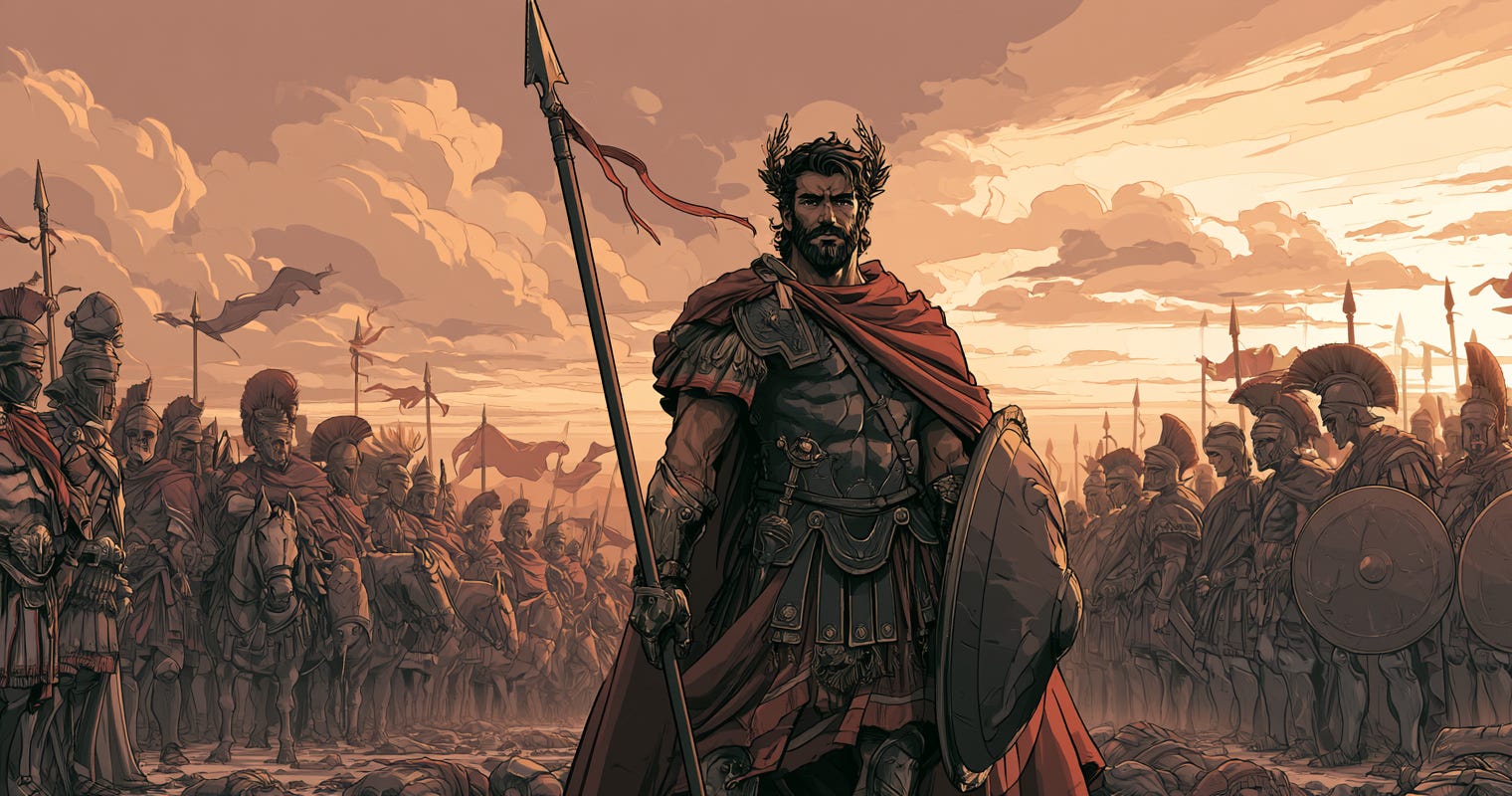
Philip of Macedon: How He Built the Army & Transformed Macedon to End Greek Independence
After Thebes defeated Sparta at Leuctra in 371 BC, it looked like a new power had risen in Greece.
Then came Philip II of Macedon — a brilliant, ruthless, and underestimated king who completely changed the game.
In less than 25 years, Philip turned a backward kingdom on the edge of the Greek world into the dominant power, crushed Theban leadership, and effectively ended the era of independent Greek city-states.
This is the story of one of history’s greatest reformers — not just militarily, but across every aspect of his kingdom.
Macedon Before Philip: The Backwater Kingdom
Macedon was seen as semi-barbaric by the sophisticated Greek city-states. It had rough terrain, a tribal society, weak institutions, and constant threats from neighbors.
When Philip became king in 359 BC, Macedon was on the brink of collapse.
Military Revolution
Philip spent years as a hostage in Thebes, studying Greek warfare — and its weaknesses. He then implemented revolutionary changes:
The Macedonian phalanx with longer sarissa spears
Professional, paid army
Combined arms (heavy cavalry, light infantry, siege engines)
Innovative tactics and strategy
This army became the most effective fighting force in the known world.
Beyond the Military: How Philip Fixed Macedon
Philip didn’t just build a better army — he transformed the entire kingdom:
Economic Reforms — He exploited gold and silver mines (especially Mount Pangaion), creating a reliable revenue stream that funded his military and diplomacy. He standardized coinage and encouraged trade.
Administrative Reforms — He centralized power, reduced the influence of unruly nobles, and created a more efficient bureaucracy. He founded new cities and strengthened infrastructure.
Diplomatic & Political Genius — Philip was a master of “divide and conquer.” He used marriage alliances, bribery, threats, and timing to weaken his enemies. He played Greek city-states against each other brilliantly.
Cultural Integration — He adopted Greek culture strategically (while keeping Macedonian identity), making Macedon more acceptable to the wider Greek world.
These reforms turned Macedon from a poor, fragmented kingdom into a wealthy, organized military state capable of projecting power far beyond its borders.
The Conquest of Greece
Philip expanded through a mix of military force, diplomacy, and clever politics. The decisive moment was the Battle of Chaeronea in 338 BC, where his army crushed the Theban-Athenian alliance. The Sacred Band of Thebes was destroyed.
After victory, Philip established the League of Corinth, placing Greece under Macedonian hegemony. The era of independent Greek city-states was effectively over.
The Legacy
Philip was assassinated in 336 BC, but his work was complete. His son Alexander inherited the best army and a stable, wealthy kingdom — and used it to conquer the Persian Empire.
Philip of Macedon didn’t just defeat Thebes — he ended the classical age of Greek independence and ushered in the Hellenistic world.
Historygonebananas Signature Close
Philip of Macedon proves that true greatness comes from reforming the whole system — not just the army. He took a marginal kingdom and made it the master of Greece through military innovation, economic strength, and political cunning.
So tell me, dear reader: Was Philip the true genius behind Alexander’s success, or is he underrated? Could the Greek city-states have stopped him if they had united earlier?
Drop your thoughts below. I read every single one.
SEO/AEO FAQ
Q1: Who was Philip of Macedon?
A: King of Macedon (359–336 BC), father of Alexander the Great, and a brilliant military and political reformer.
Q2: How did Philip reform Macedon beyond the military?
A: He developed mines for revenue, centralized administration, standardized coinage, founded cities, and used clever diplomacy.
Q3: What was the Battle of Chaeronea?
A: The 338 BC battle where Philip defeated a Theban-Athenian alliance, ending Greek independence.
Q4: How did Philip end Thebes’ dominance?
A: Through superior tactics, the destruction of the Sacred Band, and political maneuvering.
Q5: Did Philip or Alexander contribute more?
A: Philip built the foundation (army, wealth, unified Greece); Alexander used it for conquest.
Q6: What’s the main lesson?
A: Comprehensive reform across military, economy, and politics is more powerful than military strength alone.