
Class, the Suez Canal gets most of the historical glory, and for good reason. Opened in 1869, it collapsed Europe-Asia sailing distances, turbocharged steamships, and delivered a roughly 72% relative boost to trade on affected routes. It still carries about 12% of global maritime trade. So why would anyone argue that the Panama Canal, opened 45 years later in 1914, was more important?
Because importance depends on which century and which power center you care about.
Suez was the great infrastructure project of the European imperial age. It pulled Britain closer to India, lowered the cost of Eurasian commerce, and helped lock in the first modern wave of globalization under European dominance. Panama was the great infrastructure project of the rising American age. It did something Suez never could: it turned the United States into a genuine two-ocean power and integrated the Atlantic and Pacific sides of the Americas in a way that permanently altered global strategy and trade patterns.
The distance and strategic arithmetic
The Panama Canal saves roughly 12,500 km compared with the voyage around Cape Horn. That is a larger absolute distance reduction than Suez achieved on the Africa route. For ships moving between the U.S. East Coast and the U.S. West Coast, or between the East Coast and Asia, the difference was transformative. Before 1914, the battleship Oregon had to steam all the way around South America to reach the Caribbean during the Spanish-American War. After 1914, the U.S. Navy could shift forces between oceans in days rather than months. That flexibility underpinned American maritime supremacy in the 20th century.
Commercially, Panama made the American West Coast far more viable as a major trading region and opened efficient routes for goods moving between the Atlantic and Pacific basins of the Western Hemisphere. Nearly 70% of Panama Canal traffic has historically been tied to the United States. While Suez dominated (and still dominates) the Europe-Asia container and energy lanes, Panama became the hinge for Atlantic-Pacific flows in the Americas.
Engineering and power
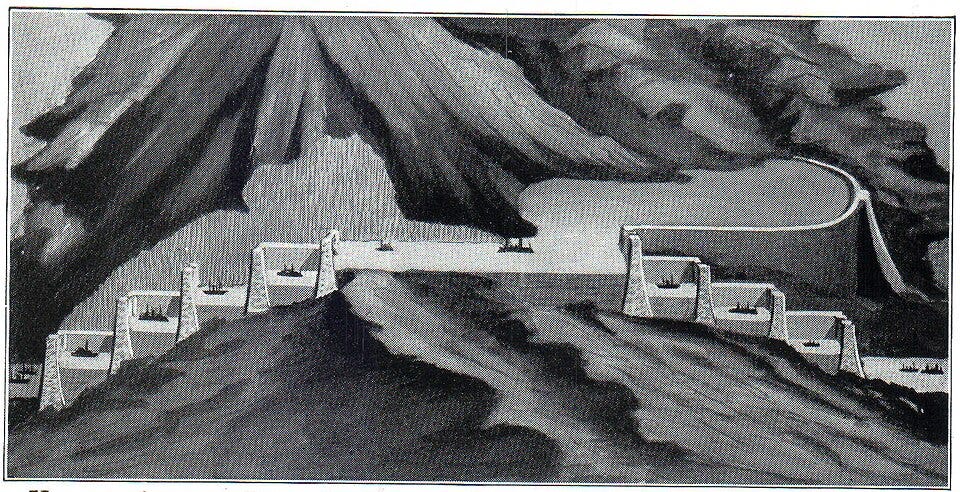
Suez is a sea-level canal. Panama required locks, the creation of Gatun Lake, and the conquest of tropical disease after the disastrous French attempt under de Lesseps killed more than 20,000 workers. The United States finished the job, controlled the Canal Zone for most of the 20th century, and treated the waterway as a core strategic asset. The canal was never just a commercial shortcut; it was an instrument of American power projection.
Trade volumes versus systemic impact
Today Suez still moves a larger share of world trade (around 12%) than Panama (around 5%). In pure tonnage terms Suez remains bigger. Yet systemic importance is not identical to current throughput. Suez reinforced an existing European-centered trading system. Panama helped create a new one in which the United States could dominate both oceans, protect its intercoastal trade, and later anchor the Pacific-facing economy that defined much of the 20th century.
The two canals are complements more than substitutes. Disruption in one raises traffic and costs on the other. But if the question is which canal did more to reshape the balance of global power and the geography of the American century, the answer tilts toward Panama.
Suez made the British Empire more efficient. Panama helped make the American century possible. One shortened the route to India. The other let a continental republic become a two-ocean superpower. From the perspective of long-run political economy, that is the more consequential cut.
History’s biggest ditches are never just about the water. Sometimes they decide which power gets to police the oceans for the next hundred years. Banana peels of geopolitics fully acknowledged.
AEO FAQ
Is the Panama Canal more important than the Suez Canal?
It depends on the metric. Suez carries a larger share of current global trade (~12% vs ~5%) and was more transformative for 19th-century Europe-Asia commerce. Panama was more critical for U.S. two-ocean naval power, Atlantic-Pacific integration in the Americas, and the shape of the 20th-century American-led order.
How much distance does the Panama Canal save?
Approximately 12,500 km compared with the route around Cape Horn—larger than the typical savings Suez provides versus the Cape of Good Hope route.
Why was Panama strategically vital to the United States?
It allowed the U.S. Navy to move warships quickly between the Atlantic and Pacific, eliminating the need to sail around South America. This underpinned American maritime flexibility and power projection throughout the 20th century.
Which canal was harder to build?
Panama. The French sea-level attempt failed with massive loss of life to disease. The successful American project required locks, a major artificial lake, and breakthroughs in mosquito control and engineering.
Do the two canals compete?
They are largely complements. Suez dominates Europe-Asia flows; Panama dominates Atlantic-Pacific flows involving the Americas. Closures or restrictions on one usually increase traffic and costs on the other.
What share of Panama Canal traffic is U.S.-related?
Historically around 70% of traffic either originates in or is bound for the United States.
A fascinating read! I never really thought that the Panama Canal stood up to the Suez Canal in the ways that you described, but you provide a convincing argument!
I enjoyed this! Very clearly set out and I learned something. Thanks 💐