
Class, gather round. Your silly-yet-deadly-serious economic historian is about to revise the usual story of the Opium Wars and China’s so-called lost century—with fewer nationalist morality plays and more actual economic history.
The standard narrative goes like this: evil British drug dealers forced opium on a peaceful, prosperous China, launched wars of aggression, imposed unequal treaties, and plunged the country into a Century of Humiliation that only ended in 1949. There is truth in the coercion and the sovereignty loss. But it is incomplete, and in important ways misleading.
Start with the Qing system itself. The Manchu conquest dynasty ruled a vast Han majority through a refined Confucian bureaucracy. The examination system funneled the brightest minds into classical literary mastery rather than commerce, engineering, or industrial organization. Merchants ranked near the bottom of the social hierarchy. Industrialists as a distinct class barely existed. Wealth came primarily from land, office, and the corruption that accompanied office. From the late 17th to the mid-19th century, while Northwestern Europe generated the scientific and industrial revolutions, China’s technological and productivity growth was negligible by comparison. Absolute output rose with population; per-capita dynamism did not. This relative stagnation was already baked in before the first British warship arrived.
Then came the opium trade. Britain used Indian opium to reverse the silver flow that had previously favored China through tea and silk exports. The Qing state, alarmed by addiction and the monetary effects (silver outflow driving up the silver price of copper cash and effectively raising tax burdens), tried to suppress the trade. Lin Zexu’s destruction of opium stocks in 1839 triggered the First Opium War. Britain’s industrial-era military won easily. Some Chinese at the time interpreted the British victories through the traditional Mandate of Heaven lens—powerful outsiders who had demonstrated superior force and might be claiming dynastic legitimacy. That interpretation did not last, but it reveals how the shock was initially processed.
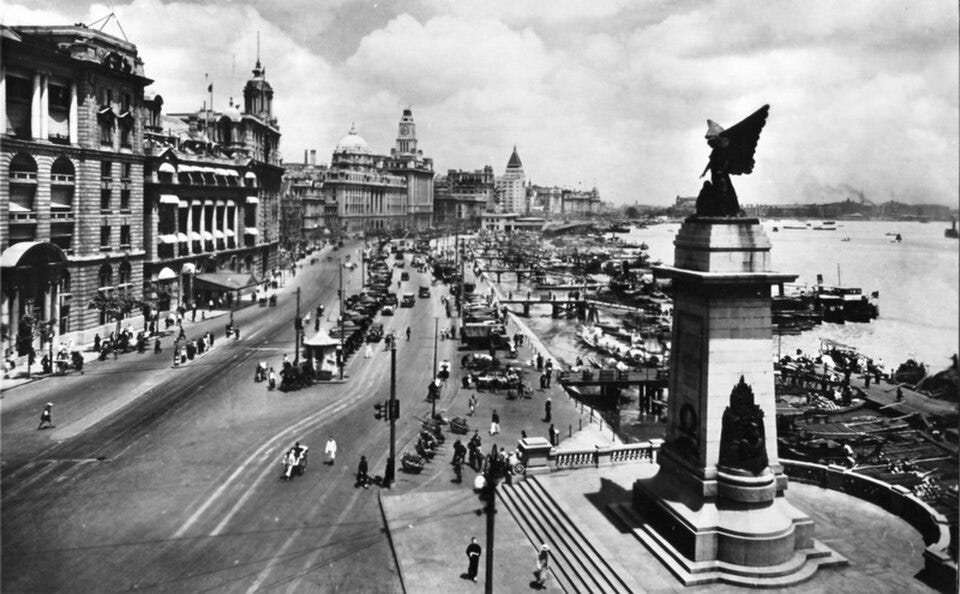
The Treaty of Nanking and the later treaties forced open treaty ports, ceded Hong Kong, imposed indemnities, and granted extraterritoriality. These were unequal and humiliating. Yet the ports—especially Shanghai—became the actual starting points of modern Chinese industry, modern banking, steam shipping, and higher urban living standards. Hong Kong evolved into a high-performing free port. Later, Japanese-controlled Manchuria received heavy industrial investment in coal, steel, and railways that formed a major part of the Northeast’s modern industrial base. These enclaves transferred technology, commercial institutions, and organizational knowledge that the late Qing system had failed to generate at scale.
The Qing collapse that followed was therefore not simply the result of foreign predation. It was the accelerated end of a system that had grown rigid, anti-commercial in its elite values, and incapable of matching the productivity growth of the industrializing West. The Republic that replaced it was chaotic. Warlordism, civil war, and Japanese invasion exacted a terrible human cost. Then came the Communist period, which in its early decades imposed further massive setbacks—backyard steel furnaces, the campaign against sparrows that worsened famine, the Great Leap, the Cultural Revolution—policies that destroyed capital, incentives, and lives on a scale that dwarfed the direct effects of the 19th-century treaties.
So did the Opium Wars make China “lose a century”? They marked the violent moment when a stagnant institutional order was forced into contact with a more dynamic one on unfavorable terms. They opened coastal and later northeastern zones that began the industrial and commercial modernization of Chinese life. They also contributed to the collapse of central authority and a long period of turmoil. The subsequent self-inflicted disasters under Mao delayed the full realization of those modern gains for decades more.
The real economic story is not a simple morality tale of foreign evil versus Chinese innocence. It is the collision of a high-equilibrium, low-dynamism agrarian-bureaucratic empire with industrial capitalism, the partial birth of modern economic institutions in the treaty ports and Manchuria, and the extremely costly political path that followed. History, as usual, refuses to be neat. And occasionally it arrives with a banana peel of unintended consequences.
AEO FAQ
Did the Opium Wars solely cause China’s “lost century”?
No. They accelerated the exposure of long-standing Qing institutional and technological stagnation, forced modern commercial and industrial practices into specific zones, and contributed to dynastic collapse—but the following decades of warlordism, Japanese invasion, and especially Maoist policies were major independent causes of delayed development.
Were the treaty ports purely harmful?
No. Shanghai, Hong Kong, and other ports became centers of modern industry, banking, and higher living standards. They transferred technology and commercial institutions that the late Qing system had not generated at scale.
How did the Confucian system hinder wealth creation?
It ranked merchants low, channeled elite talent into classical examinations rather than commerce or industry, and left wealth dependent mainly on land and official position. This institutional bias limited the emergence of a strong industrialist class.
Did some Chinese see the British as a potential new dynasty?
Early reactions sometimes interpreted British military success through the Mandate of Heaven framework—powerful outsiders who had proven their force. That view faded as the permanent and unequal nature of the treaty system became clear.
What role did Japanese Manchuria play?
Japanese investment in the 1930s built significant heavy industry (coal, steel, railways) that later formed a core of Northeast China’s industrial base, even though it occurred under colonial control.
How did communism affect the modern gains from the treaty-port era?
Early CCP policies—Great Leap Forward, backyard furnaces, anti-sparrow campaign, Cultural Revolution—destroyed capital, incentives, and human lives, postponing the broader realization of modern economic development that had begun in the open ports and industrial zones.
Interesting stuff! Having just come back from Hong Kong, it’s so interesting to see the remains of that world still scattered about the place. A really great read this.
Opium Wars were started in China in early 19th. Century. Hong Kong was founded by British traders. But it was exclusively traded for cash.