
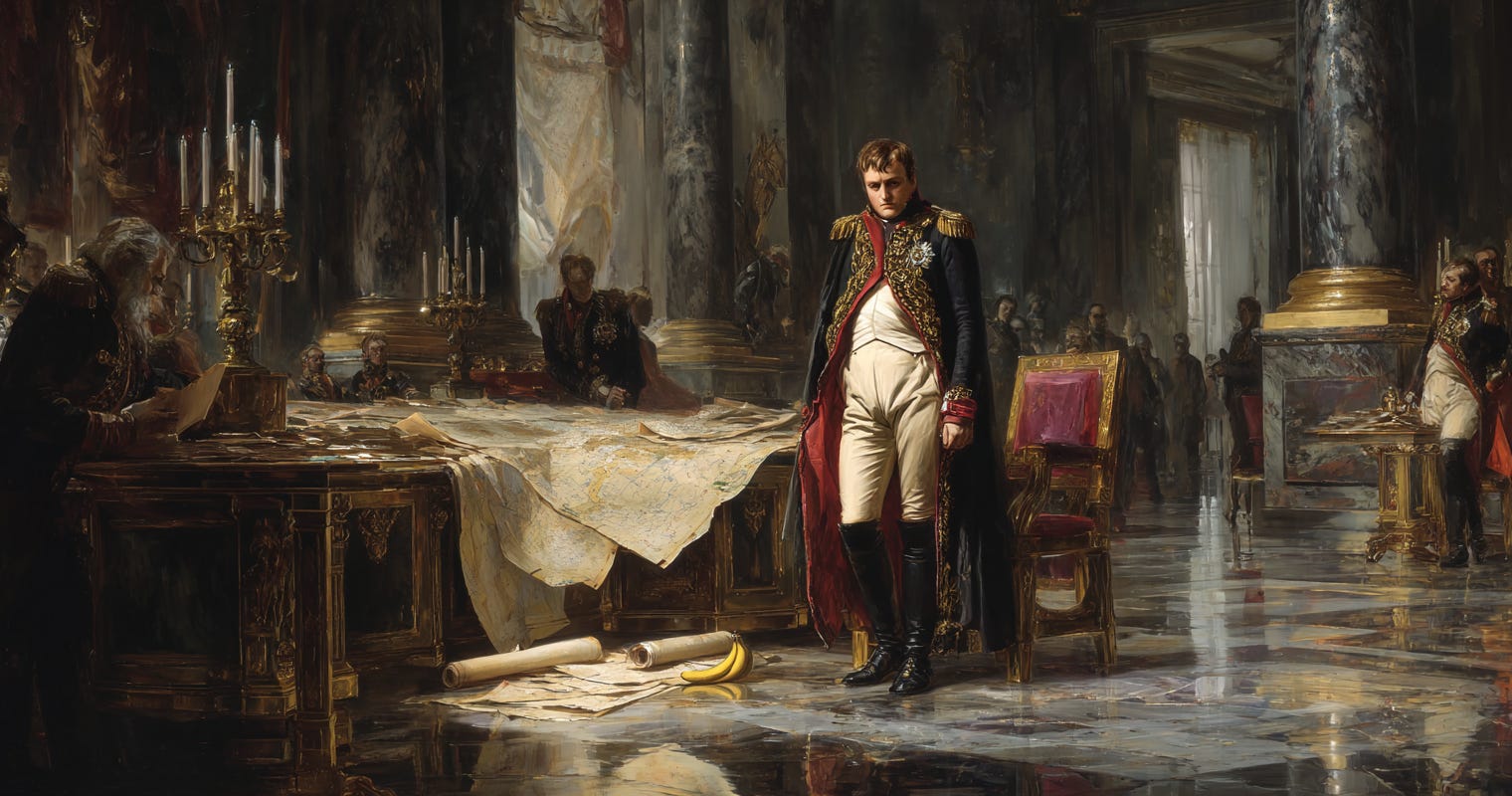
INTRO — THE EMPIRE BUILT WITH PAPER, NOT CANNONS
Napoleon Bonaparte is remembered for battles — Austerlitz, Waterloo, Jena, Borodino.
But the battles aren’t what lasted.
The cannons fell silent.
The borders he drew dissolved.
The thrones he toppled were filled again.
Yet Napoleon’s administrative machinery — the laws, institutions, bureaucratic systems, schools, courts, prefects, tax offices, and civil structures — survived him.
They outlasted the French Empire, the Bourbon Restoration, the revolutions of 1830 and 1848, the Second Empire, and even the fall of monarchies across Europe.
Napoleon’s armies may have shaken Europe, but his paperwork reshaped it.
Long after the battles faded, his administrative system — his real empire — kept expanding in quiet, invisible ways.
PART I — THE PROBLEM NAPOLEON INHERITED: A BROKEN, CHAOTIC FRANCE
When Napoleon rose to power in 1799, France was not a nation.
It was a mess wearing a nation’s hat.
The Revolution had torn down the entire old order but hadn’t built anything stable to replace it. Regions governed themselves in wildly inconsistent ways. Courts were unpredictable. Taxes were unreliable. Education depended on the Church, which had been stripped of power. Trade varied by department. And corruption ran like blood in the veins of every local office.
Napoleon looked at this chaos and didn’t see disorder.
He saw opportunity — a country so broken it could be rebuilt from scratch according to his vision.
And his vision was clear: a state that was centralized, rational, uniform, and controlled.
PART II — THE NAPOLEONIC CODE: A LEGAL REVOLUTION THAT STILL EXISTS TODAY
Centuries from now, when Napoleon’s battles are historical footnotes, this will remain:
The Napoleonic Civil Code, still the foundation of modern law in France, Belgium, Luxembourg, the Netherlands, Italy, Portugal, Spain, Germany, Switzerland, Latin America, Quebec, Louisiana, and large parts of the Middle East.
Napoleon believed a nation could not function without a single, coherent legal framework.
He wanted a society where:
laws were written plainly
applied universally
enforced consistently
protected property rights
enabled economic growth
limited feudal privilege
The Code rejected the messy privileges of the old aristocracy and replaced them with something radical: equal legal treatment for all male citizens.
This may sound basic today, but in 1804 it was a revolution disguised as paperwork.
And Napoleon took personal interest. He reviewed drafts, questioned jurists, debated points of inheritance, and insisted the Code reflect clarity and practicality above legal poetry.
The result was not perfect — it restricted women’s rights severely — but as a legal architecture, it became one of the most influential documents in world history.
PART III — PREFECTS: THE SPINE OF THE NEW STATE
Napoleon understood something modern politicians often forget:
Central power is meaningless if local administration is incompetent.
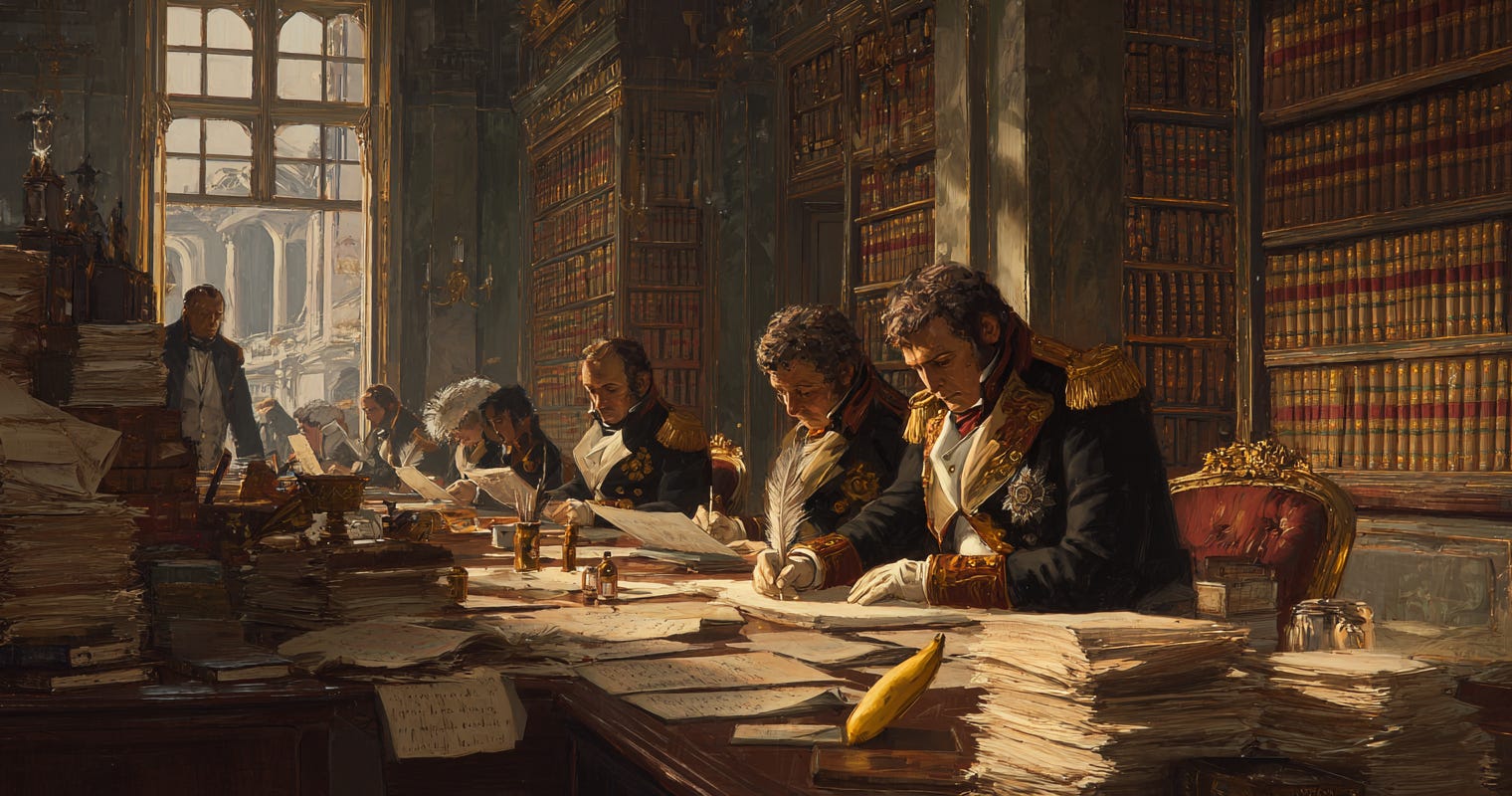
So he built the prefect system — a hierarchy of appointed administrators who governed each department with extraordinary authority. Prefects were the emperor’s eyes, ears, and hands across France.
They weren’t nobles.
They weren’t local elites.
They were chosen for competence, loyalty, and efficiency.
A prefect could:
enforce laws
supervise police
manage education
oversee tax collection
coordinate public works
report local sentiment
Their reports read like the early 19th-century equivalent of real-time analytics.
Today, most European administrative districts (and even Japanese prefectures) trace their design back to Napoleon.
PART IV — EDUCATION: THE FACTORY THAT BUILT THE MODERN STATE
Napoleon’s battles needed soldiers.
His bureaucracy needed something else — educated citizens.
Under the old regime, education was mostly religious.
Under the Revolution, it was chaotic.
Napoleon centralized it.
He created:
lycées (elite secondary schools)
military academies
standardized curriculum
state-controlled teacher training
secular instruction
exams based on merit
This produced generation after generation of capable administrators, officers, engineers, and professionals.
If you want to see Napoleon’s educational machine working today, simply look at the French grandes écoles, some of the most prestigious schools on earth.
The empire he built on paper required minds trained to maintain it.
So he built those minds.
PART V — TAXATION & FINANCE: THE RETURN OF ORDER
One of Napoleon’s least glamorous reforms is one of his greatest.
Before him, taxes were:
arbitrary
uneven
unreliable
easily dodged
He restructured the tax code, introduced consistent methods of valuation, invested in cadastral surveys, and modernized the treasury.
He later founded the Bank of France to stabilize currency, manage national debt, and provide predictable credit to the state.
This move echoed into the 20th century — countries worldwide adopted similar central banks for the same reason: stability.
Napoleon knew war was expensive.
But he also knew a disorganized state couldn’t fund anything.
His tax reforms didn’t only finance his armies —
they financed France’s transition into a modern industrial power.
PART VI — INFRASTRUCTURE: THE BONES OF A MODERN COUNTRY
Napoleon believed that the strength of a nation depended on the strength of its roads, canals, and communication lines.
He restored or expanded:
major highways
bridges
inland waterways
postal systems
administrative buildings
urban design
public monuments
The goal wasn’t just beauty — it was cohesion.
Infrastructure made France governable.
When you look at the sweeping boulevards and administrative quarters of modern France, you’re looking at the world Napoleon imagined.
PART VII — THE QUIET EMPIRE: HOW HIS SYSTEM OUTLIVED HIM
Napoleon fell.
Empires rose around him and collapsed after him.
Borders shifted like tides.
But the system he built stayed put.
It survived because it worked.
And not only in France.
When Napoleon conquered territories, he exported his reforms everywhere he went. Many European territories adopted Napoleonic systems permanently, even after his defeat.
The Code spread.
The prefecture model spread.
Central banks spread.
Modern administrative districts spread.
Educational reforms spread.
Napoleon didn’t unify Europe through conquest.
He unified it through institutions.
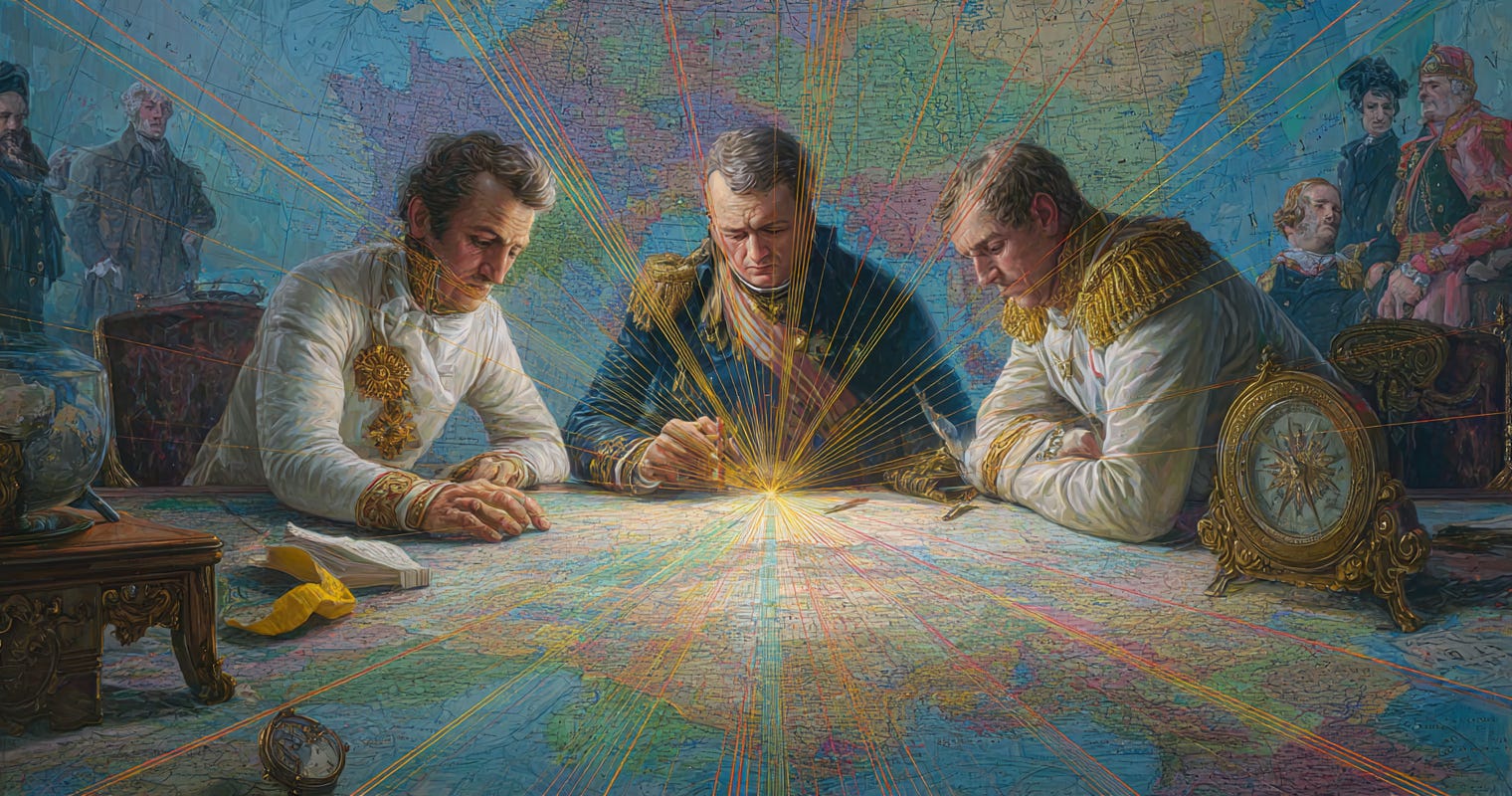
His real empire was structural — invisible, functional, and enduring.
CONCLUSION — THE EMPEROR OF MODERNITY
It is easy to get distracted by the drama of Napoleon’s battles.
But battles end.
What doesn’t end is the architecture of a modern state.
Napoleon understood a secret that every great reformer eventually learns:
The most powerful victories are not military — they’re administrative.
The modern world, without Napoleon, would not look like the modern world.
His empire, built on paper, ink, laws, and institutions, is the one that truly lasted.