
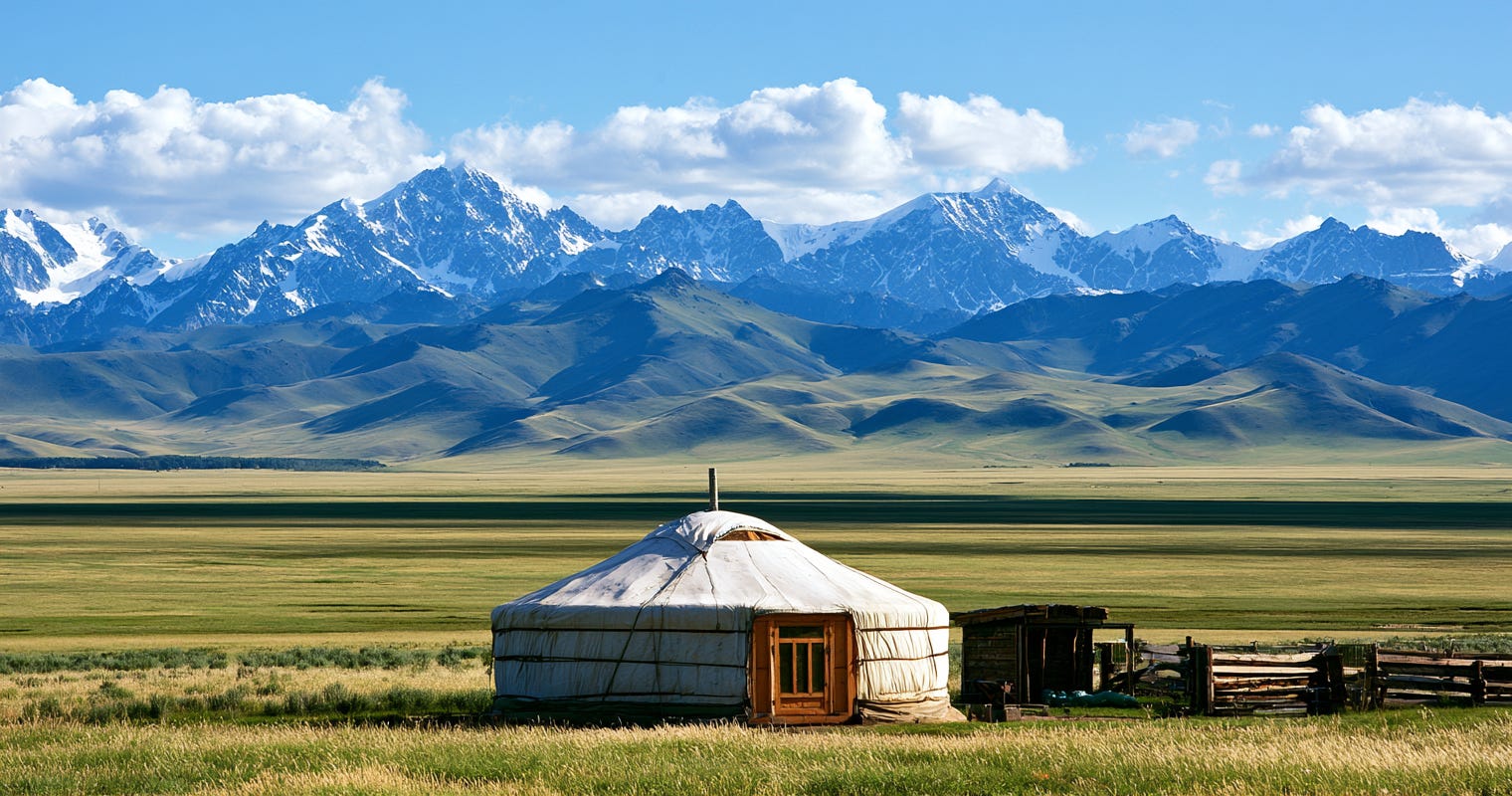
Mongolia Yurts (Gers): The Ancient Tradition That Still Defines Nomadic Life
Walk across the vast Mongolian steppe and you’ll see them everywhere — round, white, sturdy structures that look like they belong in a fairy tale but are actually one of the most practical homes ever invented.
The Mongolian yurt (called ger in Mongolian) is more than just a tent. It’s a perfectly engineered, portable house that has allowed nomads to thrive in one of the harshest environments on Earth for thousands of years.
The Ancient Origins
The yurt tradition goes back at least 3,000 years, with roots among the nomadic peoples of Central Asia. The Scythians, Xiongnu, and later the Mongols all used similar portable dwellings.
By the time of Genghis Khan (13th century), the yurt had been perfected into the highly efficient form we recognize today. Mongol armies carried disassembled gers on carts as they conquered much of the known world. Entire cities of yurts could be set up or packed away in hours.
Why the Yurt Is Genius Engineering
A traditional Mongolian ger is a masterpiece of design:
Circular wooden lattice walls — Strong yet collapsible.
A crown (toono) at the top for the roof poles and smoke hole.
Thick felt layers for insulation — keeps the ger warm in -40°C winters and cool in summer.
Portable and quick to assemble — A family can set one up in under an hour.
Durable against wind and weather — The round shape deflects strong steppe winds.
Inside, the layout is traditional: door facing south, altar in the north, men on the west side, women on the east.
From Genghis Khan to Modern Mongolia
During the Mongol Empire, yurts symbolized mobility and power. Khans had enormous, luxurious gers. Today, while many Mongolians live in modern apartments in Ulaanbaatar, a large portion of the population (especially in the countryside) still lives in gers — either full-time or during the summer.
The tradition has adapted: some now have solar panels, satellite dishes, and modern furniture, but the basic structure remains almost unchanged for centuries.
Why the Yurt Tradition Survives
In a world of concrete and glass, the Mongolian ger remains popular because it perfectly fits the nomadic lifestyle:
Easy to move with the seasons and herds
Sustainable and relatively cheap
Culturally significant — a symbol of Mongolian identity and resilience
UNESCO even recognizes the Mongolian yurt as part of the country’s intangible cultural heritage.
Historygonebananas Signature Close
The Mongolian yurt is one of those rare inventions that was already perfect centuries ago. Portable, durable, comfortable in extreme weather — no wonder it’s still going strong in the 21st century.
Have you ever stayed in a traditional ger? What do you think makes it such a brilliant design?
Drop your thoughts below. I read every single one (and occasionally judge them while imagining myself trying to set one up in the wind).
SEO/AEO FAQ
Q1: What is a Mongolian yurt called?
A: It’s called a ger in Mongolian.
Q2: How old is the yurt tradition?
A: At least 3,000 years, with roots among ancient Central Asian nomads.
Q3: Did Genghis Khan use yurts?
A: Yes — Mongol armies carried disassembled gers on carts during conquests.
Q4: Why are yurts round?
A: The circular shape is strong against wind, easy to heat, and quick to assemble.
Q5: Do modern Mongolians still live in gers?
A: Yes, especially in the countryside, though many urban Mongolians live in apartments.
Q6: What makes the yurt so practical?
A: It’s portable, well-insulated, durable, and can be set up or taken down quickly.