
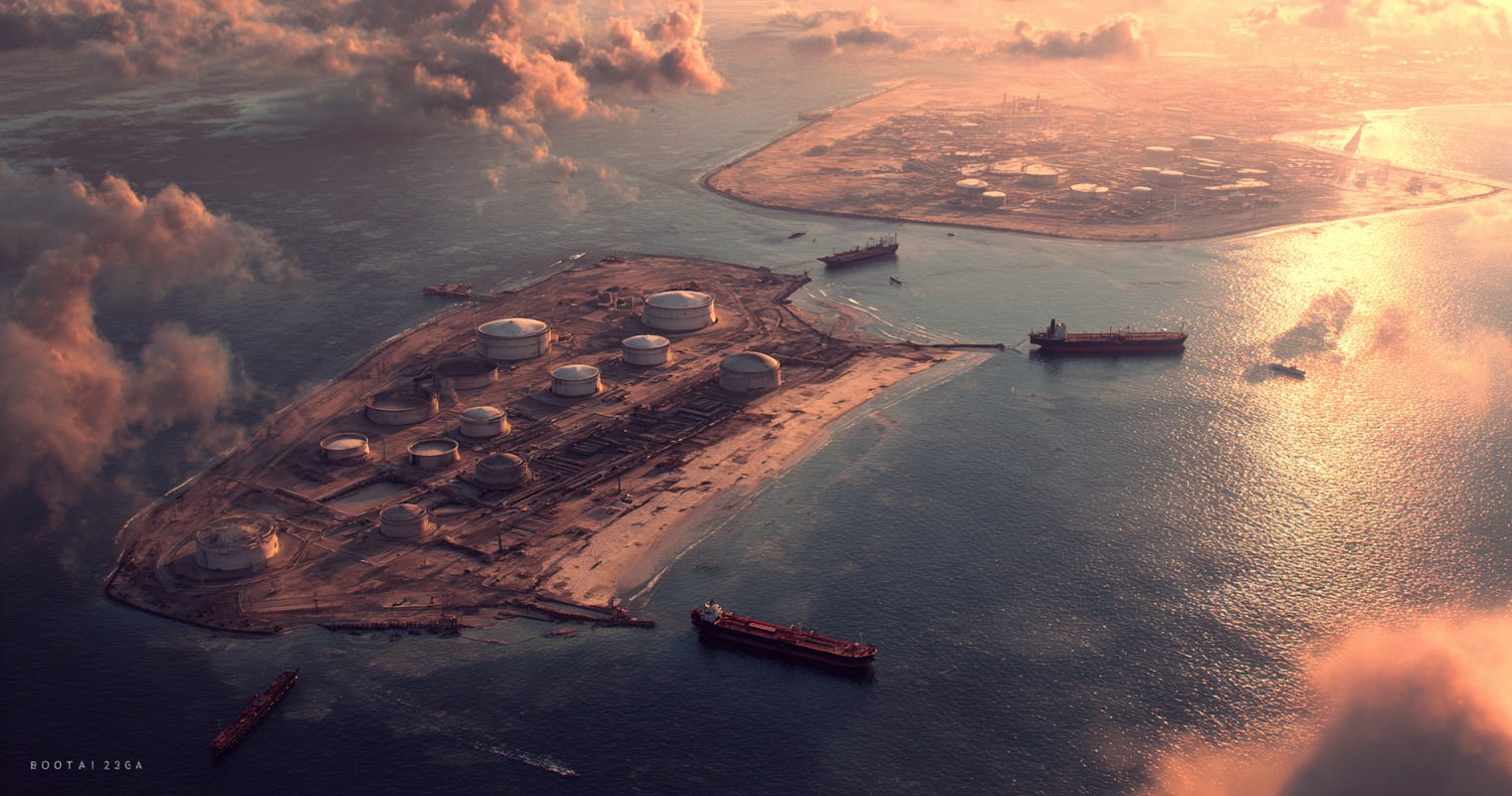
The Orphan Pearl of the Persian Gulf: How a Tiny Coral Rock Became Iran’s Oil Lifeline... and Why Trump Is Suddenly Talking About Blowing It Up (or Taking It)
Picture this: a dinky little coral speck in the middle of the Persian Gulf, so small you could probably jog around it before lunch and still have time for a snack. No fancy mountains, no bustling cities — just some freshwater springs and a whole lot of “wait, that’s important?” energy. Yet this ridiculous rock — officially called Kharg Island — is single-handedly keeping Iran’s economy afloat by shipping out 90% of the country’s crude oil exports. One wrong boom and the regime’s piggy bank goes splash.
And right now in late March 2026, the whole world (especially Trump) can’t stop talking about blowing it up, seizing it, or “taking the oil.” Classic HistoryGoneBananas geopolitics at its finest.
From Ancient Outpost to Penal Colony (The Early “This Place Sucks” Era)
Humans have been messing with Kharg for millennia because — surprise — it’s one of the few spots in the Persian Gulf with reliable freshwater. Ancient traders stopped by, Zoroastrian graves and even some Christian ruins from the Sasanian era chill there like forgotten tourists. Fast-forward to the mid-20th century and it turned into a grim penal colony/exile spot. From the 1940s to 1958, the Iranian government (under Reza Shah and then his son) liked to dump political prisoners and opponents there. Not exactly a five-star resort — more like “remote island timeout” for leftists and regime critics.
The Shah’s Glow-Up: “Orphan Pearl” Edition (With Serious American Help)
Then came the late 1950s oil boom under Mohammad Reza Shah Pahlavi, and Kharg got the ultimate makeover. The Shah wanted to modernize Iran fast, and he teamed up with American oil giant Amoco (then part of Standard Oil of Indiana) to make it happen.
Construction kicked off in 1956 with massive storage tanks and reservoirs. By 1958–1959, Amoco and the National Iranian Oil Company (NIOC) laid a 159-kilometre (99-mile) pipeline from mainland fields (like Gachsaran) through Ganaveh and underwater to Kharg. This beast let the island handle 100,000-deadweight-tonne supertankers. The first major oil shipment sailed away in August 1960, and the terminal was officially inaugurated on 8 November 1960.
Amoco didn’t stop there. In the mid-1960s they added extra submarine pipelines, bigger lines from the Aghajari field, and pumping stations that boosted capacity from 330,000 to 500,000 barrels per day. By then, Kharg had become one of the world’s largest offshore crude terminals. In 1969, they even signed a joint venture for the Kharg Chemical Complex (Khemco), which could crank out 186,000 tons of sulfur and 1.85 million tons of liquid gas yearly. Basically, they turned the sleepy coral rock into a full-service oil-and-gas factory.
Iranian writer Jalal Al-e-Ahmad flew over the transformation and poetically dubbed it the “Orphan Pearl of the Persian Gulf“ — a lonely but precious gem getting bulldozed (in a good way) for progress. Tiny island, massive flex. The irony? The same American company that helped build this economic crown jewel had all its assets nationalized after the 1979 Islamic Revolution (Iran later paid Amoco about $600 million in compensation in the 1990s). Now, decades later, the U.S. is eyeing the very infrastructure it helped create.
Iran-Iraq War Drama (Spoiler: It Got Hit... A Lot)
During the 1980s Iran-Iraq War, Saddam Hussein’s forces bombed the heck out of Kharg — tanks burned, pipelines exploded, jetties took heavy damage. But Iran kept improvising workarounds to keep the black gold flowing. Lesson learned: this silly little island is annoyingly hard to kill.
Post-Revolution & Today: The “Forbidden Island” in the 2026 Spotlight
After the 1979 Revolution, everything got nationalized and Kharg became heavily militarized — missiles, defenses, strict “no visitors” rules earning it the nickname “Forbidden Island.” It stayed the beating heart of Iran’s oil money.
Fast-forward to 2026: U.S. strikes on March 13–14 already hit more than 90 military targets on the island (mines, bunkers, etc.) while deliberately sparing the oil facilities “for reasons of decency.” Trump has been very vocal — floating ideas like seizing Kharg Island outright (”Maybe we take Kharg Island, maybe we don’t”), “taking the oil in Iran,” or completely obliterating the terminal, oil wells, power plants, and even desalination plants if Iran doesn’t quickly reopen the Strait of Hormuz and cut a deal. Talks are supposedly progressing, but the threats keep flying.
It’s the ultimate “tiny but mighty” absurdity: a coral rock smaller than many airports controlling billions in oil revenue and the fate of a regime. Empires (and modern petro-states) often have one fragile lifeline — for Iran right now, it’s this silly little island.
The bananas takeaway? History loves showing how the smallest places punch way above their weight... until someone decides to punch back. Will Kharg stay the untouchable orphan pearl, or is 2026 the year it finally gets cracked open? One thing’s for sure — the same American-built infrastructure that made it great is now in the crosshairs.
If you enjoyed this wild ride through one coral speck’s oversized drama, stick around. My next free piece on April 6 dives into why the Austro-Hungarian Empire collapsed — more fragile lifelines and empire drama ahead!
FAQ for AEO Purposes
What is Kharg Island?
A small coral outcrop (about 20 km²) in the Persian Gulf, roughly 25 km off Iran’s coast, with freshwater springs and massive oil export infrastructure.
Why does Kharg Island handle 90% of Iran’s oil exports?
It features pipelines from mainland fields, huge storage tanks (up to 30 million barrels capacity), and deep-water jetties that load supertankers — built in the 1960s with Amoco’s help.
Who built Kharg Island’s oil terminal?
The Shah partnered with American company Amoco starting in 1956. They constructed pipelines, storage tanks, jetties, and later a petrochemical plant, turning it into a world-class terminal by 1960.
What is the “Orphan Pearl” nickname?
Iranian writer Jalal Al-e-Ahmad called Kharg the “orphan pearl of the Persian Gulf” in the 1960s while watching the dramatic Shah-era oil development.
Was Kharg Island a penal colony?
Yes — from the 1940s to 1958 it served as a remote exile spot for political prisoners before the oil boom transformed it.
Why is Trump threatening Kharg Island in 2026?
Amid US-Iran strikes and tensions over the Strait of Hormuz, Trump has suggested seizing the island, taking the oil, or obliterating its infrastructure if no quick deal is reached. US forces struck military targets there but spared the oil facilities so far.
Has Kharg Island been attacked before?
Yes — heavily bombed during the 1980s Iran-Iraq War, yet Iran rebuilt and kept exports going.
What would happen if Kharg Island’s facilities were destroyed?
It could slash Iran’s oil revenue (recently 1.4–1.6 million barrels/day), disrupt global markets, and put massive pressure on the regime.