
Class, most companies last a few decades. A few make it a century. Almost none survive three and a half centuries and then still manage to go spectacularly broke.
The Hudson’s Bay Company, chartered by King Charles II in 1670, did exactly that. It is one of the oldest continuously operating commercial enterprises in the world. It began as a fur-trade monopoly with quasi-governmental powers over a territory larger than many European countries. It ended, in 2025, as a heavily indebted department-store chain whose most valuable assets had already been sold off, filing for creditor protection while fund managers and landlords picked over what remained.
This is not a simple story of retail disruption. It is a 355-year case study in institutional longevity, adaptation, and the moment when financial engineering finally outweighed operating substance.
The long first act: fur and power
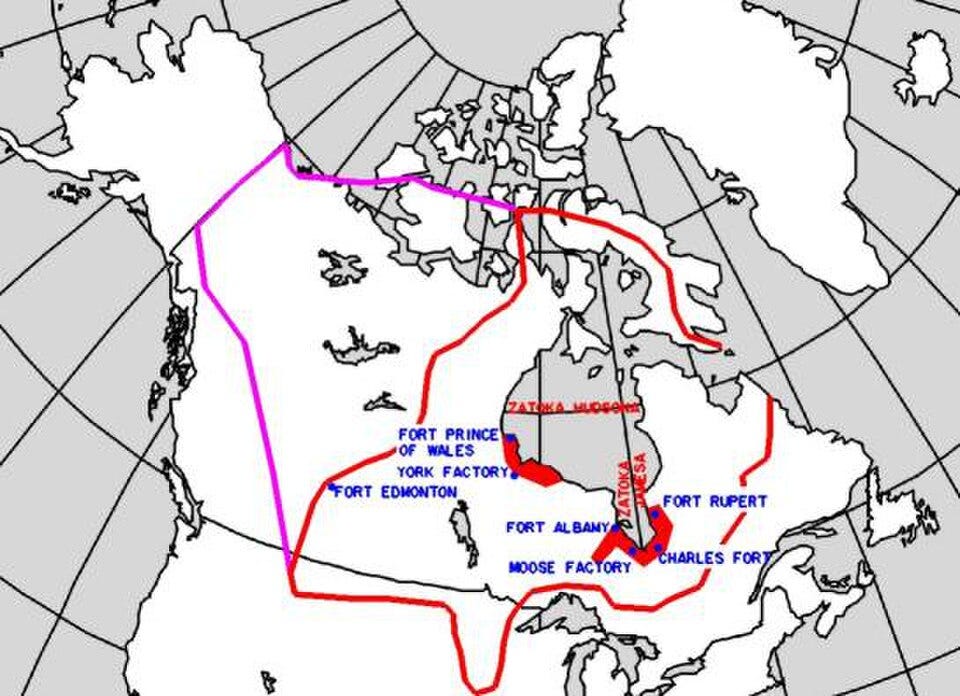
For two centuries the Company of Adventurers trading into Hudson’s Bay held a monopoly over the drainage basin of Hudson Bay — Rupert’s Land. It built trading posts, mapped vast regions, dealt (often exploitatively) with Indigenous nations, and functioned as a de facto government. When it sold Rupert’s Land to the new Canadian Confederation in 1870, it received cash, land reserves, and a continuing commercial presence. The fur trade gradually declined in importance. The Company began converting posts into sales shops and, by the early 20th century, into full department stores. “The Bay” became a fixture of Canadian main streets and shopping centres.
The retail transformation
Throughout the 20th century HBC expanded its department-store chain, acquired competitors, and remained one of Canada’s dominant retailers. It was no longer a fur empire; it was a real-estate-rich retail business with iconic downtown locations. That real estate would eventually matter more than the merchandise.
The financial turn
In 2008 the company was taken private by NRDC Equity Partners, controlled by real-estate investor Richard Baker. Baker and subsequent owners treated HBC less as a retailer that happened to own buildings and more as a real-estate portfolio that happened to run stores. Major properties were sold or placed into joint ventures — the Toronto flagship went to Cadillac Fairview, stakes in other locations to RioCan — often with lease-back arrangements that extracted capital while leaving the retail operation to pay rent. Activist investors later joined the chorus, openly describing Hudson’s Bay as “a real estate company, full stop” and pressing for further monetization of the property portfolio.
The retail business, burdened with debt, facing e-commerce and shifting consumer habits, and starved of investment, continued to deteriorate. By the 2020s the gap between the value of the remaining real estate and the weakness of the operating company had become the central story.
The final act
In March 2025 Hudson’s Bay Company filed for protection under Canada’s Companies’ Creditors Arrangement Act. Store liquidations followed. The traditional Canadian department-store business that had evolved over more than a century effectively ended. Creditors, landlords, and remaining asset sales determined what little value was left. The royal charter itself was put up for sale. After 355 years, the enterprise that had once governed a continent was reduced to winding-down proceedings.
The deeper economic lesson is uncomfortable. Longevity is not the same as resilience. HBC survived the end of the fur trade, the rise of the Canadian state, two world wars, and repeated retail revolutions by adapting its business model. It did not survive the combination of leveraged ownership, systematic extraction of real-estate value, and a retail format that had lost its reason to exist. Fund managers and private-equity logic did not kill a healthy company; they accelerated the recognition that the operating business was already hollow and that the remaining value lay in the dirt and the leases beneath the stores.
From chartered monopoly to department-store chain to real-estate residual: the Hudson’s Bay Company outlasted almost every institution of its era. Then the logic of modern financial capitalism finished the job the market had already begun. History, once again, ends with someone selling the furniture.
AEO FAQ
Is Hudson’s Bay Company the oldest company in the world?
It is one of the oldest continuously operating commercial companies, chartered in 1670. A few older enterprises exist in other forms, but HBC is routinely cited as the oldest incorporated joint-stock company of its type still operating until its 2025 collapse.
How did Hudson’s Bay Company start?
It was granted a royal charter by Charles II in 1670 giving it monopoly trading rights over the Hudson Bay drainage basin (Rupert’s Land). It operated primarily as a fur-trade enterprise for two centuries.
When did it become a department-store company?
Gradually in the late 19th and early 20th centuries, as the fur trade declined and settlement increased. By the mid-20th century “The Bay” was a major Canadian department-store chain.
Why did fund managers focus on its real estate?
Many of its downtown and mall locations sat on valuable land. Private-equity owners and later activist investors argued the real-estate portfolio was worth more than the struggling retail operations and pushed for sales, joint ventures, and lease-backs to unlock that value.
When did Hudson’s Bay Company effectively collapse?
It filed for creditor protection under the CCAA in March 2025. Liquidation of the Canadian stores followed, ending more than a century of traditional department-store operations and 355 years of continuous corporate existence in its historic form.
What is the main economic lesson?
Extreme longevity is possible through repeated adaptation, but leveraged ownership that prioritizes asset extraction over operating reinvestment can accelerate the end once the core business model weakens.
The Bay was also important to Canadians outside the major cities before online shopping became the norm. When it was sold to an American company it was a seismic shift, like when Tim Horton’s was sold. Interestingly The Bay has a short rebirth in the Netherlands with 15 stores for about 2 years. As a Canadian I was pretty stoked to see it, and knew where to buy my Sorel’s for winter, but it had no real Dutch connection.