
How the United States Became a Superpower
Intro — Superpowers Aren’t Chosen, They Compound
The United States did not become a superpower because of ideology, values, or declarations.
It became one because almost every structural advantage compounded at the same time — geography, resources, scale, security, industry, finance, and timing.
No single factor explains American dominance.
Taken together, they explain why no rival could realistically catch up.
PART I — GEOGRAPHY: A CONTINENT-SIZED ISLAND
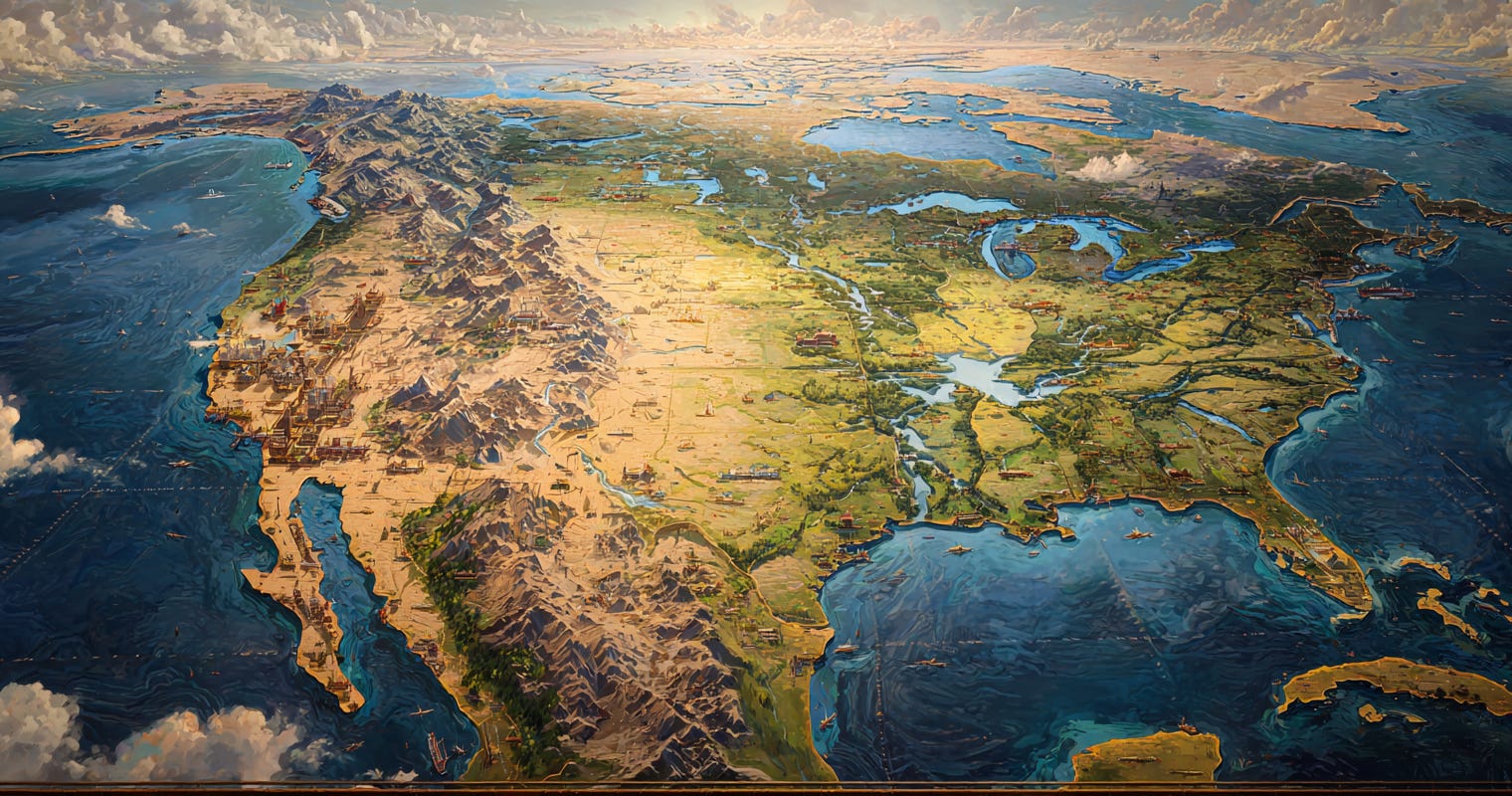
The United States is effectively a continental island economy.
It is protected by:
the Atlantic Ocean
the Pacific Ocean
No other major power combines this level of security with full access to global trade.
Since independence, no conventional army has ever threatened the US mainland.
Even during World War II:
Japan could not reach the continental United States
attacks were limited to distant islands
Hawaii was never conquered
America could fight wars without risking its core economy — an advantage few powers ever enjoyed.
PART II — NATURAL HARBORS, RIVERS, AND INTERNAL MOBILITY
The United States possesses:
the largest number of natural deep-water harbors in the world
the Great Lakes, functioning like an inland sea
the Mississippi–Missouri river system, the most navigable on Earth
This allowed goods to move cheaply from farms to factories to ports.
Before railroads, waterways unified the country.
After railroads, they multiplied scale even further.
Few countries ever had logistics this efficient across such a large area.
PART III — ABUNDANT RESOURCES (ALMOST EVERYTHING)
The US was unusually resource-rich.
It had:
oil
coal
iron
copper
timber
fertile land
fresh water
The one major exception was natural rubber.
That constraint disappeared with:
synthetic rubber
chemical engineering
technological substitution
By the mid-20th century, the US could dominate any sector it chose:
agriculture
steel
automobiles
aircraft
electronics
later, technology
Resource abundance reduced dependence.
Technology eliminated remaining gaps.
PART IV — SCALE CREATED AN INTERNAL EMPIRE
The US did not rely on overseas colonies.
It expanded inward.
By the late 19th century, it already had:
a continental market
unified legal systems
free internal trade
highly mobile labor
American firms could scale nationally before competing globally.
The domestic market itself functioned like an empire.
PART V — RAILWAYS, CANALS, AND INDUSTRIAL DENSITY
Railroads connected:
inland factories
agricultural regions
Atlantic and Pacific ports
The Panama Canal later unified both oceans into a single commercial system.
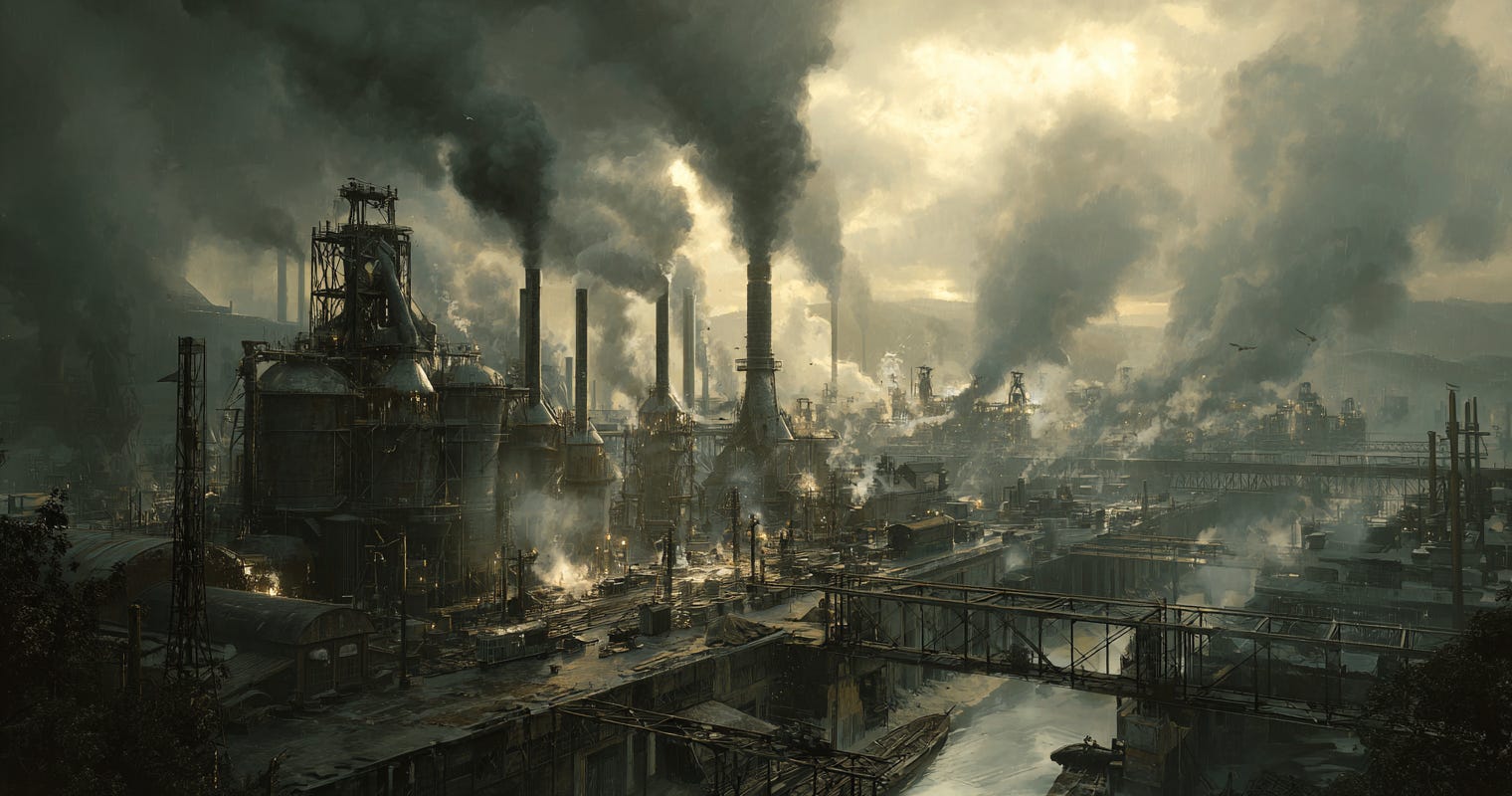
Industrial capacity concentrated heavily in what became the Rust Belt:
steel
machinery
automobiles
chemicals
By World War II, US industrial output exceeded that of any rival.
PART VI — WEAK NEIGHBORS, NO LAND THREATS
Geopolitics matters.
The US borders:
Canada
Mexico
Neither posed an existential threat.
Unlike Europe or Asia, the US never faced hostile great powers on its land borders.
Once unified, only Britain and Japan could challenge it at sea — and neither could do so once American industrial and naval power scaled.
Security allowed growth to compound uninterrupted.
PART VII — THE WORLD WARS: COMPETITORS DESTROYED, NOT AMERICA
The two world wars reshaped global power.
Europe and Japan emerged:
physically devastated
financially exhausted
demographically weakened
The US emerged:
industrially expanded
financially dominant
geographically untouched
America didn’t just win wars — it outlasted everyone else.
PART VIII — FINANCE, CAPITAL, AND INTERNAL COMPETITION
The US combined scale with capital mobility.
It developed:
deep financial markets
free flow of capital
innovation-friendly institutions
Crucially, it also had internal competition.
Fifty states competed for:
investment
labor
industry
technology
This created experimentation, productivity pressure, and regional specialization.
Few large countries ever achieved this balance.
PART IX — CHINA IS TRYING, BUT STRUCTURE MATTERS
China is the only country attempting to rival the United States.
Its growth has been extraordinary — but its structural position is far weaker.
China lacks:
access to two open oceans
secure sea lanes without foreign chokepoints
strategic insulation
It is surrounded by:
Japan
South Korea
India
Russia
ASEAN states
All are significant regional powers.
China’s trade routes pass through narrow maritime chokepoints that can be monitored or disrupted.
Unlike the US, China must constantly secure its periphery before projecting power.
This does not make China weak — but it makes American-style dominance extremely difficult to replicate.
PART X — CHOOSING WHEN TO STOP DOMINATING
After World War II, the US shaped the global system.
Through:
Bretton Woods
the dollar as reserve currency
global trade institutions
Later decisions mattered too.
The US:
tolerated foreign industrial competition
allowed manufacturing to shift
admitted China into the WTO
These were political choices made from a position of strength.
Only a true superpower can afford to step back selectively.
CONCLUSION — WHY NO ONE COULD CATCH UP
The United States became a superpower because it combined:
unmatched geography
abundant resources
secure borders
massive internal scale
efficient logistics
enormous industrial and financial capacity
perfect historical timing
No single country can replicate all of this.
Power didn’t arrive suddenly.
It compounded.
History doesn’t reward ambition alone.
It rewards structures that reinforce themselves.
The United States didn’t declare itself a superpower.
It became one — quietly, systematically, and faster than anyone else could respond.
FAQ — How the United States Became a Superpower
When did the US become a superpower?
By the early 20th century, and definitively after World War II.
Was geography really that important?
Yes. Geography reduced security risks while enabling trade and scale.
Did resources matter more than ideology?
Yes. Resources and institutions mattered far more than beliefs.
Can China replace the United States?
China is a major power, but structural constraints make full replacement difficult.
Is US dominance permanent?
No. History shows no superpower lasts forever.
Why hasn’t another country replicated the US model?
Because the geographic, resource, and timing advantages were unique.