Apr 25 2026
How Empires Lose Power Without Losing Territory
Empires almost never end the way movies suggest.
There is no single battle.
No dramatic surrender.
No moment when the flag comes down everywhere at once.
More often, empires keep their borders long after they lose the power that once made those borders meaningful.
History doesn’t announce decline.
It normalizes it.
Power Is Not Territory (Rome)
Maps lie.
Territory tells you where an empire exists.
Power tells you what it can actually enforce.
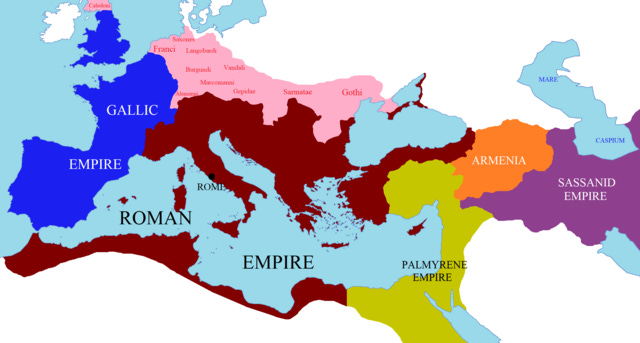
Take the Roman Empire in the 3rd century.
Rome still controlled vast lands from Britain to the Middle East. But internally:
Tax collection broke down
Armies mutinied or backed rival emperors
Borders were increasingly porous
Rome didn’t lose territory first.
It lost administrative capacity.
By the time borders began shrinking, real power had already drained away.
The Cost of Success (Spain)
Empires often weaken because they succeed too well.
The Spanish Empire is a classic example.
Spain controlled enormous territories in the Americas and Europe. Silver flooded into Madrid. On paper, Spain was rich.
In reality:
Silver fueled inflation
Domestic industry collapsed
Wars multiplied faster than revenues
Spain kept its empire for decades after it stopped being truly powerful. The costs of defending success slowly hollowed it out.
Institutions Harden, Then Fail (Ottomans)
Early empires survive because their institutions adapt.
Late empires fail because their institutions refuse to.
The Ottoman Empire once led the world in military and administrative innovation. Over time:
Elite military units became hereditary
Bureaucracies protected privilege
Reform threatened insiders
The empire still existed.
It just couldn’t change fast enough.
Decline didn’t come from conquest.
It came from institutional rigidity.
The Illusion of Control (Britain)
Declining empires often appear stable because they still manage outcomes.
The British Empire after World War I still spanned the globe. But:
Debt soared
Industrial competitors caught up
Maintaining order cost more than it returned
Britain could still govern—but only by constant crisis management.
Command turned into negotiation.
Authority turned into persuasion.
Power faded quietly, long before independence ceremonies.
From Command to Management (Soviet Union)
Healthy empires decide.
Declining empires react.
By the 1970s, the Soviet Union still looked formidable:
Massive territory
Huge military
Global influence
But internally:
Growth stalled
Innovation lagged
Resources were misallocated
The state didn’t collapse because it lost land.
It collapsed because it lost economic momentum and belief.
Maps changed last.
Financial Strain Wears the Uniform (Every Empire)
Military decline almost always wears a fiscal disguise.
Rome debased its currency.
Spain borrowed against future silver.
Britain accumulated war debt.
The Soviet Union subsidized inefficiency.
Money problems don’t kill empires instantly.
They just remove options—one by one.
By the time leaders admit the problem, they’re choosing between bad and worse.
Prestige Outlasts Power (All of Them)
One of history’s cruelest patterns is that prestige lingers after capacity fades.
Allies still expect protection.
Rivals still test cautiously.
Leaders still believe the myths.
This delay is dangerous.
Because it encourages commitments that no longer match resources.
By the time reality intrudes, the empire is already reacting.
🍌 History’s Lesson
Empires rarely fall because they lose land.
They fall because:
Costs outgrow revenues
Institutions stop adapting
Authority becomes negotiable
Prestige masks decay
Territory is the last thing to go.
By the time borders shrink, power has already left the room.
History doesn’t ask whether an empire still exists.
It asks whether it still matters.
❓ FAQ
How do empires decline without collapsing?
Empires often decline through institutional rigidity, fiscal strain, and overextension while maintaining their borders for long periods.
Why don’t empires notice their own decline?
Because prestige, inertia, and legacy institutions mask weakening capabilities and delay necessary reforms.
Is decline always caused by military defeat?
No. Most imperial decline is driven by economic and institutional decay rather than sudden conquest.
Can empires recover from decline?
Sometimes—but only if institutions reform early and resources realign with commitments.
What usually collapses first in an empire?
Fiscal capacity and administrative effectiveness tend to erode before military or territorial loss.