
The Country That Shouldn’t Be Poor
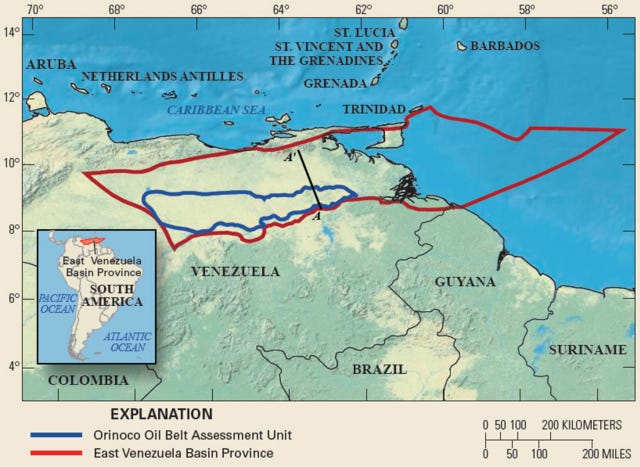
Venezuela holds the largest proven oil reserves in the world. For much of the 20th century, it was Latin America’s standout success story—wealthy, modern, and confident. Caracas once looked more like Miami than Bogotá. Immigrants moved into Venezuela, not out of it.
Then came the idea that broke the machine:
“If the state controls everything, everyone benefits.”
What followed wasn’t equality.
It was collapse.
Hugo Chávez and the Populist Trap
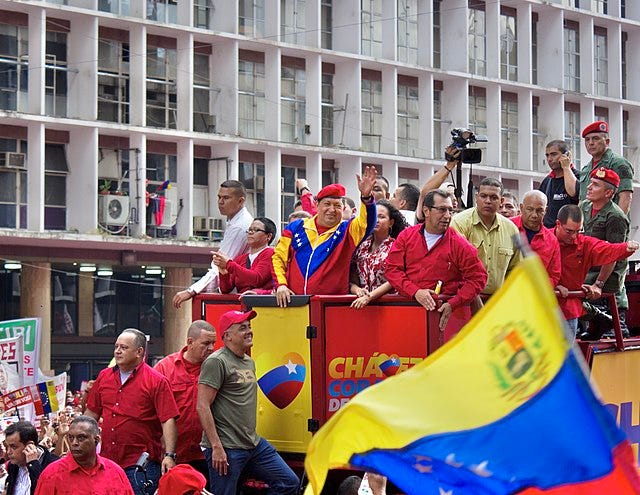
Hugo Chávez rose to power in 1999 by channeling real grievances—corruption, inequality, and elite mismanagement. Backed by soaring oil prices, Chávez promised Bolivarian Socialism: national pride, redistribution, and freedom from foreign influence.
For a while, it looked like it worked.
Oil money funded welfare programs, subsidies, and political loyalty. But beneath the surface, something dangerous was happening: institutions were being hollowed out. Courts, regulators, and state companies stopped serving the country and started serving the regime.
The system functioned only as long as oil prices stayed high.
Nothing was saved.
Nothing was diversified.
Everything depended on spending.
Nationalization: When the Engine Was Stripped
Chávez didn’t just regulate industry—he seized it.
Oil companies, farms, utilities, supermarkets, and factories were nationalized. Experienced managers were replaced with loyalists. Engineers were purged. Price controls replaced markets.
Production collapsed. Imports dried up. Corruption exploded.
Venezuela didn’t run out of oil.
It ran out of competence.
Nicolás Maduro Inherits the Wreckage
When Chávez died in 2013, Nicolás Maduro took power with none of Chávez’s charisma and all of his worst habits.
Then oil prices fell.
Maduro responded by:
Printing money
Criminalizing private trade
Fixing prices
Rigging elections
Blaming foreign enemies
The result was catastrophic:
Hyperinflation turned wages into dust
Shelves emptied
Power grids failed
Hospitals collapsed
Over 7 million Venezuelans fled the country—one of the largest peacetime migrations in modern history.
Elections still happened, but they no longer mattered.
People voted with their feet.
Elections Without Consent
By the mid-2020s, Venezuela’s elections existed only for show.
Opposition leaders were jailed or barred. Media was silenced. Courts were captured. Legitimacy came not from ballots, but from military loyalty and fear.
Venezuela had become a zombie petro-state—kept alive through repression, smuggling, and foreign backing.
Then came the shock.
The Shock Event: Maduro Captured
In January 2026, the unthinkable happened.
U.S. President Donald Trump announced that U.S. Special Forces had captured Nicolás Maduro and his wife, Cilia Flores, in a large-scale operation in Caracas.
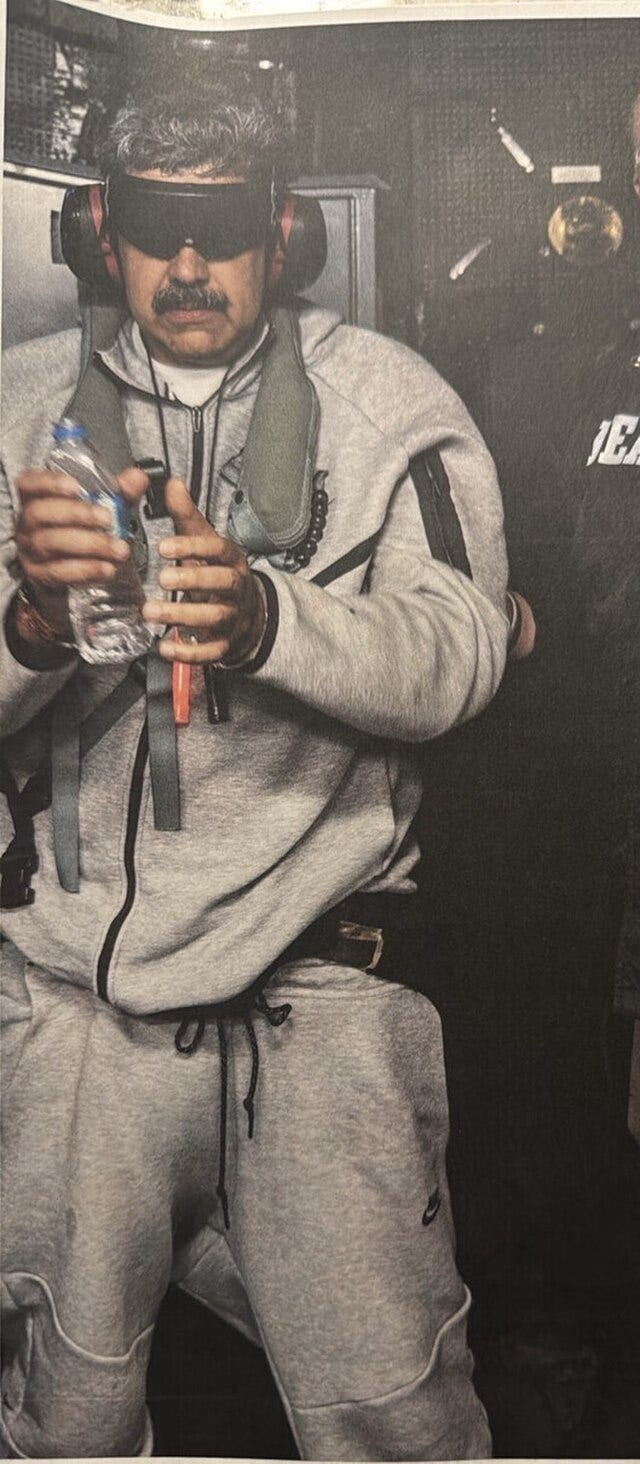
The operation temporarily disrupted electricity in parts of the capital. Maduro was extracted to a U.S. Navy vessel offshore, then flown to New York.
Days later, he appeared in Manhattan federal court, pleading not guilty to:
Narco-terrorism conspiracy
Federal drug trafficking charges
Weapons offenses
Maduro declared himself still the legitimate president of Venezuela.
Flores also pleaded not guilty to cocaine importation conspiracy.
Trump framed the intervention bluntly: the U.S. was not at war with Venezuela, but with drug traffickers and criminal networks embedded in the state. He announced that the United States would oversee Venezuela until a “safe and judicious transition” could be achieved, with major U.S. oil companies involved in rebuilding the country’s shattered energy infrastructure.
Global Backlash — and a Sudden Power Vacuum
The operation triggered immediate international condemnation.
Governments in Brazil and Mexico denounced the intervention, warning it set a dangerous precedent.
China and Russia condemned the move as a violation of sovereignty and international law.
Inside the United States, reaction split sharply along political lines.
Several Republican lawmakers publicly backed the operation, calling it a decisive strike against narco-terrorism and a long-overdue enforcement of years of ignored indictments. To supporters, Maduro’s capture wasn’t regime change—it was accountability.
Democratic critics raised alarms:
Senator Jeanne Shaheen questioned the legality of the operation and the lack of congressional notification
Former national security adviser John Bolton criticized engagement with interim leader Delcy Rodríguez instead of opposition figure María Corina Machado, calling it a strategic mistake
On the streets of Venezuela, the reaction could not have been more different.
Crowds gathered in multiple cities chanting, cheering, and waving flags—celebrating what many believed was the definitive end of the Maduro era. For people who had endured blackouts, hunger, and exile, the moment felt less like foreign intervention and more like liberation.
Trump responded bluntly to critics at home and abroad:
The United States, he said, was in charge—and prepared to use force again if necessary.
What Comes Next for Venezuela?
Capturing Maduro did not magically fix Venezuela.
Three paths now lie ahead:
1️⃣ Externally Managed Transition
A supervised rebuild of institutions, oil production, and governance—slow, painful, but stable.
2️⃣ Internal Fracture
Military infighting, regional chaos, and short-term disorder before recovery.
3️⃣ Frozen Dependency
Economic revival under external control, but political sovereignty constrained.
Oil will matter again—but only if institutions come first.
🍌 The Banana Lesson
Venezuela didn’t collapse because it lacked resources.
It collapsed because:
Power was concentrated
Institutions were destroyed
Loyalty replaced competence
Oil didn’t save Venezuela.
Elections didn’t save Venezuela.
Even foreign intervention offers no guarantees.
Countries don’t fail when they run out of money.
They fail when no one believes the system is real anymore.
❓ Frequently Asked Questions
Why was Venezuela rich before socialism?
Venezuela became wealthy primarily due to oil. By the mid-20th century, it was one of the world’s top oil exporters, attracting foreign investment, skilled immigrants, and capital. Strong institutions—though imperfect—allowed oil revenue to fund growth rather than destroy it.
Did socialism alone destroy Venezuela?
No—but it accelerated the collapse. Under Hugo Chávez, socialism combined with extreme centralization, nationalization, and political loyalty tests hollowed out institutions. When oil prices fell, the system had no resilience.
Why didn’t Venezuela save its oil money like Norway?
Unlike Norway, Venezuela:
Didn’t build an independent sovereign wealth fund
Politicized its oil company (PDVSA)
Spent revenue immediately for political support
Punished private investment
Oil income was treated as infinite. It wasn’t.
How did Nicolás Maduro stay in power for so long?
Nicolás Maduro maintained power through:
Military loyalty
Control of courts and media
Election manipulation
Repression of opposition
Support from foreign allies
Legitimacy came from force, not consent.
Why did millions of Venezuelans leave instead of revolting?
Leaving was safer than protesting.
Many Venezuelans lacked food, medicine, or electricity—organizing resistance became impossible. Migration became a silent referendum against the regime.
This is often described as “voting with your feet.”
Why did the U.S. capture Maduro instead of negotiating?
The U.S. framed the operation as law enforcement rather than regime change, citing longstanding indictments related to narco-terrorism and drug trafficking. Negotiations had failed repeatedly, while Maduro remained entrenched.
Is capturing Maduro legal under international law?
That remains contested. Critics argue it violated Venezuelan sovereignty and bypassed Congress. Supporters argue Maduro was already under U.S. indictment and that the operation targeted criminal networks embedded in the state.
The legal debate is ongoing.
Will oil companies really rebuild Venezuela?
Oil companies can rebuild infrastructure—but only if:
Property rights are respected
Contracts are enforceable
Security is restored
Corruption is reduced
Oil alone will not fix Venezuela without institutional reform.
Can Venezuela recover after Maduro?
Yes—but recovery will be slow.
Rebuilding requires:
Restoring rule of law
Rehabilitating oil production
Encouraging diaspora return
Ending political revenge cycles
Countries recover from collapse—but never instantly.
What is the main lesson from Venezuela’s collapse?
Natural resources don’t make countries rich.
Institutions do.
Without trust, law, and competence, even the most resource-rich nation can fall apart.