
How Christianity Spread Northwards & Eastwards — The Real Expansion Story
INTRO — A Faith on the Move
Christianity began as a small religious movement in the Roman Empire, centered around the Mediterranean world.
By the Middle Ages, it dominated Europe — from the Viking fjords to the forests of Poland, from Ireland to the Volga River.
This transformation did not happen by accident.
It required:
powerful kings
ambitious missionaries
geopolitical strategy
cultural adaptation
trade networks
literacy and administration
This is the real story of how Christianity moved north and east — not through blind fate, but through the systematic reshaping of societies.
PART I — THE POLITICAL LOGIC OF CONVERSION
Christianity spread fastest where rulers saw it as politically useful.
1. Kingship & Legitimacy
Medieval kings needed legitimacy.
Christianity offered:
divine right
coronation rituals
alliances with powerful Christian monarchs
written law
literate administrators
When a king converted, the elite followed — and the population followed the elite.
2. Unified Law & Statecraft
Christianity brought:
canon law
standardized moral codes
literacy through monasteries
administrative records
This allowed early states to centralize power.
3. Alliances & Diplomacy
Conversion to Christianity often meant:
access to trade
military alliances
diplomatic recognition
A king who remained pagan was isolated.
A Christian king gained powerful friends.
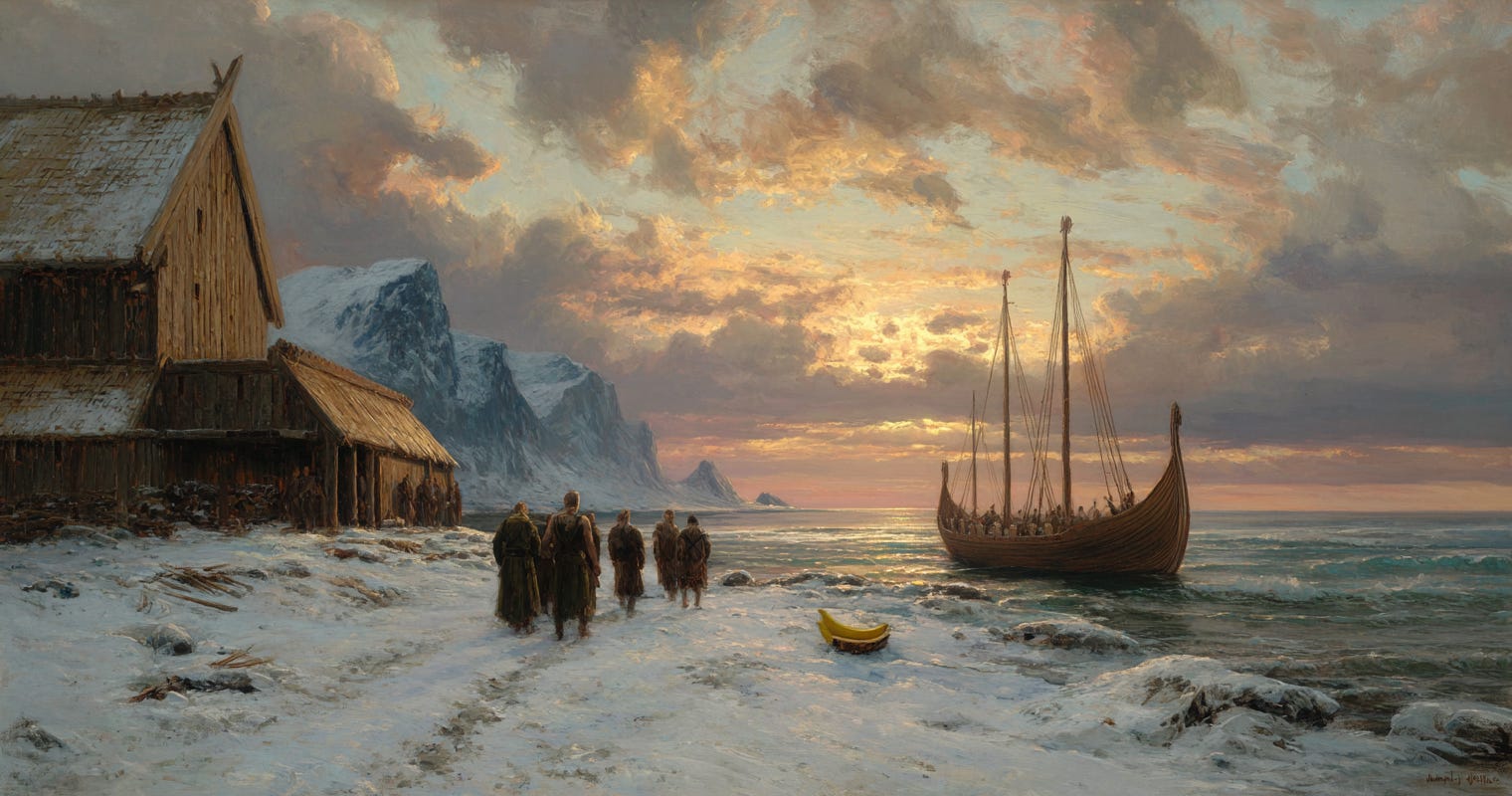
PART II — THE NORTHERN FRONTIER: SCANDINAVIA & THE VIKINGS
Christianity’s spread among the Norse was slow, uneven, and deeply political.
1. Vikings Met Christianity Through Raiding & Trade
They raided monasteries — but also traded with Christians and served as mercenaries.
Exposure created familiarity.
2. Kings Saw Conversion as an Opportunity
Harald Bluetooth of Denmark converted to:
strengthen royal authority
connect with Christian Europe
undermine local pagan chieftains
Norway and Sweden followed similar paths:
Christianity unified kingdoms that were previously fragmented.
3. The Cultural Strategy: Replace, Don’t Erase
Missionaries incorporated local customs:
feast days adapted
saints replaced local spirits
churches built on former sacred sites
Christianity succeeded when it adapted.
PART III — THE EASTERN PATH: SLAVS, BYZANTIUM & THE BIRTH OF RUSSIA
Eastern Europe’s conversion was shaped by the rivalry between Rome and Constantinople.
1. Cyril & Methodius — Missionaries with a Plan
These Byzantine scholars created:
the Glagolitic alphabet (precursor to Cyrillic)
Slavic liturgy
translated scripture
This allowed Christianity to spread in local languages, a revolutionary idea.
Slavic identity and Christianity grew together.
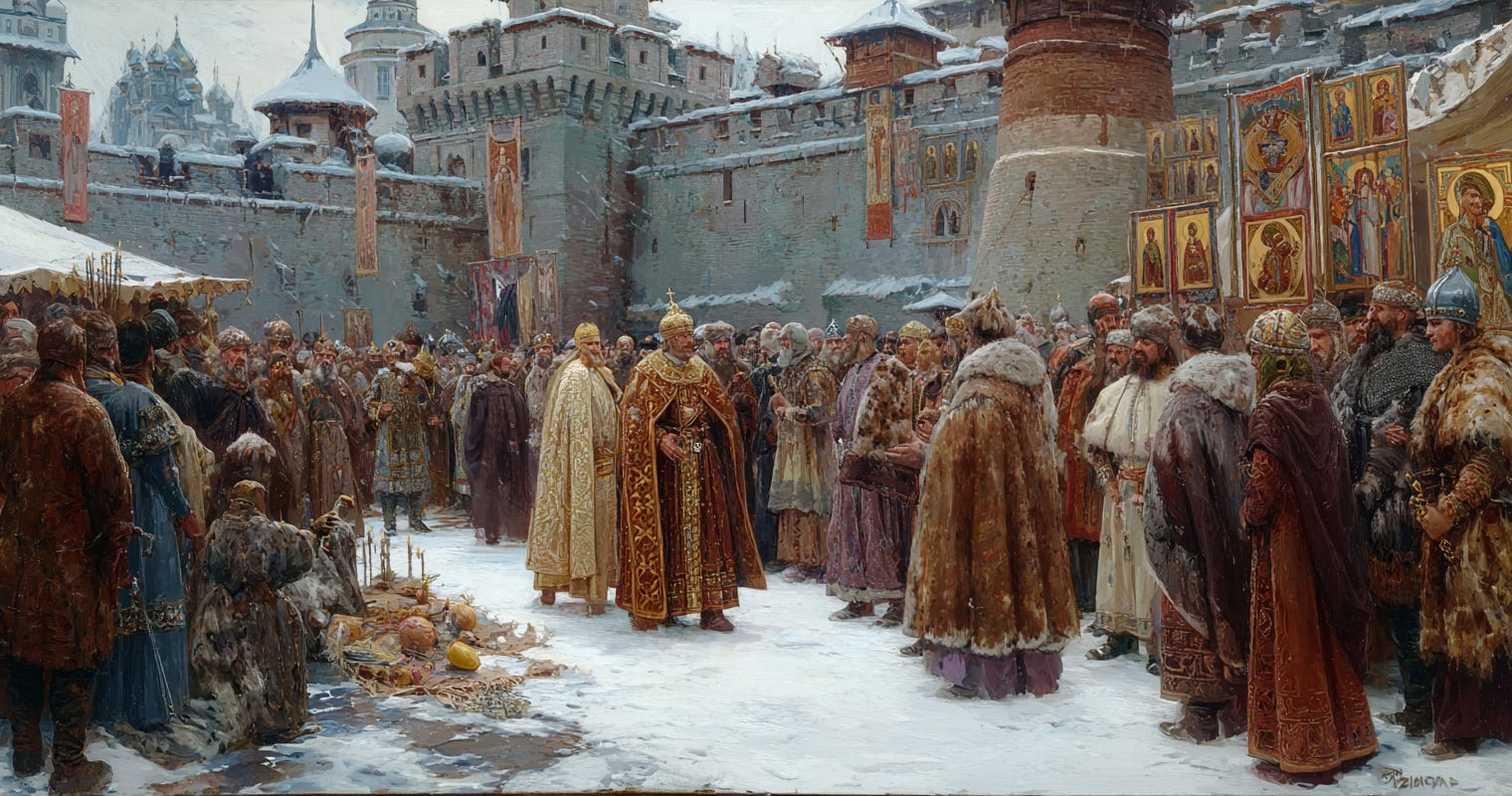
2. Vladimir of Kiev — A Strategic Conversion
Prince Vladimir converted in 988 AD for:
marriage alliance with Byzantium
access to skilled architects and administrators
strengthening state formation
leveraging Byzantium’s prestige
His baptism of Kievan Rus is one of the most significant events in Eastern European history.
3. The Role of Trade Networks
Kiev linked:
the Byzantine world
the Baltic
the Islamic caliphates
Christianity integrated Rus economically into the Mediterranean world.
PART IV — WHY EASTERN EUROPE CHOSE BYZANTIUM OVER ROME
1. Prestige of the Eastern Empire
Byzantium was:
wealthier
more educated
more urban
more sophisticated administratively
Its culture dazzled Slavic rulers.
2. Local Language Liturgy
Rome insisted on Latin.
Byzantium allowed Slavic worship.
This was decisive.
3. Political Independence
Alignment with Constantinople allowed Slavic rulers:
to avoid Western European feudal obligations
to maintain control over their own church
to resist becoming vassals of Rome
Orthodoxy offered partnership, not subordination.
PART V — CHRISTIANITY’S CULTURAL TOOLKIT
Christianity succeeded partly because it embedded itself into every layer of society.
1. Monasteries as Education & Economy
Monasteries became:
schools
scriptoria
economic hubs
diplomatic centers
They produced local elites who administered kingdoms.
2. Saints & Relics
These localized Christianity:
saints offered local intercession
relics attracted pilgrims
legends adapted to local landscapes
Christianity became familiar, not foreign.
3. Art, Literacy & Architecture
Cathedrals and churches reshaped skylines.
Icons and manuscripts reshaped imagination.
Christianity did not simply convert the mind — it transformed the physical world.
PART VI — RESISTANCE, SURVIVAL & SYNTHESIS
Not all conversions were peaceful or immediate.
1. Pagan Traditions Persisted
Folk customs absorbed into Christian festivals.
Seasonal rituals survived under new names.
2. Political Resistance
Elites sometimes rejected Christianity because:
it empowered rival factions
it threatened traditional hierarchies
it imposed foreign norms
But over time, the administrative advantages overwhelmed resistance.
3. A Hybrid Europe
Christianity in northern and eastern Europe became deeply local:
Orthodox Slavic Christianity
Scandinavian Christianity
Polish-Lithuanian Christianity
Each reflected its cultural environment.
CONCLUSION — CHRISTIANITY’S EXPANSION WAS NOT AN ACCIDENT
Christianity did not spread north and east simply because missionaries were persuasive.
It spread because:
kings needed legitimacy
states needed literacy and law
merchants needed connections
rulers sought alliances
cultures absorbed new ideas
religion adapted to local traditions
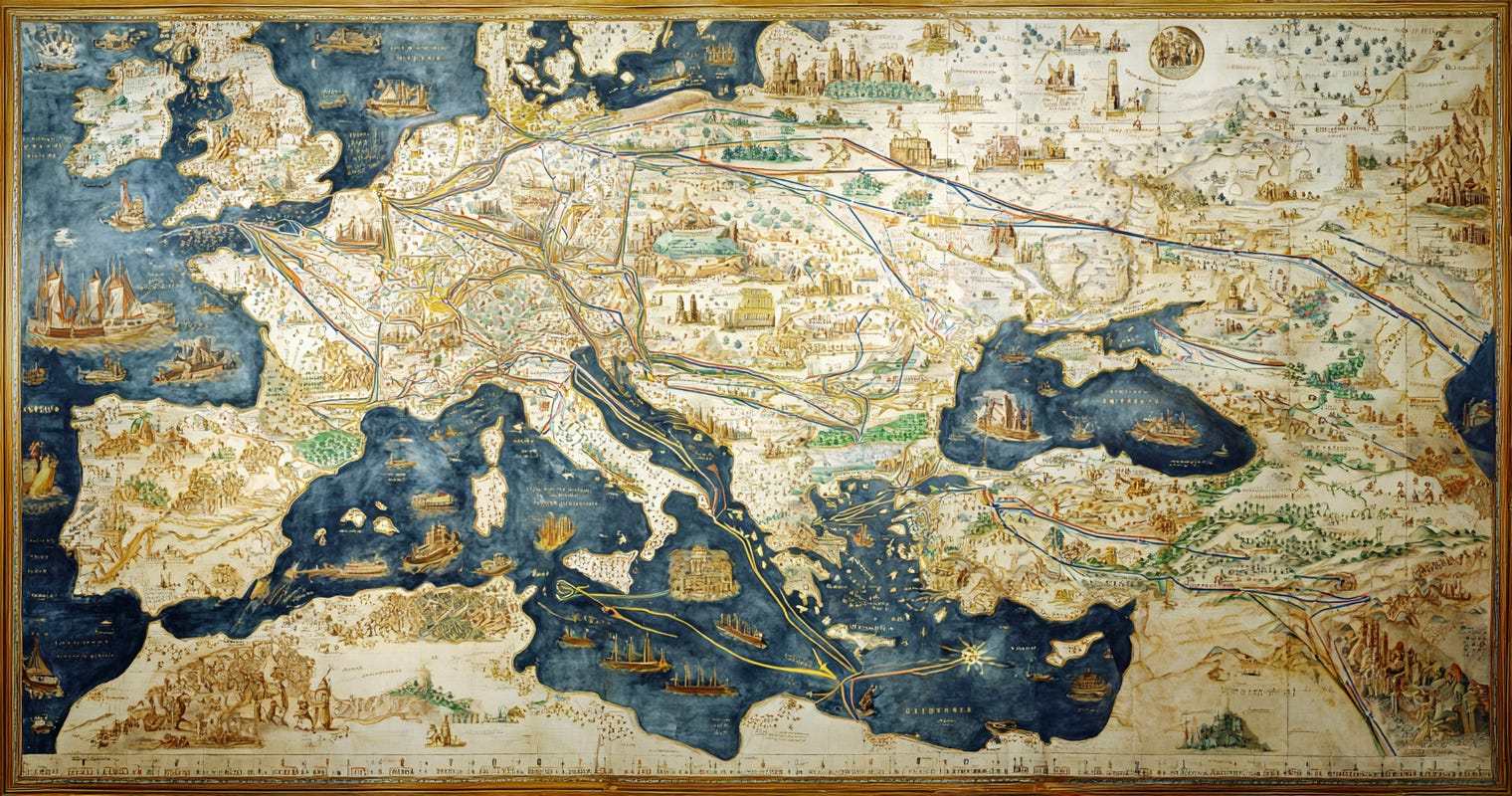
The map of Christian Europe was shaped by geopolitics and culture as much as faith.
The result was a continent permanently reshaped — from the fjords of Norway to the forests of Russia.
⭐ FAQ — Spread of Christianity
Q: How did Christianity reach Northern Europe?
Through kings, trade networks, and missionaries who adapted Christian practice to local customs.
Q: Why did Slavic peoples convert to Christianity?
For political alliances, administrative benefits, literacy, and diplomatic recognition.
Q: Why did Eastern Europe adopt Orthodoxy?
Because Byzantium offered cultural prestige, local-language liturgy, and political autonomy compared to Rome.
Q: Did Vikings convert peacefully?
Partially. Some kings adopted Christianity for political reasons, while older elites resisted.
Q: What made Christianity appealing to rulers?
It offered legitimacy, administration, literacy, and alliances with powerful Christian states.