
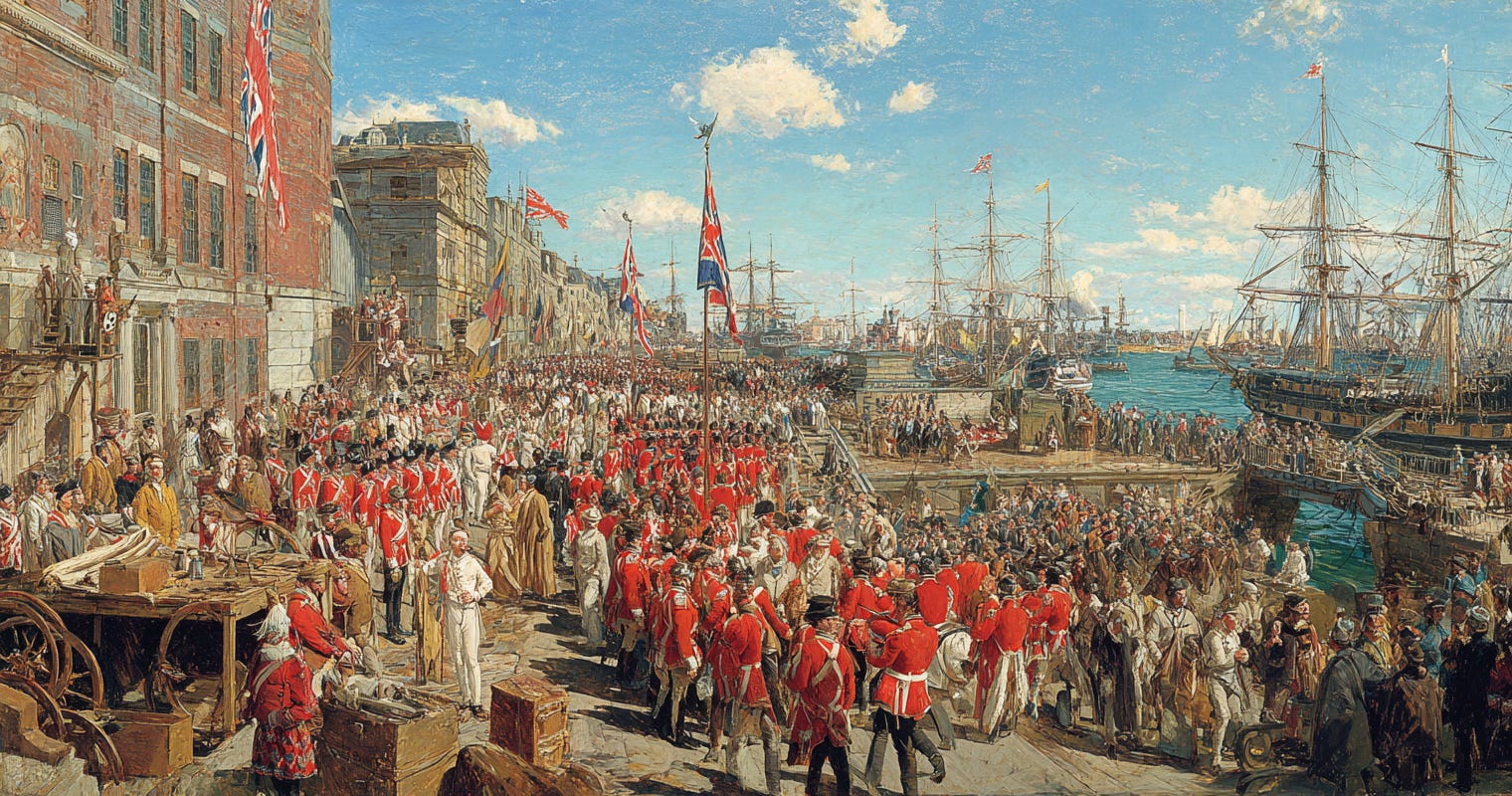
INTRO — THE EMPIRE THAT WAS NEVER SUPPOSED TO EXIST
Britain was never meant to rule the world.
In the 1500s, it wasn’t impressive. France was richer. Spain had the gold. The Ottoman Empire was a juggernaut. China under the Ming Dynasty was a global industrial machine. India’s Mughal Empire was wealthier than all of Europe combined.
England?
A small island with weak kings, muddy roads, limited resources, and a chronic identity crisis.
Yet somehow, this unassuming island went on to control a quarter of Earth’s land and nearly half its population.
And the strangest part?
Britain didn’t plan it.
It stumbled — sometimes blindly — into empire.
Britain did not set out to build the world’s biggest empire. It drifted into one — pushed by trade winds, pulled by profit, carried by ships, and helped by timing, chance, and mistakes that snowballed into domination.
The empire wasn’t designed.
It happened.
PART I — IT STARTED WITH PIRATES, NOT POLITICS
The first “agents” of British expansion weren’t diplomats or soldiers — they were pirates.
Men like Francis Drake, John Hawkins, and Henry Morgan raided Spanish ships and ports with unofficial royal permission. It was empire-building disguised as mischief. Spain’s treasure fleets were irresistible targets carrying gold, silver, and luxury goods from the Americas.
By attacking Spain, England wasn’t trying to create colonies.
It was trying to survive.
The English Crown was poor. Piracy was cheap. And every stolen Spanish ship was a strategic and financial victory.
These pirates unintentionally opened the door to overseas expansion.
They mapped coastlines.
They found trade opportunities.
They established contacts.
They tested naval strength.
England’s empire began not in parliament —
but in the chaotic spray of cannon fire on the open sea.
PART II — NAVAL POWER: THE REAL REASON THE ISLAND ROSE
Britain’s accidental ascent became inevitable when it built the world’s greatest navy.
A strong navy wasn’t a strategic choice — it was a necessity.
An island without ships is a target.
An island with ships is a fortress.
The Royal Navy became Britain’s shield and sword. And unlike continental armies that drained their states dry, navies could pay for themselves.
Ships protected trade.
Trade created wealth.
Wealth funded more ships.
More ships protected more trade.
A feedback loop of maritime dominance took shape.
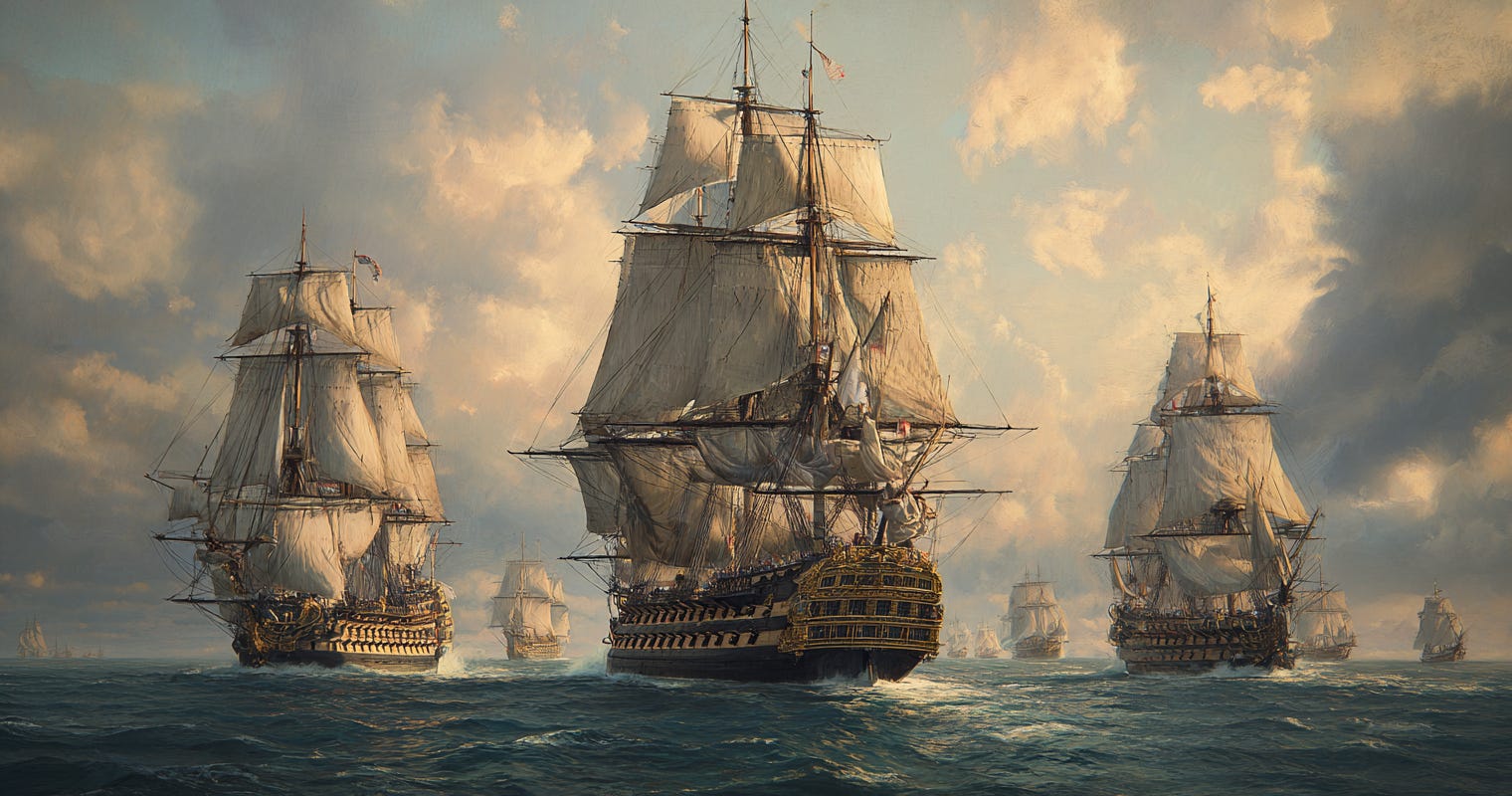
By the 18th century, the Royal Navy wasn’t just strong — it was unmatched. Battles like Trafalgar (1805) cemented this supremacy, allowing Britain to operate globally without fear of invasion.
Where the navy went, influence followed.
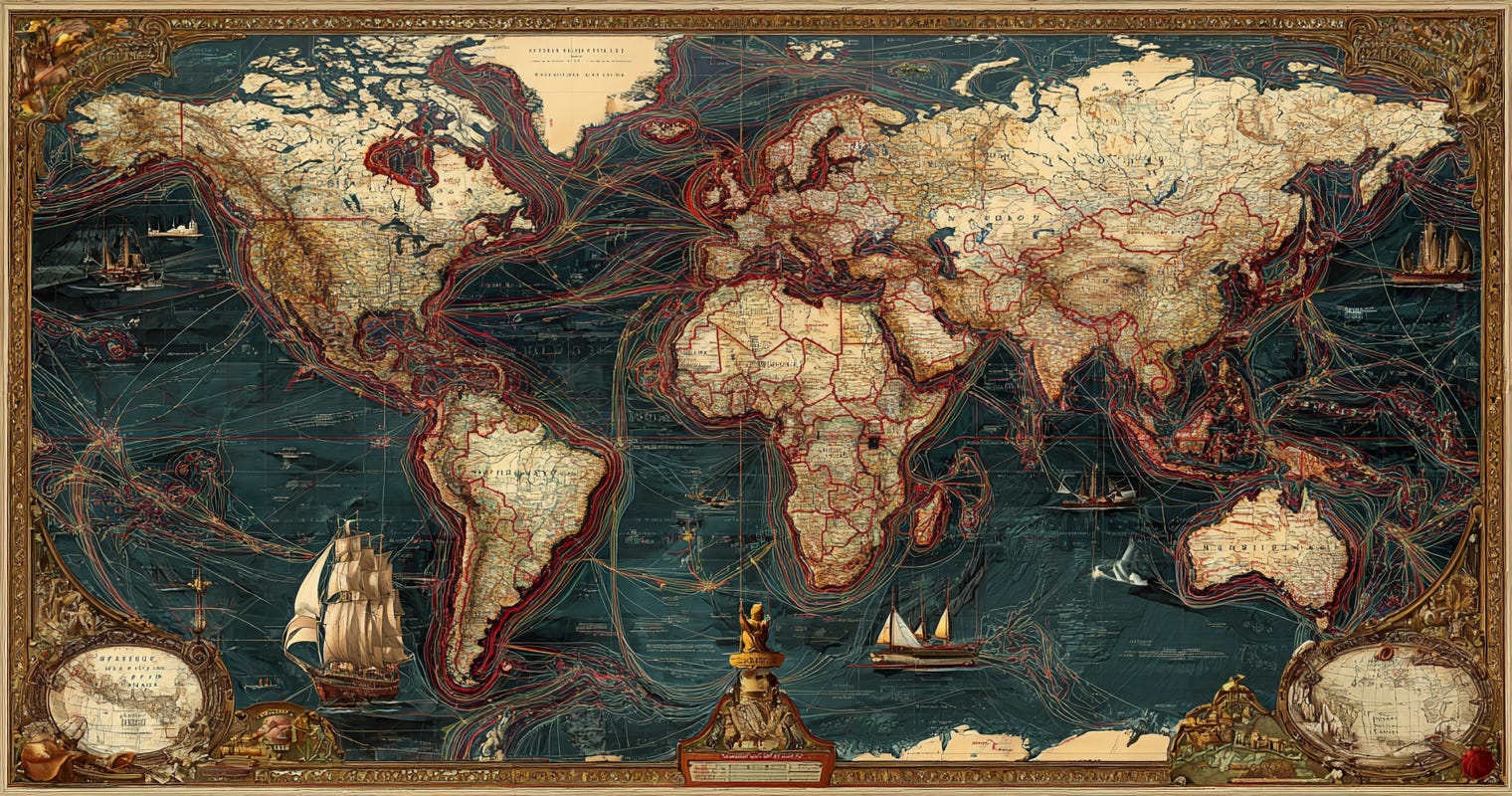
PART III — TRADE EMPIRES BEFORE TERRITORIAL EMPIRES
Long before Britain took land, it took markets.
The East India Company (EIC) began as a corporate startup with royal paperwork and a questionable business model. But it evolved into a global powerhouse, controlling shipping networks, trade routes, and financial flows across Asia.
Britain’s early empire was driven by:
spices
tea
textiles
opium
silver
manufactured goods
Merchants built the empire long before soldiers did.
What made Britain unique was its willingness to support private interests with state power. When trade networks were threatened, the navy appeared. When diplomacy failed, troops arrived. When resistance formed, Britain found allies to destabilize local powers.
Trade formed the skeleton.
The military added muscle.
And soon, the company’s interests became the Crown’s interests.
PART IV — THE INDUSTRIAL REVOLUTION: THE MOMENT BRITAIN BROKE THE WORLD BALANCE
The Industrial Revolution didn’t just make Britain richer — it made Britain unstoppable.
Factories multiplied production.
Steam engines accelerated transport.
Coal powered entire cities.
Iron and steel transformed warfare.
Textiles flooded global markets.
While other empires relied on manpower, Britain relied on machines.
Its industrial economy gave it advantages in:
manufacturing
shipbuilding
firepower
logistics
communication
Every decade, Britain pulled further ahead.
Every decade, its empire expanded almost automatically.
By the 1850s, Britain wasn’t just an empire.
It was the world’s factory, bank, and shipping company.
PART V — DIPLOMACY, DEBT, AND THE ART OF NOT HAVING TO CONQUER
One of Britain’s greatest strengths was finding ways to dominate without firing a shot.
Britain influenced nations through:
loans
advisors
treaties
naval pressure
economic dependency
A country didn’t need to be colonized to be controlled —
it only needed to rely on British capital and British ships.
This “informal empire” stretched from South America to the Ottoman Empire to China. It was empire-building hidden inside trade agreements, legal reforms, and diplomatic leverage.
Britain became the empire other empires needed.
PART VI — INDIA: THE EMPIRE WITHIN THE EMPIRE
India became the crown jewel not because Britain planned it, but because no one else could dominate it.
The Mughal Empire’s decline created a power vacuum.
The East India Company filled it — not through conquest, but through contracts, alliances, and opportunistic intervention.
Over time:
local princes depended on British troops
British companies controlled trade
British advisors influenced courts
British law shaped administration
By the time the Crown took direct control after 1857, the subcontinent was already integrated into Britain’s economic and military system.
India wasn’t “taken.”
It drifted into empire one treaty at a time.
PART VII — THE GLOBAL PATCHWORK
The British Empire wasn’t uniform.
It was a patchwork of colonies, protectorates, dominions, trading posts, naval stations, and spheres of influence.
Canada developed differently from Australia.
Hong Kong differently from Kenya.
Egypt differently from Jamaica.
Some parts became settler colonies.
Some became resource hubs.
Some became naval fortresses.
Some were merely strategic dots on maps.
The empire’s diversity made it resilient — and unpredictable.
PART VIII — WHEN BEING FIRST MEANT BEING BIGGEST
By the 19th century, Britain enjoyed advantages that no other power could match:
first to industrialize
first global navy
first global financial center
first corporate empire
first to command telegraph networks
And crucially:
Britain maintained peace in Europe through diplomacy and alliances, reducing threats at home while expanding abroad.
When competitors like Germany and the United States rose, Britain was already everywhere.
Empire wasn’t a project.
It was an inheritance of being early.
PART IX — WHY THE EMPIRE ENDED
Empires don’t last forever.
Britain’s ended because:
two world wars exhausted it
colonies demanded self-rule
global economics shifted
maintaining empire became too expensive
nationalism spread worldwide
The empire dissolved not with dramatic collapse but with gradual transition — independence movements, negotiated exits, and changing priorities.
The sun set slowly, but inevitably.
CONCLUSION — THE EMPIRE BUILT BY MOMENTUM
Britain’s empire wasn’t forged by a master plan.
It grew through:
piracy
trade
luck
naval power
industrial advantage
opportunism
diplomacy
A small island became a superpower almost unintentionally — a country that learned to exploit timing, geography, and global change better than its rivals.
The British Empire was not born from design.
It was born from momentum.
And momentum, once gained, carried it farther than any nation in history.