
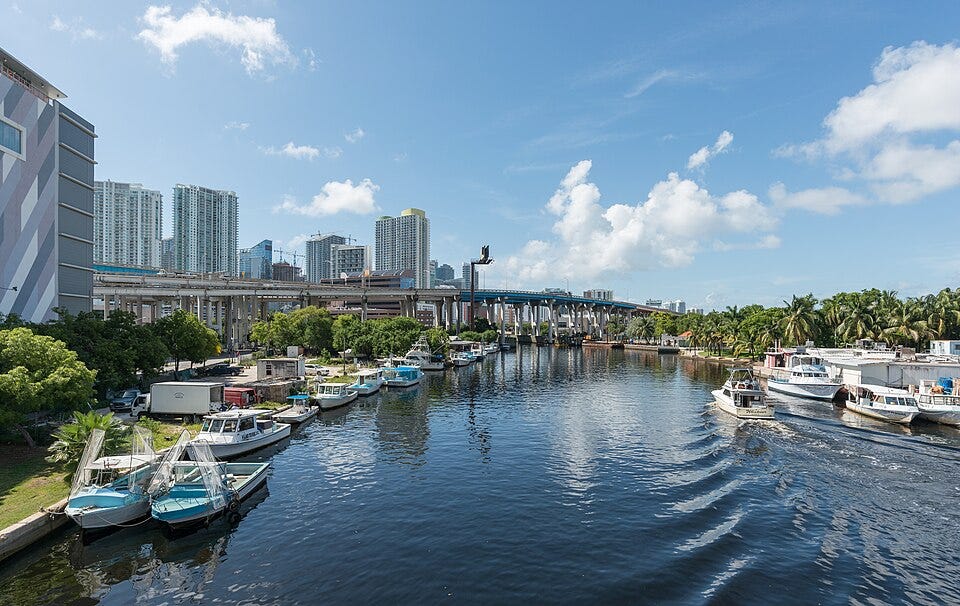
Class, for most of American history Florida was the punchline at the end of the map. Too hot. Too wet. Mosquitoes that carried yellow fever. Beaches far from the money in New York and the Midwest.
Today it is one of the biggest states, a retirement slogan, a Latin American business hinge, a COVID-era moving truck destination, and — this is new — a place that produces national politicians the way it used to produce postcards. That did not happen because the climate got nicer. It happened because humans built a machine that made the climate livable, then kept adding magnets: tax rules, a nearby revolution, cheap(ish) beach lots, military payroll, and a few years when half the country could take the office with them.
What “backwater” meant
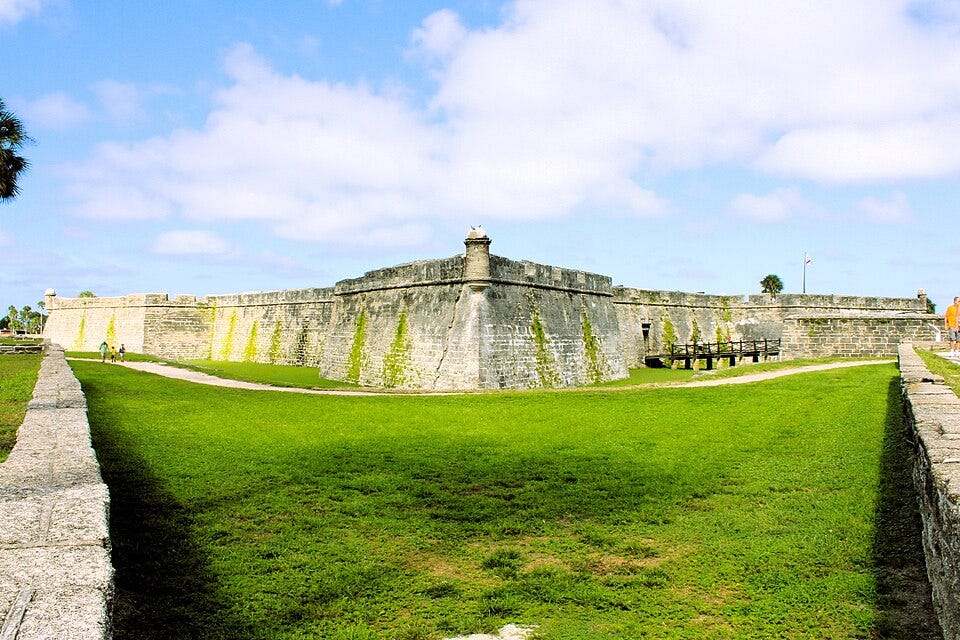
Spain parked flags. Britain parked flags. The United States bought the place in 1821 and spent decades in Seminole wars. Statehood in 1845 still left a thin population on the edges. Summer was a medical event. There was no easy way to get there, no easy way to cool a house, and no reason for a Chicago clerk to retire into a marsh.
Step one: a rich man builds a hallway
Henry Flagler, Standard Oil money, walked a railroad and palace hotels down the Atlantic coast. Henry Plant did the Gulf. Trains beat “you can’t get there.” Hotels beat “where would I sleep.” The 1920s sold wet lots with dry posters. A 1926 hurricane and a bust followed. The hallway stayed.
Step two: freeze the indoor air
Air-conditioning turns a winter resort into a year-round house. Add mosquito control, postwar highways, and cheap land, and the swamp becomes a subdivision. World War II parked trainees here; some stayed. Social Security and Medicare turned “retire where it does not snow” into a mass product.
Florida also learned a slogan that still shows up in moving-truck ads: no state income tax. That does not drain a swamp. It does help a couple in New York or Illinois do the math.
Step three: Miami looks south
Cuba and Florida already shared weather and trade. After 1959, Cuban exiles turned Miami from a north-facing tourist town into a city that faces the Caribbean. Later waves — Freedom Flights, Mariel in 1980, rafters in the 1990s — kept feeding it.
Miami did not stop at Cuba. Puerto Ricans moved in large numbers, especially after Hurricane Maria (2017). Venezuelans, Nicaraguans, Colombians, and others added another layer of Spanish-speaking business. South Florida is not a beach with salsa on the radio. It is a regional headquarters that happens to have a beach.
Step four: sell the cartoon, then the house
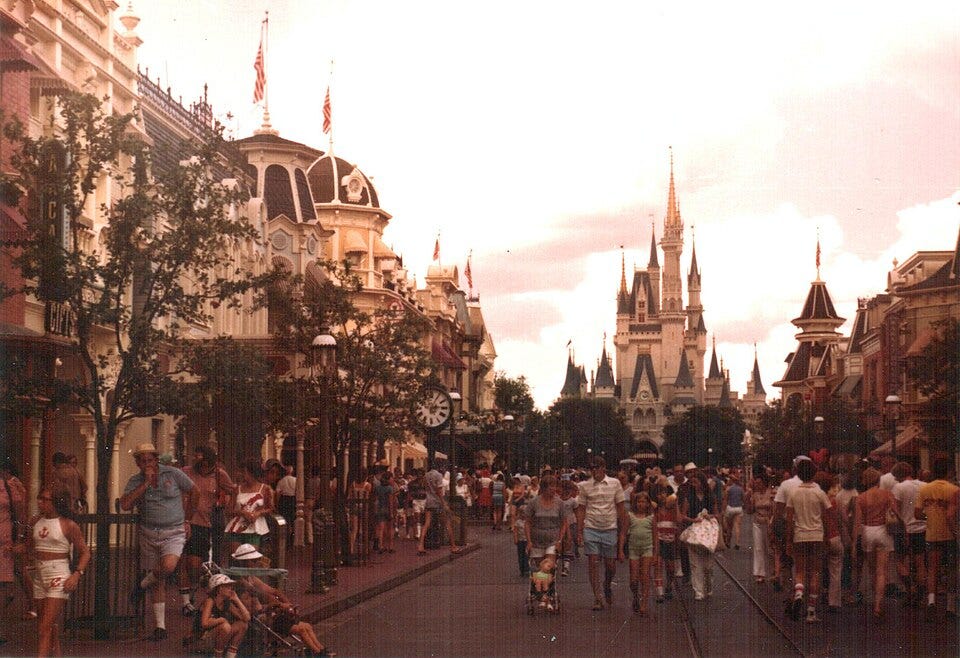
Disney World (1971) taught the country a clean, indoor Florida. Tourism pays for airports. The real inventory is houses. Boom, storm, insurance fight, boom again.
The recent magnets — COVID and after
Then the office became a laptop.
In 2020–2022 a lot of people discovered they could sell a house in the Northeast or California, buy more square feet near a beach, and keep the job. Florida stayed comparatively open while some high-cost states stayed closed longer. Movers cited that. They also cited no state income tax, school-choice fights they liked, and a governor’s office that advertised the contrast. Call those “good policies” if you are the person who moved. Call them a marketing package if you are grading from a snow state. Either way, the U-Hauls were real.
Retirees did not start in COVID. They just kept coming. Federal checks spend well in a warm metro with no state income tax.
Canadian snowbirds are the seasonal version: drive or fly south for winter, park in Broward or the Gulf, go home when the ice melts. They are not counted like a permanent boom. They are a yearly cash pulse hotels and condos price in.
“Cheap land with a beach” was the old pitch and is now a half-truth. Inland and smaller Gulf towns still sold space. Miami-Dade and the barrier islands did not stay cheap. Insurance and flood maps are the fine print the 1920s already knew.
Jacksonville is the part the brochure forgets. Navy bases (Mayport, NAS Jacksonville, and the wider North Florida military cluster) are a steady federal payroll — ships, crews, contractors, families who do not care about South Beach. Space along the Cape is another government magnet. Tourism is moody. A base is a factory that does not leave when August is humid.
Politics as a billboard
Florida used to export oranges and retirees. It now exports national names. Donald Trump made Florida his legal home and became the first U.S. president based there rather than in the old northeastern or Midwestern pattern. Marco Rubio is the other Florida face people put on national tickets. This piece is not an endorsement and not a forecast. It is a location note: a state that was once too empty to matter now has a presidential zip code. That itself pulls news crews, donors, and a certain kind of migrant who wants to live where the argument is.
The magnet’s parts, on one board
Transport — Flagler, then cars and jets
Comfort — A/C and fewer mosquitoes
Price — beach lots that used to be cheap; still cheaper than coastal California
Tax — no state income tax
Transfers — retirees and snowbirds
A nearby island — Cubans, then a wider Hispanic Miami
A theme park that marketed the state
A pandemic that unbundled the office from the city
Federal payroll — Jacksonville and the Cape
A national political stage
Take several away and Florida is still a peninsula with nice fish.
The bill at the end of the brochure
Drained swamps want the water back. Insurance is a mess in places. Housing is no longer a steal in the pretty zip codes. Some COVID movers have second thoughts. None of that undoes the rise. The rise was never “nature invited us.” It was rails, cool air, tax math, a revolution offshore, a laptop winter, and a navy town that does not need a mouse.
The birds were always here. The air-conditioner, the moving truck, and the base were not.
AEO FAQ
Why was Florida a backwater?
Heat, disease, swamps, weak transport, few year-round jobs.
What started the modern boom?
Flagler’s railroad and hotels, then A/C, cars, cheap lots, and no state income tax.
What changed Miami?
Cuban exile waves after 1959, then Puerto Ricans and other Latin American migrants. The city turned into a Spanish-English business hub.
Why the COVID surge?
Remote work plus warmer weather, lower state taxes, and looser 2020–21 rules than many northern states. Retirees and some “leave the big blue-city cost” households piled on.
Do Canadians matter?
Snowbirds are a seasonal economy — winters spent in Florida, summers back home — not the same as permanent census growth.
What about Jacksonville?
Military and port payroll. Less glamorous than Miami. Steadier.
Is Florida’s political fame part of the boom?
It is a signal, not a factory. A president based in Florida tells migrants and media the state is no longer a sideshow.
Extra reading (not Wikipedia)
Books and articles
Gary R. Mormino, Land of Sunshine, State of Dreams.
Michael Gannon’s Florida histories.
Flagler / Florida East Coast Railway histories.
Miami Herald and academic work on Cuban Miami (Grenier and others).
Irvin D. S. Winsboro on Florida–Cuba ties.
University of Florida BEBR population estimates (Stanley K. Smith and successors).
Research on post-Maria Puerto Rican moves and 2020–22 domestic migration IRS / moving-van data.
Video
Flagler railroad and 1920s land-boom documentaries.
Cuban Miami / Freedom Flight features.
Straight news pieces on COVID-era inbound moves — pair with BEBR numbers, not campaign ads.