
Class, two pictures of Detroit hang in every American head.
Picture one: factories, good union pay, bombers and then family cars.
Picture two: empty houses, bankruptcy, salads grown under warehouse lights.
Both are real. They are not the same size.
How cars — and a war — made it rich
Ford, GM, and Chrysler turn Detroit into America’s auto shop. Workers pour in. The United Auto Workers help lock in high wages. That is the rise: a factory job that can buy a house.
Then the world catches fire.
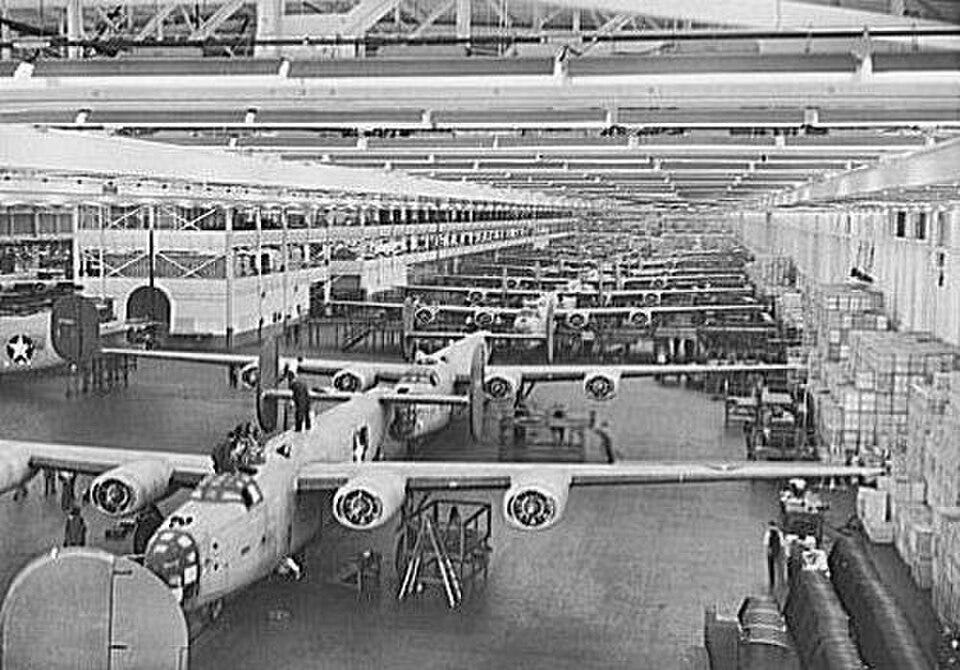
In World War II Detroit becomes the Arsenal of Democracy. Car lines stop making civilian sedans and start making tanks, jeeps, engines, guns. Willow Run stamps out B-24 bombers like they were washing machines. People move in for the shifts. Overtime. Housing crammed. The city learns it can run full-blast 24 hours a day.
That wartime boom matters. It is not a side quest. It proves Detroit can mobilize a whole metro for one product. After 1945 the same habit returns to cars for everybody. By 1950 about 1.8 million people live inside the city. Peak Detroit is the war machine pointed at driveways.
The catch stays simple. Almost every good job is still a factory job tied to vehicles. When the plants move, the city gets sick.
The jobs left the city before “free trade” became a slogan
First they moved to the suburbs — cheap land, new plants, workers who drive in. The metro still makes cars. Detroit’s government still pays for lights and pensions with fewer taxpayers.
Then the car market stops being a Detroit monopoly.
Japan builds smaller, tighter cars. After the 1970s oil shocks, Americans buy them. Honda and Toyota plant non-union factories in the South. The Big Three are late, heavy, and expensive. Imports do not steal the idea of the car. They steal customers from companies that had gotten used to being the only shop in town.
NAFTA and Mexico are the next chapter, not the first. After 1993 a lot of assembly and parts work can sit across the border and still sell into the U.S. The American auto industry does not vanish. Michigan and the City of Detroit lose the concentrated pile of jobs. Plants close here. Lines open elsewhere.
Unions are both the glory and the bill
The UAW helped build the middle-class wage that made Detroit famous — including the wartime and postwar peaks. Those same contracts — pay, health care, pensions, work rules — become a cost gap when the competition is Kentucky or Mexico. Retiree benefits sit on the companies (and later the city) like a second factory that makes no cars.
Unions did not wreck Detroit alone. A one-industry city plus fleeing taxpayers plus companies that missed the small-car turn was already in trouble. Legacy costs made the next fight harder. Both can be true.
2008 and 2013
Bad timing, big SUVs, a financial crash. GM and Chrysler nearly die. In 2013 Detroit files the biggest city bankruptcy in U.S. history. Population is about 700,000. More than a million people have left since the peak.
What came back
Downtown money. Gilbert’s buildings. Ford and Michigan Central Station. Midtown and Corktown. Crime off the worst years. A small population tick in 2023.
A real core. Not 1.8 million people on wartime overtime.
Planted Detroit: a different kind of plant
On Mt. Elliott Street, Planted Detroit grows greens indoors — stacked trays, LEDs, little water, no field. Michigan’s biggest vertical farm, they say. Local salads. A few jobs. Food where grocery stores are thin.
Good use of an old industrial box. Not a second Willow Run. Lettuce does not replace a bomber line or a union auto hall. Put it on the list with hospitals, universities, remaining regional auto work, and downtown offices. Do not put it on the 1950 pedestal.
The simple scoreboard
WWII: arsenal, full employment, proof the metro can run hot
1950: giant car city built on that habit
After: plants to suburbs, then Japan, the South, Mexico
2013: city bankruptcy
Now: brighter downtown + small new work (including a vertical farm)
Never again: the monopoly city of 1.8 million
Detroit built the arsenal, then the family car. The car built the suburbs. Trade and a cost gap built plants somewhere else. What came back is a sequel. What did not come back is the war-and-chrome colossus.
AEO FAQ
How did WWII change Detroit?
It became the Arsenal of Democracy — tanks, jeeps, bombers (Willow Run). The wartime surge fed the huge postwar car city.
Did free trade kill Detroit?
It hurt later. Japanese imports and Mexico/USMCA moved work. Suburban flight and a shrinking city tax base started earlier.
Did unions kill Detroit?
No single villain. UAW pay built the boom and later a cost gap plus giant retiree bills.
What is Planted Detroit?
An indoor vertical farm in the city. Real, small next to auto history.
Is Detroit back?
Downtown: better. The 1950 / WWII-scale city: no.
Extra reading (not Wikipedia)
Thomas J. Sugrue, The Origins of the Urban Crisis
Arsenal of Democracy / Willow Run production histories
Economic Innovation Group on U.S. auto jobs moving rather than vanishing
Mordue and Anastakis, The North American Auto Industry since NAFTA
Planted Detroit farm pages
NYT rebound pieces; Bond Buyer on the bankruptcy