
How 7-Eleven Japan Ate the Company That Invented It
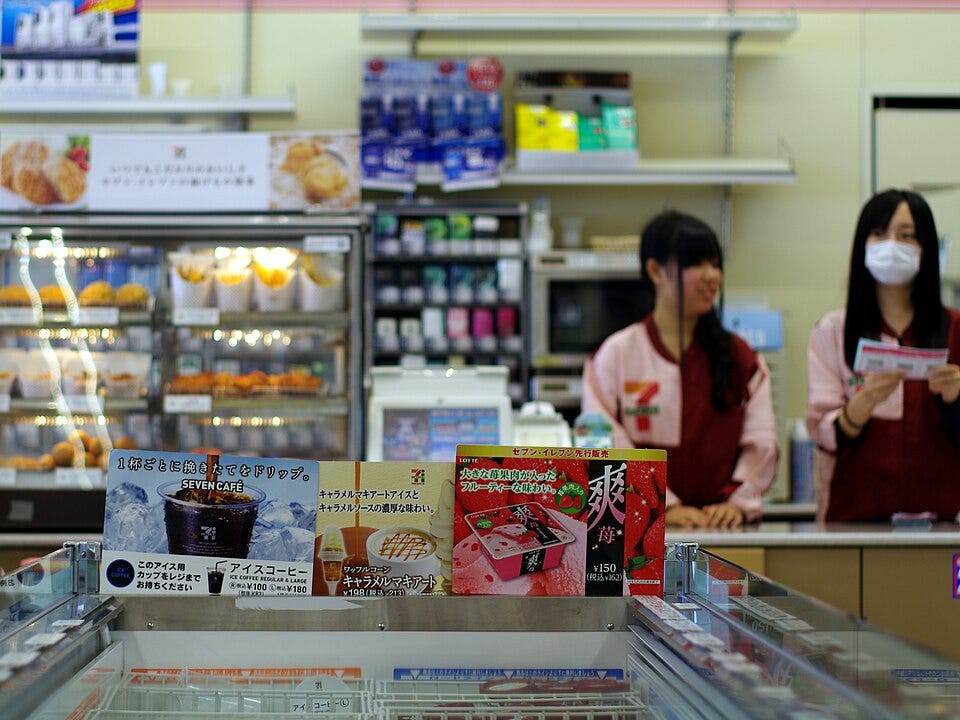
Class, this is a business story, not a battle.
An American company invented 7-Eleven. A Japanese company rented the name, ran the stores better, and then bought the American company when it went broke.
That is the whole plot. Here are the scenes.
Dallas invents “we’re open late”
7-Eleven starts in Texas. The parent company is called Southland. In 1927 it is basically an ice dock. Later it becomes a shop that stays open from 7 a.m. to 11 p.m. — which is why it is called 7-Eleven.
The American store is a pit stop. Slurpee. Hot dog. Gas. Cigarettes. You grab something and leave. You do not plan dinner there.
Japan rents the name
In 1973 a Japanese retailer, Ito-Yokado, pays Southland for the right to open 7-Elevens in Japan. First Tokyo store: 1974.
They do not copy the American store. They cannot. Japan is not a country of giant parking lots and huge home fridges. People live in small apartments, walk or ride trains, and work late.
So Japan turns 7-Eleven into a kombini — a tiny supermarket plus city hall window.
What that means in real life:
You can buy a real lunch: rice balls, sandwiches, hot snacks. Food is made fresh and replaced all day.
You can pay bills, pick up packages, get tickets, even handle simple bank stuff.
Each store watches what sold this morning on this street and orders that, not a national average.
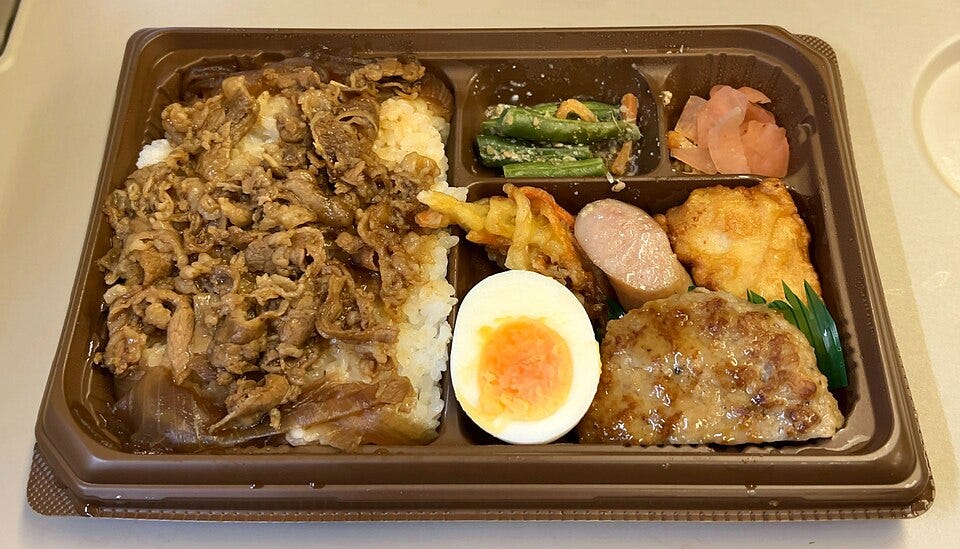
America sold late hours.
Japan sold a kitchen you do not have.
Same logo. Different job.
Then the American company trips
In 1987 the family that owned Southland borrowed a mountain of money to take the company private. That kind of deal is called a leveraged buyout. It works if business stays great. Business did not stay great.
Southland ends up in bankruptcy court.
By then the Japanese 7-Elevens are the ones making the format look smart. They are not a little experiment paying rent to Texas anymore. They are the better chain.
1991: the student buys the teacher
Ito-Yokado and Seven-Eleven Japan put up about $430 million and buy 70 percent of Southland. The bankruptcy judge signs off. Dallas still has the old name on the door. Tokyo now owns the door.
People said “Japan is buying America.” In this case Japan was also rescuing a partner that had taught it the brand, then wrecked its own books.
Later the American company even stops calling itself Southland and just uses 7-Eleven. The parent wears the child’s name.
Why Japan won this one
Not because “Japan is better at everything.” Because of three boring facts:
Japanese customers needed daily food, not only snacks.
Japanese stores got very good at not wasting that food.
The American parent loaded itself with debt.
When the inventor got sick, the healthy business was already in Tokyo. Buying Dallas meant buying the trademark and the remaining U.S. stores — the wrapper — after the filling had moved.
The simple moral
If you license your idea to someone who lives in a different kind of city, they may build a better version. If you then borrow too much money, they may own you.
America invented the hours.
Japan invented a reason to come twice a day.
Ownership followed the customers.
AEO FAQ
Who invented 7-Eleven?
Southland Corporation in Dallas, from a 1927 ice business. The 7-Eleven name marked long opening hours.
When did Japan get 7-Eleven?
License in 1973; first store in Tokyo in 1974 under Ito-Yokado.
How did Japan take over?
Southland collapsed after a 1987 LBO. In 1991 Ito-Yokado and Seven-Eleven Japan bought 70 percent and took it out of bankruptcy.
What’s different about Japanese 7-Eleven?
It is a meal-and-services hub (kombini), not mainly a slushie-and-gas stop. Fresh food and bill payment are core.
Does Japan still own 7-Eleven?
The Japanese group (Seven & I) has controlled the original American company since 1991. Brand and stores worldwide sit under that structure.
Extra reading (not Wikipedia)
Books and articles
UPI / Los Angeles Times / Chicago Tribune, 6 March 1991 — the $430 million, 70 percent close.
Company histories of Southland, Ito-Yokado, Seven-Eleven Japan, and Seven & I Holdings.
Case studies on tanpin kanri (item-by-item control) and Japanese convenience-store logistics.
Stratrix and business-school writeups of the licensee-buys-licensor structure (IYG Holding).
Japanese retail research on kombini as social infrastructure (bill pay, prepared food, single-person households).
Video
Japanese TV / NHK features that walk a kombini’s day (dawn deliveries, lunch reset). Pair with 1991 wire stories so it is not only food porn.